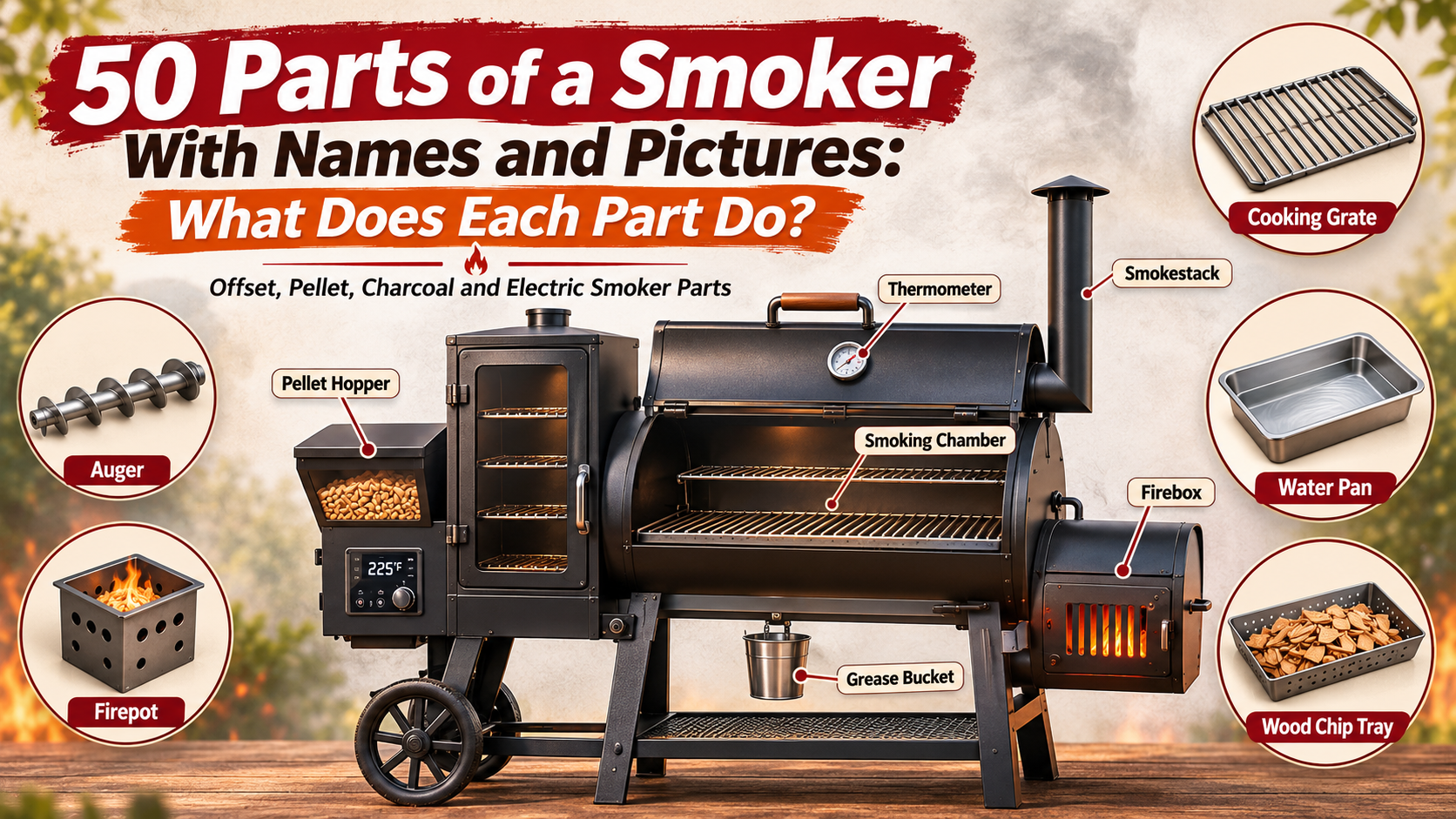


Understanding the parts of a smoker makes barbecue cooking easier, especially when you need to control heat, clean equipment, or replace a damaged component. A smoker may look simple from the outside, but several parts work together to produce heat, move smoke, and cook food at a steady temperature.
An offset smoker uses a separate firebox, while a pellet smoker relies on an automatic fuel-feeding system. Charcoal, electric, and gas smokers have their own arrangements.
This guide explains 50 common BBQ smoker parts, their functions, and where you can find them. It covers the main cooking chamber, airflow system, fuel components, temperature controls, and maintenance hardware.
Not every smoker includes all 50 items. Some parts are built into specific models, while others are optional or replaceable accessories.
What Are the Main Parts of a Smoker?
The main smoker components are the cooking chamber, heat source, cooking grates, airflow controls, temperature monitoring system, and grease collection system.
Most smokers share these basic functions, although their construction varies.
For example, an offset smoker burns wood or charcoal inside a separate firebox. A pellet smoker automatically moves wood pellets into a small combustion chamber, while an electric smoker uses an electrical heating element.
Understanding these differences helps you identify the correct replacement parts and maintain your equipment.
What Are the 50 BBQ Smoker Parts and Their Uses?
The following smoker parts list is organized into seven groups. Each part has a short explanation and a suggested close-up picture to make identification easier.
Which Parts Form the Main Smoker Body?
These components create the main structure of a smoker and support the cooking area.
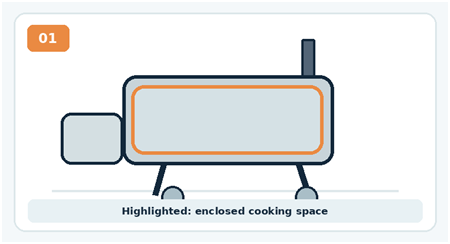
1. Cooking Chamber
The cooking chamber is the main enclosed area where food is smoked. It holds cooking grates and allows heated air and smoke to circulate around the meat. In a traditional offset smoker, it is usually a horizontal steel barrel.
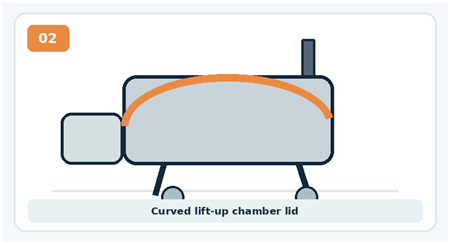
2. Smoker Lid
The lid closes the cooking chamber and helps retain heat. Some smokers use a large hinged lid, while cabinet smokers have upright doors. A poorly fitting lid can cause unwanted air leakage and unstable temperatures.
3. Lid Handle
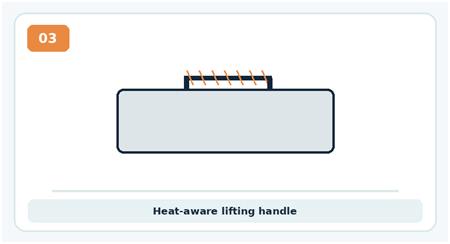
The lid handle provides a grip for opening and closing the cooking chamber. Many models use a spring-style or insulated handle, although handles can still become hot during cooking.
4. Lid Hinges
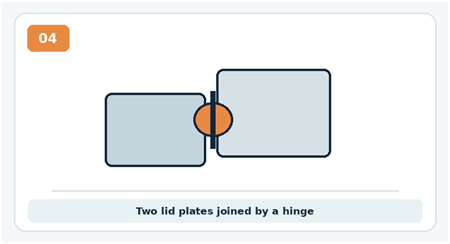
Hinges connect the lid to the smoker body and allow controlled movement. Loose hinges may cause alignment problems or prevent the lid from closing evenly. Inspect them occasionally for corrosion or damaged fasteners.
5. Cooking Grates
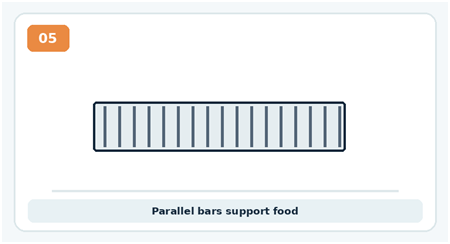
Cooking grates support food inside the smoker. They are commonly made from steel, stainless steel, or porcelain-coated materials. Their spacing, size, and condition influence how easily you can arrange food and clean the cooking surface.
6. Upper Cooking Rack
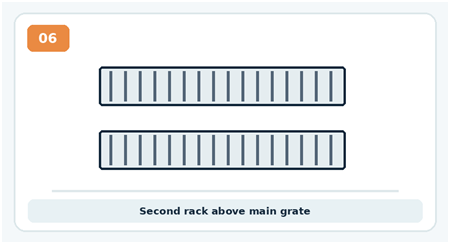
An upper rack adds cooking space above the main grate. It is useful for smaller food items, but temperatures may differ between rack levels. Not every smoker has an upper rack.
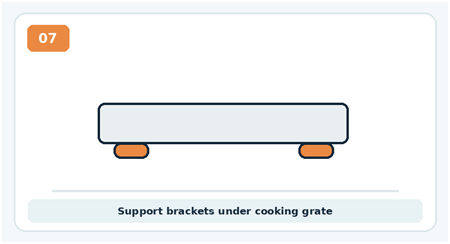
7. Cooking Grate Supports
Grate supports are brackets, rails, or ledges that hold cooking grates in position. If they become loose or damaged, the cooking surface may become unstable.
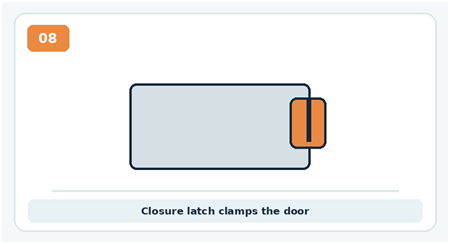
8. Smoker Door Latch
A door latch helps keep a cabinet door or firebox lid securely closed. Some smokers use simple mechanical catches, while others feature adjustable latches that improve closure.
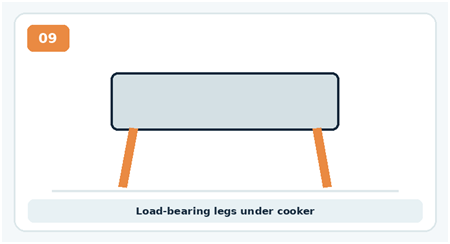
9. Smoker Legs
Legs support the smoker above the ground and provide stability during cooking. Heavy smokers require sturdy supports because their steel construction, fuel, and food can create substantial weight.
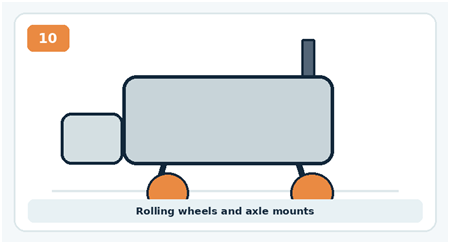
10. Smoker Wheels
Wheels make larger smokers easier to move across suitable surfaces. Their construction varies between models. Damaged wheels or axles can make a heavy smoker difficult or unsafe to reposition.
Which Offset Smoker Parts Control Fire and Smoke?
Offset smoker parts are designed to keep the fire separate from the food while directing heated air through the cooking chamber.
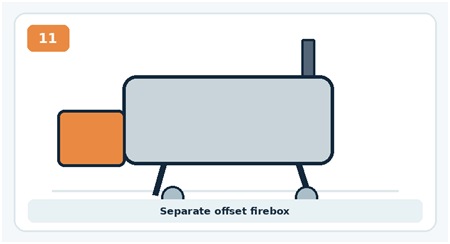
11. Firebox
The firebox is the separate compartment where wood or charcoal burns. It is usually connected to one side of the cooking chamber. Heat and smoke travel from the firebox into the main cooking area.
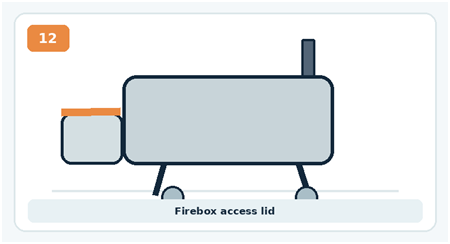
12. Firebox Lid
The firebox lid provides access for adding fuel and maintaining the fire. It should close properly to help control airflow. Opening it repeatedly may temporarily affect combustion and temperature.
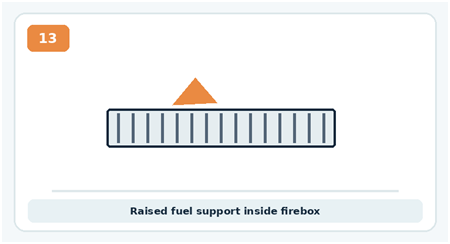
13. Fire Grate
The fire grate supports burning wood or charcoal above the bottom of the firebox. This arrangement allows air to reach the fuel and creates space for ash to collect below.
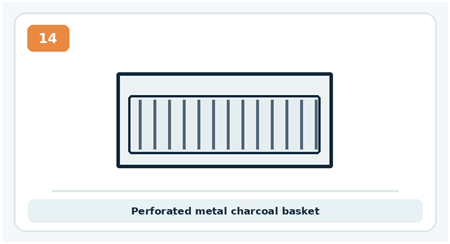
14. Charcoal Basket
A charcoal basket keeps charcoal organized inside a compatible firebox or charcoal smoker. Its raised or perforated construction can improve air access and simplify fuel management.
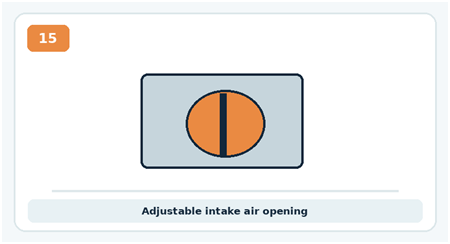
15. Air Intake Damper
The intake damper controls how much air enters the firebox. Opening it generally increases oxygen availability, which can strengthen combustion. Closing it too far can cause the fire to smolder.
16. Smokestack
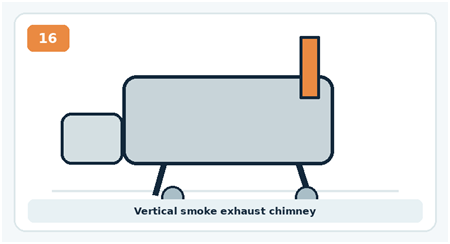
The smokestack, also called the chimney, provides an exit path for smoke and combustion gases. Its design and location influence airflow through the cooking chamber.
17. Exhaust Damper
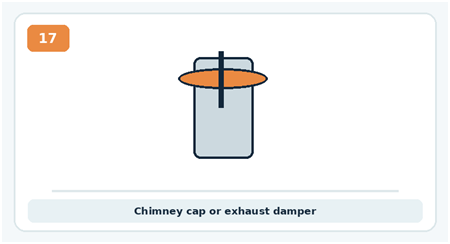
Some smokers include an adjustable exhaust damper at the top of the chimney. It changes exhaust restriction, but it should not be used to starve the fire of airflow. Many pitmasters manage heat primarily through fire size and intake airflow.
18. Firebox-to-Chamber Opening
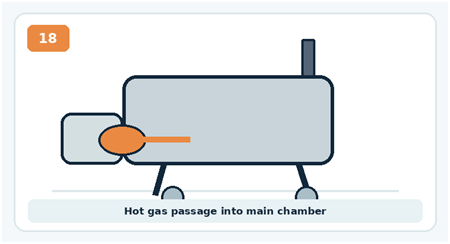
This opening connects the firebox with the cooking chamber. It allows hot gases and smoke to enter the cooking area. Its size and shape depend on the smoker’s design.
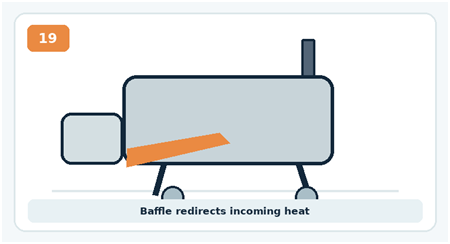
19. Heat Baffle Plate
A heat baffle redirects or shields heat entering the cooking chamber. Depending on the design, it can reduce direct radiant heat near the firebox and improve temperature distribution.
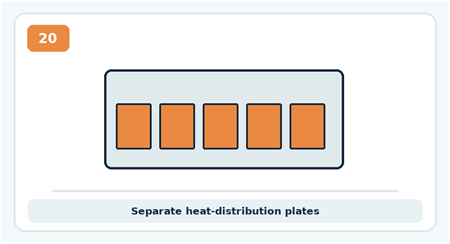
20. Tuning Plates
Tuning plates are adjustable or removable steel plates used in some offset smokers. Their spacing helps influence heat distribution along the cooking chamber. They are not standard equipment on every offset smoker.
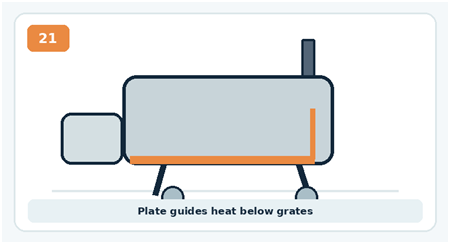
21. Reverse Flow Plate
A reverse flow plate directs hot gases beneath the cooking area before they travel back toward the exhaust. This creates a different heat path from that of a conventional offset smoker.
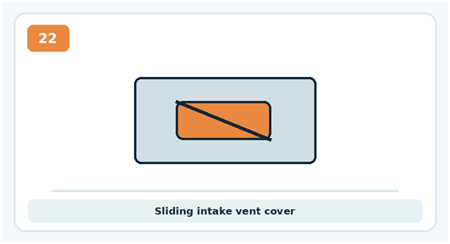
22. Firebox Air Vent Cover
Some fireboxes use a sliding, rotating, or hinged cover over the intake opening. This is the movable part of the intake assembly that allows the cook to adjust airflow.
What Parts Make a Pellet Smoker Work?
The parts of a pellet smoker include mechanical and electronic components that automatically deliver fuel, start combustion, and regulate temperature.
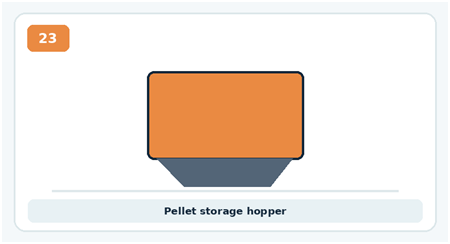
23. Pellet Hopper
The pellet hopper is a storage container for cooking-grade wood pellets. It is usually attached to the side of the grill. Its capacity determines how much fuel can be loaded before refilling.
24. Hopper Lid
The hopper lid covers stored pellets and helps protect them from debris and incidental moisture. It does not make the pellet supply completely weatherproof, so proper storage remains important.

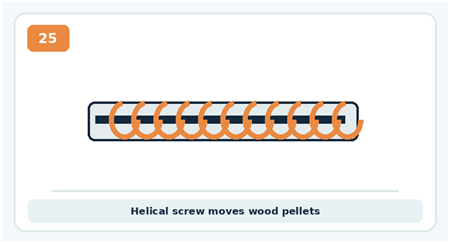
25. Auger
The auger is a rotating screw-shaped mechanism that transports pellets from the hopper toward the firepot. A blockage or jam can interrupt fuel delivery and cause temperature problems.
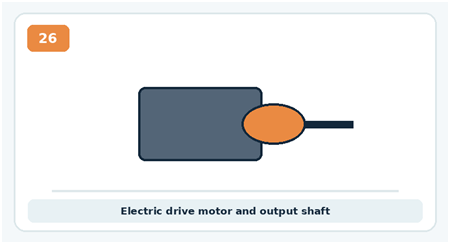
26. Auger Motor
The auger motor drives the pellet-feeding mechanism. The controller operates it according to the smoker’s design and temperature requirements. A failed motor may prevent pellets from reaching the firepot.
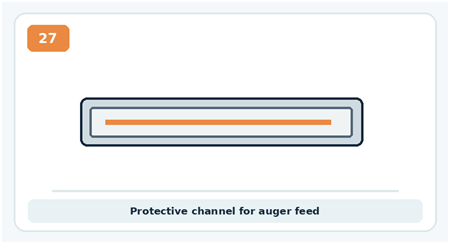
27. Auger Tube
The auger tube houses the rotating auger and guides pellets toward the combustion area. Pellet dust or moisture-damaged pellets may accumulate inside and cause feeding problems.
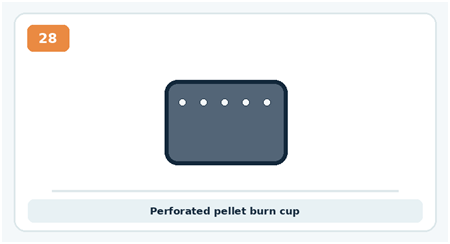
28. Firepot or Burn Pot
The firepot is a small metal combustion chamber where pellets burn. Openings in the firepot allow combustion air to enter. Excess ash can interfere with ignition and airflow.
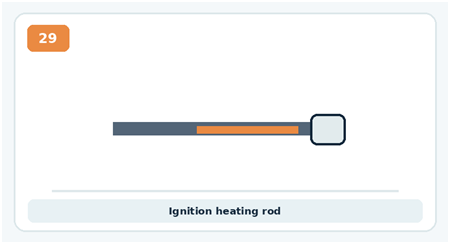
29. Hot Rod Igniter
The hot rod is an electrical heating element that starts pellet combustion during ignition. It is commonly positioned so that it extends into the firepot. Its exact design varies by manufacturer.
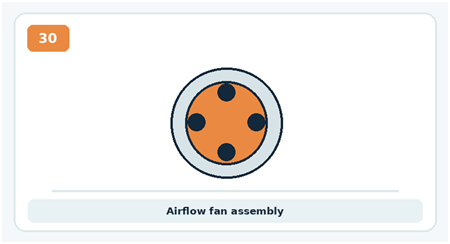
30. Combustion Fan
The combustion fan supplies air to support the burning pellets. On many pellet grills, it works alongside the controller and fuel-feeding system to maintain combustion.
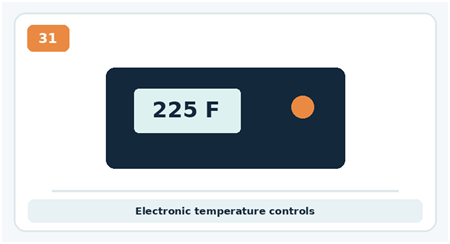
31. Digital Temperature Controller
The digital controller manages the smoker’s operating temperature. Depending on the model, it controls the auger, fan, and ignition system using temperature sensor feedback.
32. Internal Temperature Sensor
An RTD probe or thermocouple measures temperature inside compatible pellet smokers. The controller uses this reading to help regulate heat. A faulty sensor can produce inaccurate temperatures.
33. Pellet Grill Heat Diffuser
The heat diffuser sits above or near the firepot and helps spread heat throughout the cooking area. It also shields food from concentrated heat produced directly above the fire.
34. Pellet Hopper Cleanout Door
Some pellet grills include a hopper cleanout door or chute for removing unused pellets. This feature is convenient when changing pellet varieties or preparing the grill for storage.
Which Parts Are Common in Charcoal, Electric, and Gas Smokers?
These barbecue smoker parts appear in particular fuel-powered designs rather than across every type of smoker.
35. Charcoal Grate
The charcoal grate holds burning fuel above the bottom of a charcoal smoker. It supports airflow beneath the coals and helps separate accumulated ash from the main fuel bed.
36. Charcoal Ring
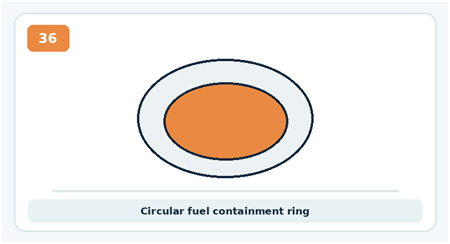
A charcoal ring is a circular metal enclosure used in some vertical charcoal smokers. It holds charcoal in a defined area and helps organize the fuel load.
37. Water Pan
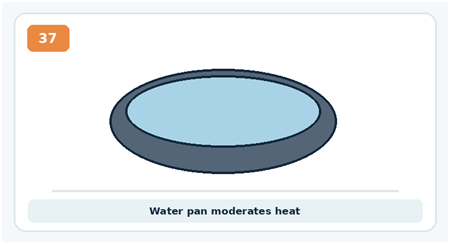
The water pan holds water inside compatible smokers. It provides thermal mass and can help moderate temperature changes. Water evaporation also adds moisture to the cooking environment, but it does not guarantee juicy meat.
38. Wood Chip Tray
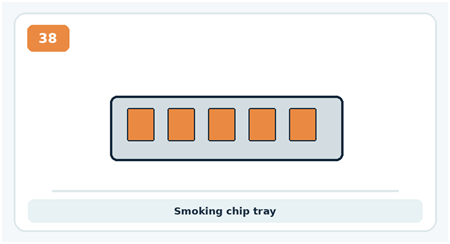
A wood chip tray is a designated container for smoking wood chips in some electric and gas smokers. It places the wood near a heat source so that smoke can develop during cooking.
39. Electric Heating Element
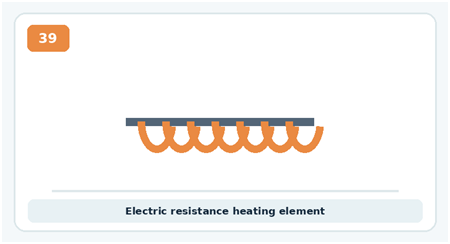
The electric heating element generates heat without burning wood or charcoal as the primary heat source. Some electric smokers use separate wood chips to provide smoke flavor.
40. Gas Burner
A gas burner provides heat in propane or natural-gas smoker designs. The burner may heat a wood chip box or other smoke-generating accessory. The fuel system must be maintained according to the manufacturer’s instructions.
41. Gas Regulator and Hose
The regulator controls gas supply pressure within the range required by the appliance, while the hose connects the fuel source to the smoker. Damaged or incompatible parts can create serious safety hazards.
Which Smoker Parts Help With Temperature, Grease, and Maintenance?
These components make the smoker easier to monitor, maintain, and operate safely.
42. Analog Temperature Gauge
An analog temperature gauge is commonly mounted on the lid or cooking chamber door. It gives a general indication of cooking temperature, although the reading may differ from the temperature directly beside the food.
43. Meat Probe Port
A probe port is an opening designed to let temperature probe wires enter the cooking chamber without being pinched by the lid. It may use a rubber or metal fitting.
44. Grease Drip Tray
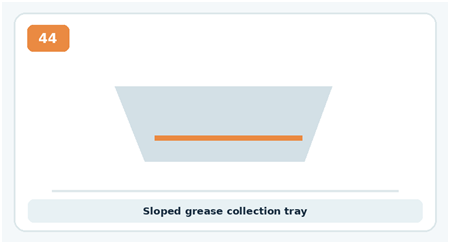
The grease drip tray catches or directs grease and cooking drippings away from certain hot components. Its design varies between pellet, electric, and cabinet smokers.
45. Grease Drain Tube
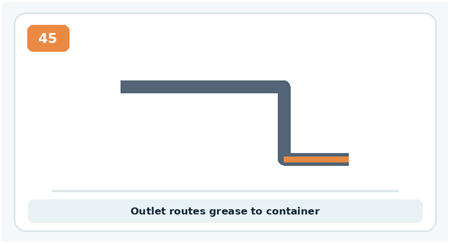
A grease drain tube or channel directs collected grease toward a removable container. Blockages can allow grease to accumulate and increase the risk of flare-ups.
46. Grease Bucket
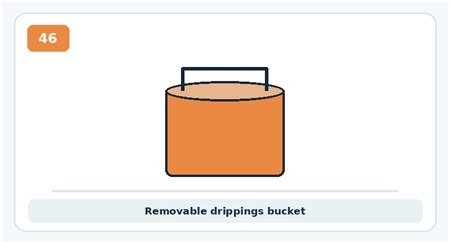
A grease bucket collects liquid grease and drippings routed out of the smoker. It should be emptied and cleaned regularly according to the manufacturer’s instructions.
47. Ash Collection Tray
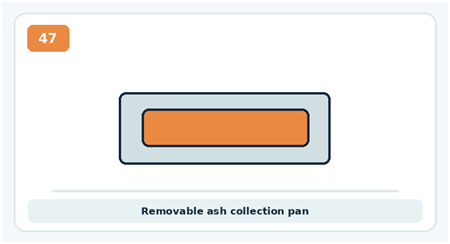
An ash collection tray catches ash from burning charcoal or wood in smokers equipped with one. Regular cleaning helps prevent airflow restrictions and excessive ash buildup.
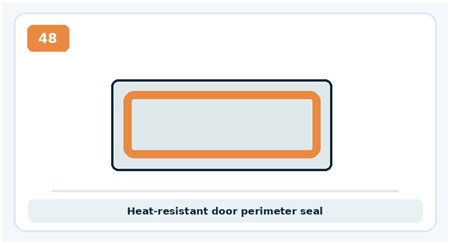
48. High-Temperature Door Gasket
A high-temperature gasket seals gaps around certain smoker doors or lids. It can reduce unwanted air leakage, although the correct material and fit depend on the smoker model.
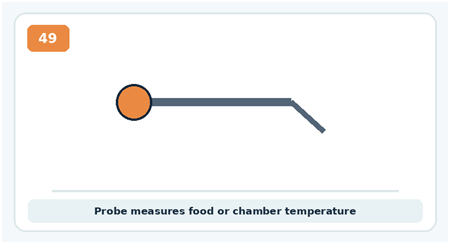
49. Smoker Thermometer Probe
A separate digital thermometer probe measures food temperature or grate-level air temperature, depending on the probe type and placement. It provides more useful cooking information than relying only on the lid gauge.
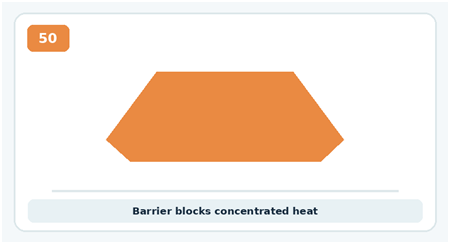
50. Smoker Heat Shield
A heat shield protects selected components or surfaces from excessive heat. Depending on the model, it may sit below the charcoal bowl, near a burner, or between the heat source and a vulnerable area.
How Do You Read a Smoker Diagram?
A smoker diagram shows where components sit and how they connect to one another. It is particularly useful when assembling a new smoker, finding replacement hardware, or identifying the cause of a heating problem.
A typical offset smoker diagram begins with the firebox on one side and the cooking chamber in the middle.
The firebox contains the burning fuel. Air enters through the intake damper, while heated gases move into the cooking chamber and eventually leave through the smokestack.
A reverse flow offset smoker uses a different route. The reverse flow plate directs hot gases beneath the cooking area before they return toward the exhaust.
Pellet smoker diagrams are more complicated because they show both mechanical parts and electrical connections.
You will normally see the hopper, auger, motor, firepot, fan, controller, and temperature sensor. The illustrated connections are important when identifying replacement parts.
Use the diagram supplied with your exact smoker model whenever possible. A general drawing should not be used to determine electrical wiring, repair procedures, or part compatibility.
What Is the Difference Between an Offset Smoker Diagram and a Pellet Smoker Diagram?
An offset smoker parts diagram mainly explains airflow, fuel placement, and the structure of the cooking chamber.
For example, the firebox contains the fire, while the smokestack provides an exhaust path. A heat baffle may help distribute heat along the chamber.
A pellet smoker diagram shows how automated components work together. Pellets move from the hopper through the auger into the firepot, where the igniter starts combustion.
The fan supplies combustion air, and the digital controller uses temperature feedback to adjust operation.
This difference is important when diagnosing faults. An offset smoker running too cold may have inadequate fuel or airflow. A pellet smoker may suffer from a jammed auger, failed igniter, sensor problem, or dirty firepot.
Which Smoker Parts Usually Need Replacement?
The parts most likely to need attention depend on the equipment and how frequently it is used.
Cooking grates may eventually require replacement because of corrosion, damaged coatings, or structural wear.
Lid gaskets can deteriorate after repeated exposure to heat. Thermometers may become inaccurate or stop working, while wheels and door handles can suffer mechanical damage.
For pellet smokers, motors, fans, igniters, and sensors are important service components. Their lifespan varies by model, operating conditions, and maintenance.
Grease trays and ash collection systems usually require cleaning rather than replacement unless they become damaged.
Before buying any replacement, check the model number, manufacturer’s part number, dimensions, and installation instructions.
A part that looks similar may not fit correctly or operate safely.
How Can You Identify a Damaged Smoker Component?
Start by identifying the symptom rather than replacing random parts.
If a charcoal or offset smoker cannot maintain heat, inspect the fuel, fire grate, air intake, and exhaust path. Accumulated ash and poor airflow are common causes of unstable combustion.
If a lid does not close correctly, inspect the hinges, latch, and gasket. Do not assume every small gap requires sealing because smoker designs differ.
If a pellet grill fails to ignite, possible causes include an empty hopper, pellet-feeding problem, dirty firepot, or damaged ignition component.
Unplug electrical smokers before permitted maintenance, allow them to cool completely, and follow the manufacturer’s troubleshooting instructions.
Do not bypass safety devices or attempt internal gas repairs without appropriate professional assistance.
Which Smoker Parts and Accessories Should Beginners Understand First?
Beginners do not need to memorize every component before preparing their first barbecue meal.
Focus on the cooking chamber, heat source, airflow controls, cooking grates, temperature measurement system, and grease collection area.
For an offset smoker, understand how to build and maintain a steady fire before experimenting with tuning plates or other modifications.
For a pellet smoker, learn how the hopper, controller, and firepot operate together. Regular cleaning and correct pellet storage are essential.
A reliable food thermometer is also valuable because the temperature displayed on the smoker does not tell you whether meat has reached its required internal temperature.
Understanding these basic systems makes it easier to follow cooking instructions and recognize equipment problems.
FAQs
What Are the Most Important Parts of a Smoker?
The most important parts are the cooking chamber, heat source, cooking grates, airflow system, and temperature monitoring equipment. Some smokers also use electronic controls, water pans, and dedicated grease management components.
What Are the Main Parts of an Offset Smoker?
The main parts of an offset smoker are the firebox, cooking chamber, smokestack, intake damper, cooking grates, and fire grate. Some models also include heat baffles, tuning plates, or reverse flow systems.
What Are the Parts of a Pellet Smoker?
Common pellet smoker parts include the pellet hopper, auger, auger motor, firepot, igniter, combustion fan, temperature sensor, and digital controller. These components work together to automate fuel delivery and temperature control.
Are BBQ Grill Parts and Smoker Parts the Same?
Some parts are shared, including cooking grates, lids, handles, burners, and thermometers. However, smokers often include specialized equipment for smoke production, indirect heat management, or automated pellet feeding.
How Do I Find the Correct Replacement Smoker Parts?
Locate your smoker’s brand, model number, and serial number. Then compare the component against the manufacturer’s official parts diagram and replacement list. Avoid choosing parts based only on appearance.
Can I Replace Smoker Parts Myself?
Some parts, such as removable grates and approved handles, are relatively straightforward to replace. Electrical, gas, ignition, and safety-related components may require qualified service. Always follow the manufacturer’s instructions.
Why Is My Offset Smoker Not Holding Temperature?
Possible causes include insufficient fuel, wet wood, restricted airflow, excessive ash, or unsuitable fire management. Inspect the fuel and air path before considering modifications.
Where Can I Find a Smoker Parts Diagram?
The most reliable source is the owner’s manual or parts diagram for your exact smoker model. Manufacturers such as Weber, Traeger, and Oklahoma Joe’s provide documentation for many of their models.
References
- Oklahoma Joe’s. Highland Reverse Flow Offset Smoker Instruction Manual. Parts diagrams and assembly information for fireboxes, smokestacks, dampers, baffles, and cooking chambers.
- Traeger. Pellet Grill Owner’s Manuals and Support Guides. Pellet hopper, auger, motor, firepot, igniter, fan, and controller identification.
- Weber. Smokey Mountain Cooker Owner’s Guide. Parts identification for cooking grates, charcoal grates, water pans, bowl vents, and smoker body sections.
- Masterbuilt. Official Replacement Parts Catalog. Examples of electric smoker components, wood chip containers, and water bowls.