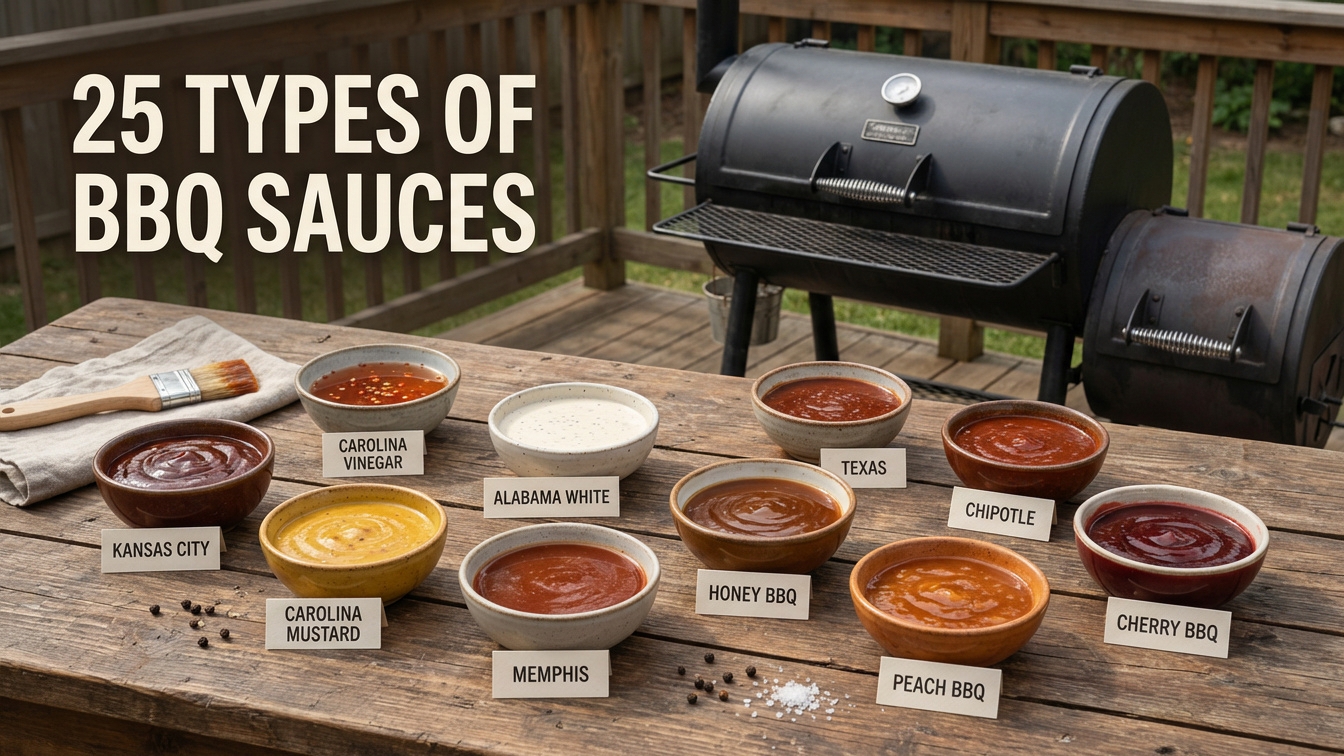


Barbecue sauce can change an entire meal. A thick, sweet sauce gives grilled chicken a sticky coating, while a sharp vinegar sauce cuts through the richness of slow-smoked meat. Some sauces taste smoky and peppery. Others are mustard-based, creamy, spicy, or made with fruit.
The different types of BBQ sauces found across the United States reflect local cooking traditions, available ingredients, and personal taste. Kansas City is known for rich tomato-based sauces, South Carolina has its famous mustard sauce, and northern Alabama serves a white sauce that looks nothing like the usual bottled barbecue sauce.
But regional traditions are only part of the story. Honey, chipotle, peach, pineapple, and other ingredients have introduced plenty of new flavors to backyard cooking.
This guide covers 25 BBQ sauce names, their origins or influences, main ingredients, flavors, and ideal food pairings. The first section explores established American barbecue traditions, followed by modern sauce varieties you can make or use at home.
What Are the Main Types of BBQ Sauces?
Most American BBQ sauces fall into four broad families: tomato-based, vinegar-based, mustard-based, and mayonnaise-based sauces.
Tomato sauces usually have a thick consistency and a sweet, tangy flavor. Vinegar sauces are thinner and sharper. Mustard sauces have a distinctive yellow color and peppery tang, while mayonnaise sauces offer a creamy alternative.
There are also different styles of BBQ sauce made with fruit, honey, peppers, coffee, and other ingredients.
The following list separates regional barbecue sauces from flavored variations, making it easier to understand what makes each style different.
Which Regional BBQ Sauces Are Popular Across America?
Regional BBQ sauces tell the story of American barbecue better than almost any other condiment. Some recipes have been passed down through generations, while others developed around restaurants and local cooking traditions.
1. What Is Kansas City-Style BBQ Sauce?
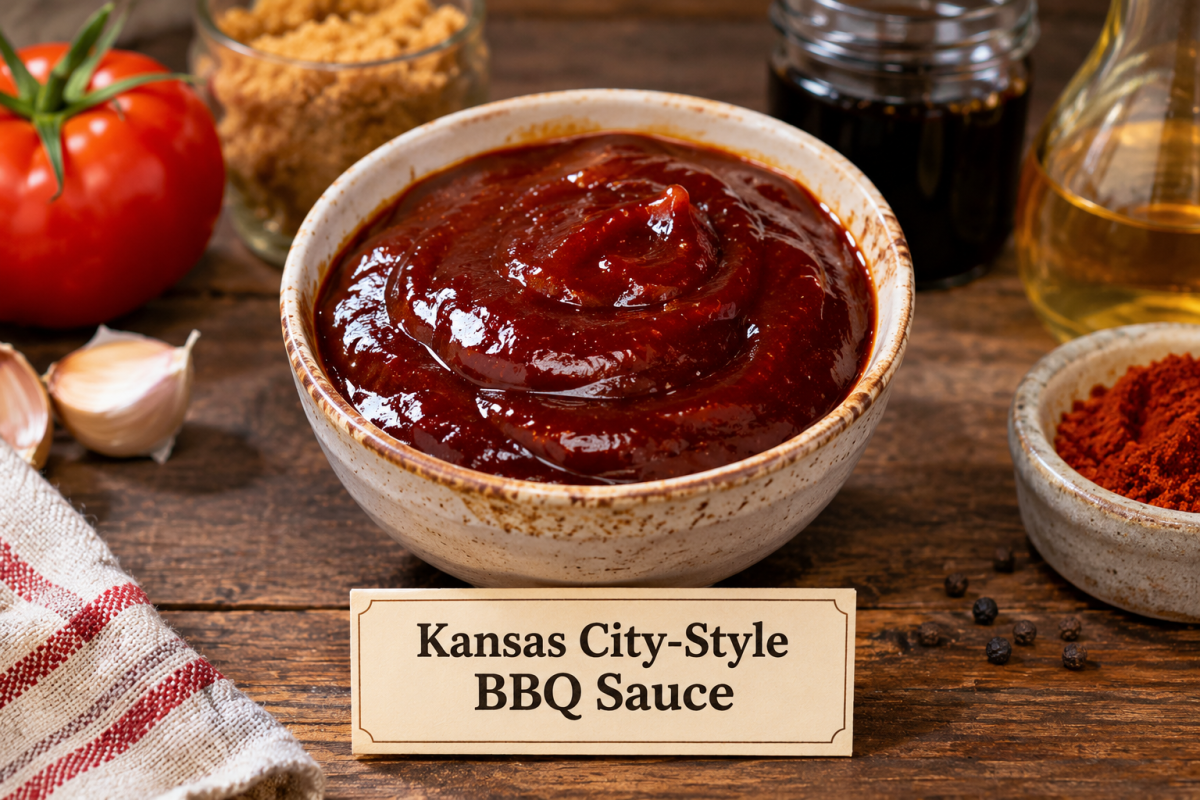
Kansas City BBQ sauce is a thick, tomato-based sauce known for its rich sweetness and dark red color.
Origin: Kansas City, Missouri.
Flavor: Sweet, tangy, smoky, and mildly spiced.
Main ingredients: Tomato ketchup, molasses, brown sugar, vinegar, paprika, and garlic.
Best with: Beef ribs, smoked brisket, grilled chicken, and beef burgers.
Its thick consistency makes it useful for brushing onto meat near the end of cooking. Since the sauce contains sugar, applying it too early over direct heat can cause burning.
Kansas City is one of the best-known American BBQ sauce traditions, although local restaurants serve many different versions.
2. What Is Eastern North Carolina Vinegar BBQ Sauce?
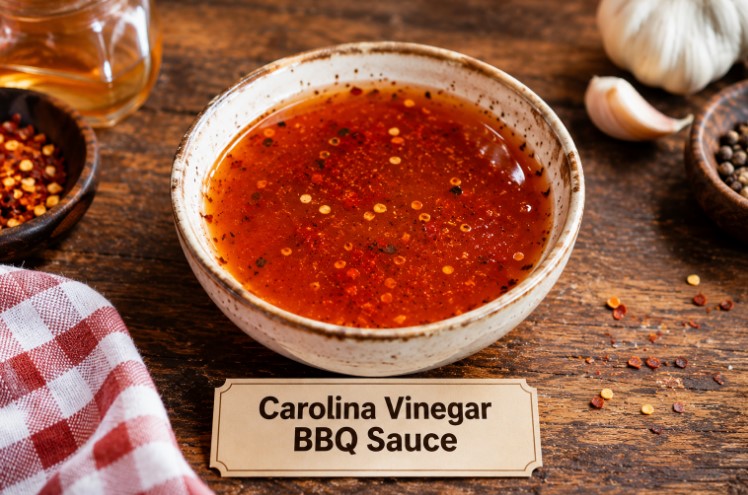
Eastern North Carolina vinegar sauce is thin, tangy, and peppery, with little or no sweetness.
Origin: Eastern North Carolina.
Flavor: Sharp, acidic, and mildly hot.
Main ingredients: Apple cider vinegar, crushed red pepper, black pepper, salt, and sometimes sugar.
Best with: Smoked chicken, shredded beef, and grilled turkey.
The traditional sauce developed alongside whole-hog barbecue, but its vinegar-forward flavor also works with other meats.
Unlike thick tomato sauces, it soaks easily into shredded meat and adds acidity without leaving a sticky coating.
3. What Makes Lexington-Style BBQ Sauce Different?
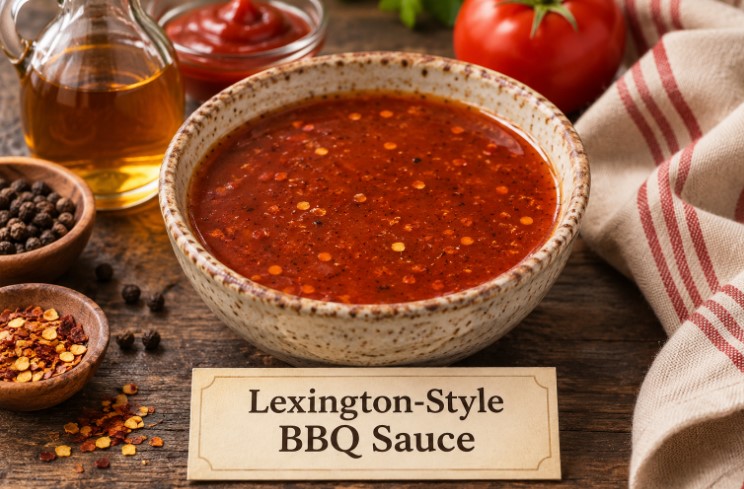
Lexington-style sauce combines the sharpness of vinegar with a small amount of tomato.
Origin: Lexington and the Piedmont region of North Carolina.
Flavor: Tangy, peppery, and lightly sweet.
Main ingredients: Vinegar, ketchup, red pepper, black pepper, and sugar.
Best with: Smoked chicken, shredded beef sandwiches, and grilled vegetables.
Also called Piedmont dip, this sauce is traditionally associated with chopped or sliced pork shoulder.
Its reddish color comes from tomato ingredients, but the sauce remains noticeably thinner than Kansas City-style barbecue sauce.
4. Why Is South Carolina Mustard BBQ Sauce Yellow?
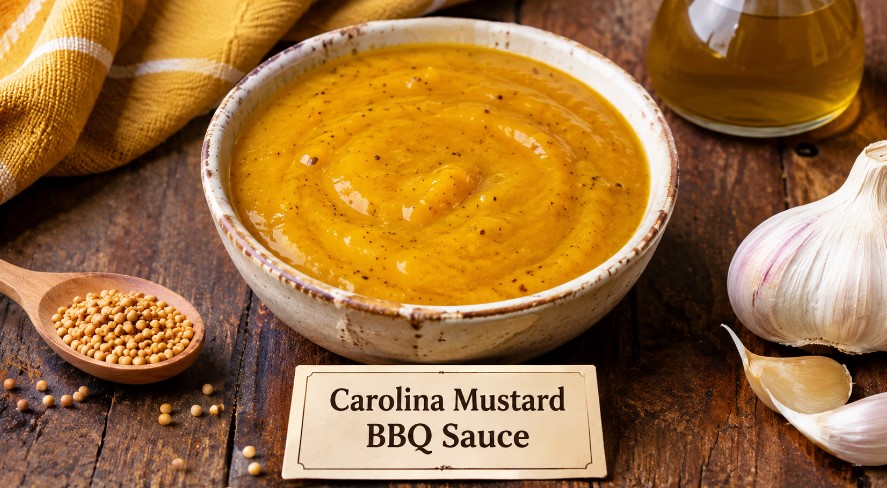
South Carolina mustard BBQ sauce gets its bright yellow color from prepared mustard.
Origin: Central South Carolina.
Flavor: Tangy, savory, slightly sweet, and peppery.
Main ingredients: Yellow mustard, vinegar, brown sugar, black pepper, and garlic.
Best with: Grilled chicken, smoked turkey, beef sandwiches, and roasted vegetables.
Often called Carolina Gold, this style is associated with the mustard traditions of South Carolina’s Midlands.
Its sharp flavor works especially well when the meat has a rich seasoning crust.
5. What Is South Carolina Light Tomato BBQ Sauce?
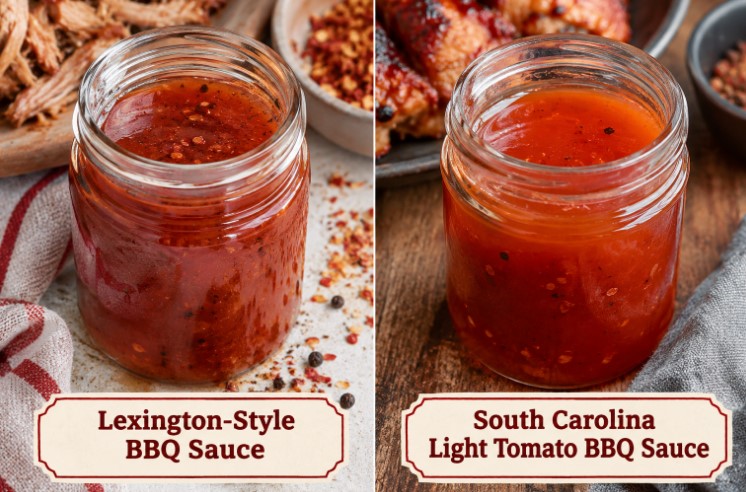
South Carolina light tomato sauce is a thin, vinegar-forward barbecue sauce containing a modest amount of tomato.
Origin: Parts of South Carolina, including the Pee Dee region.
Flavor: Sharp, lightly sweet, and peppery.
Main ingredients: Vinegar, ketchup, red pepper flakes, black pepper, and salt.
Best with: Smoked chicken, grilled beef, and shredded turkey.
It provides a middle ground between a nearly clear vinegar sauce and a thicker red barbecue sauce.
The relatively thin consistency makes it useful for serving over chopped or shredded food.
6. How Does South Carolina Heavy Tomato Sauce Taste?
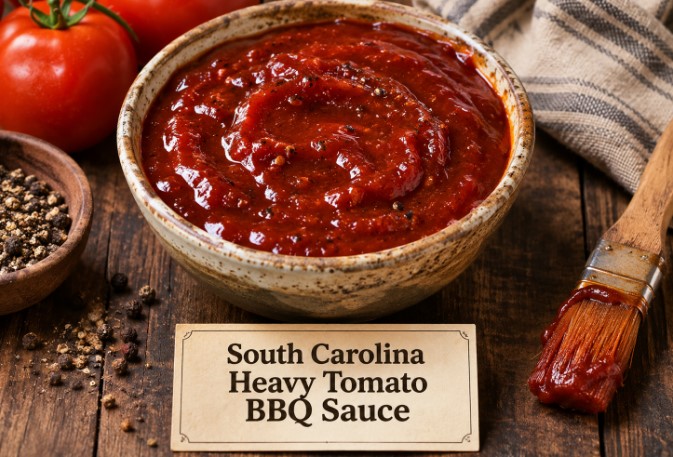
South Carolina heavy tomato sauce has a richer tomato presence than the state’s light tomato varieties.
Origin: Western and northwestern South Carolina traditions.
Flavor: Tomato-rich, tangy, mildly sweet, and savory.
Main ingredients: Ketchup, vinegar, sugar, black pepper, and spices.
Best with: Beef ribs, grilled chicken, smoked meat sandwiches, and burgers.
The thicker consistency helps it cling to grilled food. Some recipes lean sweeter, while others emphasize vinegar and pepper.
It is a useful choice for people who enjoy tomato-based barbecue sauce but want more acidity than a typical sweet bottled sauce.
7. What Is Memphis-Style BBQ Sauce?
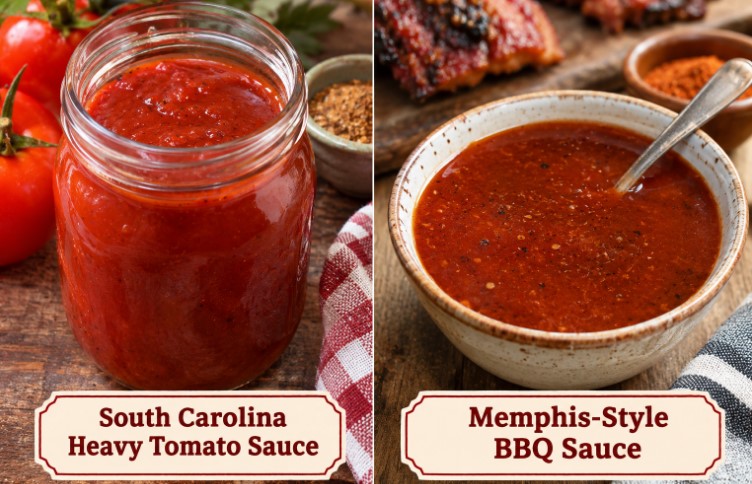
Memphis BBQ sauce is commonly a relatively thin tomato-based sauce with a lively balance of sweetness and vinegar.
Origin: Memphis, Tennessee.
Flavor: Tangy, savory, lightly sweet, and peppery.
Main ingredients: Tomato sauce, vinegar, brown sugar, mustard, garlic, and spices.
Best with: Beef ribs, smoked chicken, and barbecue sandwiches.
Memphis is also famous for dry-rubbed barbecue, so not every local preparation uses sauce.
When sauce is served, it often complements the seasoning rather than covering the meat with a thick sugary layer.
8. What Makes St. Louis BBQ Sauce Unique?
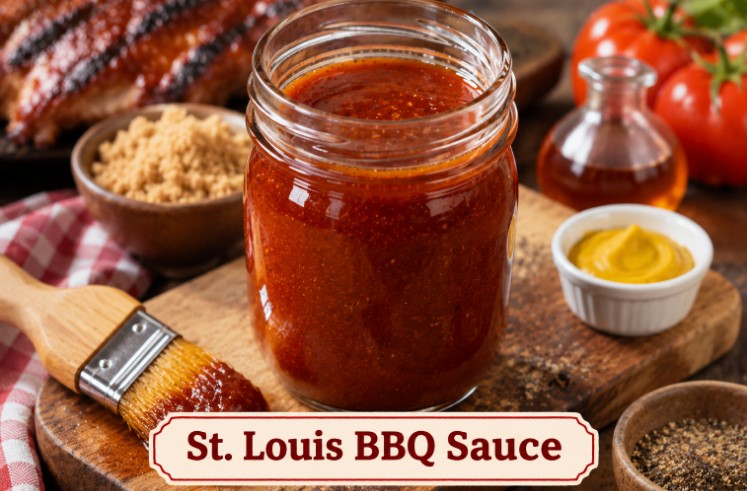
St. Louis BBQ sauce is a tomato-based style that often balances sweetness with a noticeable vinegar tang.
Origin: St. Louis, Missouri.
Flavor: Sweet, tangy, tomato-rich, and mildly spiced.
Main ingredients: Ketchup, vinegar, brown sugar, mustard, and spices.
Best with: Beef ribs, grilled chicken, and beef burgers.
St. Louis restaurants have their own recipes, so there is no single required formula.
Compared with some Kansas City sauces, St. Louis variations can be thinner and more acidic, making them suitable for brushing onto grilled foods.
9. What Is Texas-Style Mop Sauce?
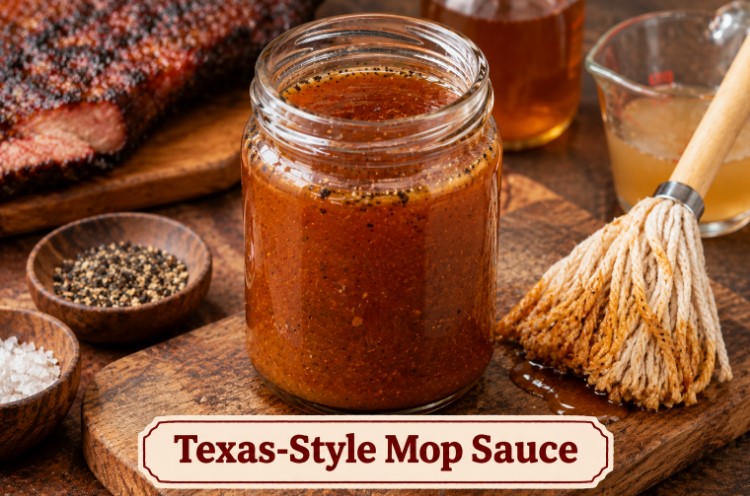
Texas mop sauce is a thin liquid used to baste meat during certain barbecue cooking methods.
Origin: Texas barbecue traditions.
Flavor: Peppery, savory, and tangy.
Main ingredients: Stock, vinegar, black pepper, garlic, and spices.
Best with: Beef brisket, beef ribs, and chuck roast.
A mop sauce is different from a thick finishing glaze. It is designed to spread easily across the meat’s surface.
Not every Texas pitmaster uses a mop, and many prefer little or no sauce. It remains one recognizable approach within the state’s varied barbecue traditions.
10. What Is Texas-Style Spicy Tomato BBQ Sauce?
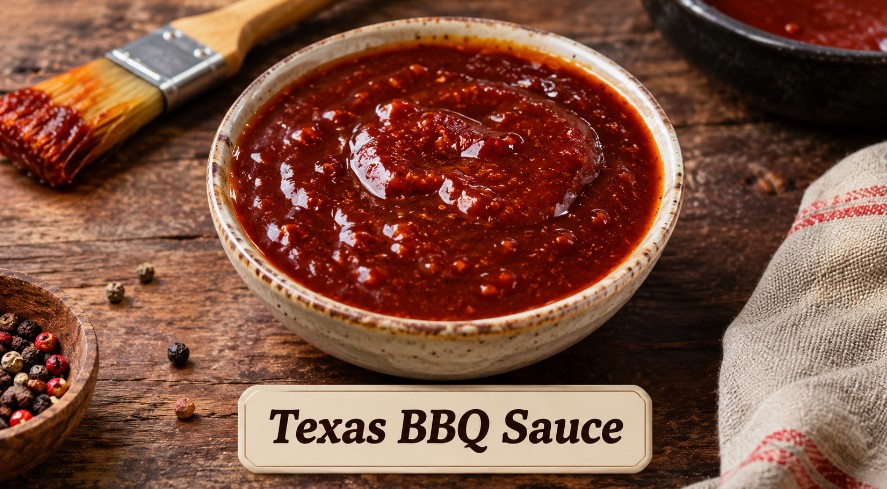
Texas-style spicy tomato sauce emphasizes pepper, savory seasoning, and acidity rather than heavy sweetness.
Origin: Texas-inspired barbecue kitchens.
Flavor: Spicy, tangy, savory, and lightly smoky.
Main ingredients: Tomato paste, vinegar, black pepper, chili powder, cumin, and garlic.
Best with: Smoked brisket, grilled steaks, and beef ribs.
Texas barbecue is highly varied, and this sauce is only one popular interpretation.
A pepper-forward tomato sauce works well alongside smoked beef because it adds moisture and seasoning without requiring a thick sugary coating.
11. Why Is Alabama White BBQ Sauce Made With Mayonnaise?
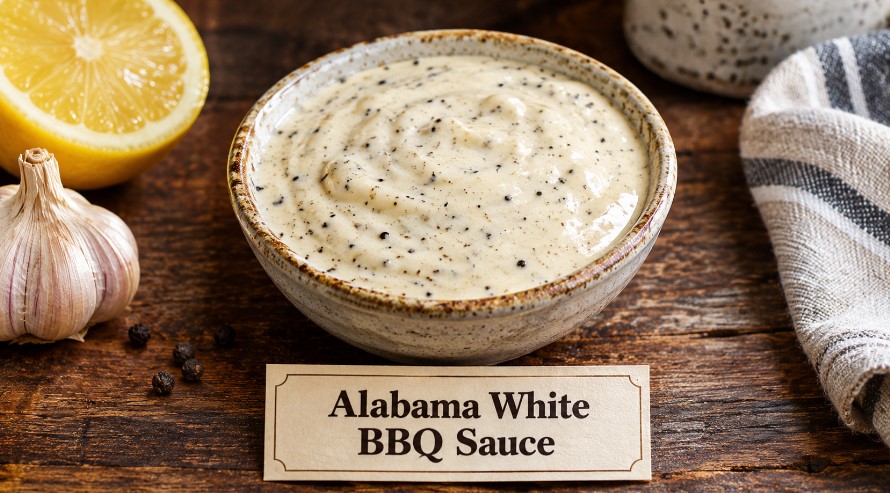
Alabama white BBQ sauce is a creamy, tangy sauce traditionally associated with smoked chicken.
Origin: Decatur, Alabama, particularly Big Bob Gibson Bar-B-Q.
Flavor: Creamy, acidic, peppery, and mildly sharp.
Main ingredients: Mayonnaise, vinegar, lemon juice, black pepper, and optional horseradish.
Best with: Smoked chicken, turkey breast, and grilled vegetables.
Unlike red barbecue sauces, Alabama white sauce is usually served as a dipping or finishing sauce.
Use clean utensils and keep the sauce refrigerated. Do not return sauce that has touched raw poultry to the serving bowl.
12. What Is Kentucky Black BBQ Dip?
Kentucky black dip is a thin, dark, strongly seasoned sauce traditionally associated with western Kentucky barbecue.
Origin: Owensboro and western Kentucky.
Flavor: Savory, tangy, peppery, and complex.
Main ingredients: Vinegar, black pepper, allspice, and Worcestershire-style seasoning.
Best with: Smoked lamb, grilled beef, and beef sandwiches.
Traditional black dip is associated with mutton barbecue. For a version without animal-derived ingredients in the sauce, choose an anchovy-free Worcestershire alternative.
This sauce is less sweet than many familiar bottled barbecue sauces, making it appealing to those who prefer strong savory flavors.
13. What Is Georgia Peach BBQ Sauce?
Georgia peach BBQ sauce is a fruit-based variation associated with Georgia’s peach-growing reputation.
Origin: Georgia-inspired barbecue cooking.
Flavor: Fruity, sweet, tangy, and mildly spicy.
Main ingredients: Peach puree, tomato sauce, vinegar, brown sugar, and chili flakes.
Best with: Grilled chicken, turkey, beef burgers, and roasted vegetables.
The peach puree contributes natural fruit flavor and a smooth texture.
It is particularly useful as a finishing glaze, although its sugar content means it should be applied carefully over high heat.
Which Internationally Influenced BBQ Sauces Are Worth Trying?
Not all popular barbecue sauces come from traditional mainland American regional styles. Hawaii and international grilling traditions have introduced flavorful sauces that are now common at American cookouts.
14. What Is Hawaiian Huli Huli Sauce?
Huli huli sauce is a sweet and savory Hawaiian grilling sauce closely associated with chicken.
Origin: Hawaii.
Flavor: Sweet, salty, gingery, and slightly tangy.
Main ingredients: Soy sauce, pineapple juice, ginger, garlic, brown sugar, and vinegar.
Best with: Grilled chicken, turkey skewers, and vegetables.
Huli huli chicken became popular through Hawaiian rotisserie-style cooking.
For an alcohol-free version, use vinegar and pineapple juice rather than cooking wine or mirin. Brush the sauce on during the later stages of grilling to reduce burning.
15. What Is Korean Gochujang BBQ Sauce?
Gochujang BBQ sauce is a sweet, spicy, and savory glaze inspired by Korean cooking.
Origin: Korean culinary traditions, adapted for barbecue sauces.
Flavor: Spicy, mildly sweet, fermented, and deeply savory.
Main ingredients: Gochujang chili paste, soy sauce, garlic, ginger, sesame oil, and honey.
Best with: Grilled beef, chicken skewers, turkey, and mushrooms.
Gochujang provides a distinctive fermented chili flavor that differs from typical American hot sauces.
Check the ingredient list when buying prepared sauces, particularly if avoiding alcohol-containing additives or animal-derived ingredients.
What Other BBQ Sauce Flavors Can You Try?
The following sauces are modern flavor variations rather than separate historical regional traditions. They provide useful choices when you want a different sweetness, spice level, or ingredient profile.
16. Why Is Honey BBQ Sauce So Popular?
Honey BBQ sauce combines familiar tomato-based barbecue flavors with the floral sweetness of honey.
Origin: Modern American barbecue cooking.
Flavor: Sweet, smooth, and mildly tangy.
Main ingredients: Honey, ketchup, vinegar, garlic, and paprika.
Best with: Chicken wings, grilled turkey, beef burgers, and roasted carrots.
Honey creates a glossy finish and adds sweetness without relying entirely on brown sugar.
Apply it toward the end of cooking because its sugars can darken quickly over direct heat.
17. What Is Molasses BBQ Sauce?
Molasses BBQ sauce is a dark, rich variation that emphasizes deep caramel-like sweetness.
Origin: American tomato-based barbecue traditions.
Flavor: Sweet, robust, slightly bitter, and smoky.
Main ingredients: Molasses, tomato paste, vinegar, mustard, and black pepper.
Best with: Beef ribs, smoked brisket, and chuck roast.
Molasses has a stronger flavor than ordinary white sugar, so a small amount can noticeably change the sauce.
Blackstrap molasses is particularly intense and may require extra sweetness or acidity to maintain balance.
18. What Makes Chipotle BBQ Sauce Smoky?
Chipotle BBQ sauce gets its signature smoky heat from dried, smoked jalapeño peppers.
Origin: Mexican-inspired American barbecue cooking.
Flavor: Smoky, earthy, moderately spicy, and tangy.
Main ingredients: Chipotle peppers, tomato sauce, vinegar, garlic, and brown sugar.
Best with: Beef burgers, smoked chicken, brisket, and grilled corn.
Chipotle creates a smoky flavor even when the meat is cooked on a gas grill.
Add the peppers gradually because canned chipotle products can vary in heat and seasoning.
19. How Hot Is Habanero BBQ Sauce?
Habanero BBQ sauce is a spicy variation made with one of the hotter commonly available chili peppers.
Origin: Chili-based barbecue sauce variations.
Flavor: Hot, fruity, tangy, and sometimes sweet.
Main ingredients: Habanero peppers, vinegar, tomato sauce, garlic, and sugar.
Best with: Chicken wings, beef skewers, grilled vegetables, and burgers.
Habaneros can be significantly hotter than jalapeños.
Use gloves when handling large quantities, avoid touching your eyes, and begin with a small amount if serving guests who are unfamiliar with spicy food.
20. What Is Roasted Garlic BBQ Sauce?
Roasted garlic BBQ sauce adds a mellow, savory garlic flavor to a tomato or vinegar-based sauce.
Origin: Contemporary barbecue recipes.
Flavor: Savory, lightly sweet, and aromatic.
Main ingredients: Roasted garlic, tomato sauce, vinegar, onion, and smoked paprika.
Best with: Grilled beef, chicken thighs, mushrooms, and roasted potatoes.
Roasting softens garlic’s sharpness and gives it a sweeter, deeper flavor.
This sauce is useful when you want more savory character without significantly increasing the heat level.
21. Why Do Some BBQ Sauces Contain Coffee?
Coffee BBQ sauce uses brewed coffee or espresso to add roasted, slightly bitter notes to a rich sauce.
Origin: Modern barbecue cooking.
Flavor: Deep, roasted, savory, and mildly bittersweet.
Main ingredients: Brewed coffee, tomato paste, molasses, vinegar, and black pepper.
Best with: Beef brisket, chuck roast, and grilled steaks.
Coffee is particularly well suited to strongly flavored beef.
It should contribute depth rather than make the sauce taste like a sweet coffee drink. A small quantity is usually enough to begin experimenting.
22. What Does Maple BBQ Sauce Taste Like?
Maple BBQ sauce uses pure maple syrup to provide a distinctive sweetness.
Origin: North American maple-inspired cooking.
Flavor: Sweet, earthy, smooth, and mildly smoky.
Main ingredients: Maple syrup, tomato sauce, vinegar, garlic, and smoked paprika.
Best with: Chicken, turkey, beef ribs, and roasted sweet potatoes.
Pure maple syrup offers a different flavor from ordinary sugar-based sauces.
Because the sauce contains sugar, add it late in grilling or serve it alongside the finished food.
23. What Is Pineapple BBQ Sauce?
Pineapple BBQ sauce combines fruit sweetness with the tang of pineapple juice.
Origin: Tropical-inspired barbecue cooking.
Flavor: Fruity, sweet, acidic, and lightly spicy.
Main ingredients: Pineapple juice or puree, tomato sauce, vinegar, ginger, and chili flakes.
Best with: Chicken skewers, turkey, grilled shrimp, and vegetables.
Pineapple gives the sauce a bright flavor that works well with grilled foods.
For a thicker glaze, simmer the mixture until it reaches the desired consistency rather than adding large amounts of sugar.
24. Why Use Cherry BBQ Sauce?
Cherry BBQ sauce combines the sweet-tart flavor of cherries with a savory barbecue base.
Origin: Contemporary fruit-based barbecue recipes.
Flavor: Fruity, tangy, rich, and slightly sweet.
Main ingredients: Cherries, tomato paste, vinegar, black pepper, and brown sugar.
Best with: Smoked beef, chicken, turkey, and grilled vegetables.
Dark cherries can give the finished sauce an attractive deep red color.
Use unsweetened cherries when possible so you can control the final sweetness. Frozen cherries work well after thawing and cooking.
25. What Is Tamarind BBQ Sauce?
Tamarind BBQ sauce is a tangy variation built around the distinctive sourness of tamarind fruit.
Origin: South Asian-inspired and fusion barbecue cooking.
Flavor: Sour, sweet, savory, and mildly spicy.
Main ingredients: Tamarind pulp, brown sugar, tomato paste, cumin, and chili powder.
Best with: Grilled chicken, beef kebabs, lamb, and roasted vegetables.
Tamarind supplies a sharp fruit acidity that differs from ordinary vinegar.
Balance it with sweetness gradually because concentrated tamarind products can be particularly sour.
How Do Different Types of BBQ Sauce Compare?
The easiest way to compare BBQ sauce varieties is by their base ingredient and dominant flavor.
| Sauce family | Examples | Main flavor | Best use |
|---|---|---|---|
| Tomato-based | Kansas City, St. Louis | Sweet and tangy | Grilled chicken, beef ribs |
| Vinegar-based | Eastern Carolina, Lexington | Sharp and peppery | Shredded meat, finishing |
| Mustard-based | Carolina Gold | Tangy and savory | Chicken, turkey |
| Mayonnaise-based | Alabama White | Creamy and acidic | Smoked poultry |
| Savory mop sauces | Texas mop, Kentucky black dip | Peppery and tangy | Basting, dipping |
| Fruit-based | Peach, pineapple, cherry | Sweet and fruity | Glazing, dipping |
| Chili-based | Chipotle, habanero, gochujang | Smoky or spicy | Wings, skewers |
| Rich sweet sauces | Honey, maple, molasses | Sweet and robust | Finishing glazes |
These categories overlap. A sauce can contain tomato, vinegar, fruit, and chili at the same time.
How Should You Choose the Best BBQ Sauce for Different Foods?
The best sauce depends on whether the food needs sweetness, acidity, heat, or extra richness.
For smoked brisket, start with a peppery Texas-style sauce or a light tomato sauce. Rich beef already has considerable flavor, so a heavy sweet glaze is not always necessary.
For grilled chicken, honey, apple-inspired fruit sauces, Alabama white sauce, and Carolina Gold are useful choices. Each produces a different result without changing the cooking method.
Beef ribs work with thicker sauces such as Kansas City, molasses, or cherry BBQ sauce. Their richness can handle a more pronounced sauce.
Grilled vegetables often benefit from acidity. Mustard sauce, tamarind sauce, and lighter vinegar sauces can complement the natural sweetness of roasted vegetables.
For guests with different preferences, serve two or three sauces separately rather than coating every portion with the same one. For additional cooking context, explore the Smoking Woods Directory to match smoke intensity with your sauce selection.
When Should You Add BBQ Sauce During Cooking?
Thin, low-sugar sauces can sometimes be used for basting, while thick sugary sauces are usually better added near the end of grilling.
Over direct heat, sugar can scorch and leave a bitter taste.
When smoking meat at lower temperatures, a glaze may be added during the finishing stage once the surface has developed its color and bark. See the BBQ Smoker Accessories Directory for useful grilling and basting tools.
Keep sauce used on raw meat separate from the sauce intended for serving. Do not reuse contaminated marinade unless it has been properly boiled according to food safety guidance.
Refrigerate homemade sauces promptly. A sauce containing mayonnaise or fresh fruit needs particular attention to storage and handling.
FAQs
1. How Many Types of BBQ Sauce Are There?
There is no universally agreed number of BBQ sauce types. American barbecue has several established regional styles, including Kansas City, Carolina, Memphis, Texas, and Alabama sauces. Fruit-based, spicy, and internationally influenced variations add many more options.
2. What Are the Four Main Types of BBQ Sauce?
The four broad families are tomato-based, vinegar-based, mustard-based, and mayonnaise-based sauces. Each can have regional variations with different levels of sweetness, heat, and acidity.
3. What Is the Most Popular Type of BBQ Sauce in America?
Sweet tomato-based BBQ sauce is one of the most widely recognized American styles, particularly the Kansas City-inspired varieties found in grocery stores. Preferences vary by region, so no single style is everyone’s favorite.
4. What Is the Difference Between Kansas City and Carolina BBQ Sauce?
Kansas City sauce is commonly thick, sweet, and tomato-based. Carolina sauces vary by region but often emphasize vinegar or mustard. This makes many Carolina styles thinner and more acidic than typical Kansas City sauces.
5. Which BBQ Sauce Is Best for Chicken?
Alabama white sauce, honey BBQ sauce, Carolina mustard sauce, and fruity sauces are all good choices for chicken. The best option depends on whether you prefer creamy, sweet, tangy, or spicy flavors.
6. Which BBQ Sauce Goes Best With Brisket?
A pepper-forward Texas-style tomato sauce or a light vinegar-based sauce pairs well with smoked brisket. Some people prefer serving brisket without sauce so the beef, bark, and smoke remain the main flavors.
7. What Is the Difference Between BBQ Sauce and a BBQ Mop?
BBQ sauce commonly refers to a condiment or finishing glaze. A mop is usually a thinner liquid applied during cooking to add seasoning and surface moisture. Not every barbecue method requires mopping.
8. Can You Mix Different BBQ Sauces?
Yes. Mixing sauces can help adjust sweetness, acidity, or heat. For example, adding vinegar sauce to a sweet tomato sauce can reduce its perceived sweetness and create a sharper flavor.
9. Which BBQ Sauces Are Best for Beginners?
Kansas City-style, honey, and mild tomato-based sauces are easy starting points because their flavors are familiar. Carolina mustard and Alabama white sauce are good choices when you want to explore something different.
References
Eater. Regional Barbecue Sauce Styles, Explained.
An overview of major American regional barbecue traditions and their characteristic sauces.
https://www.eater.com/2016/6/18/11966056/barbecue-sauce-styles
Bon Appétit. Mapping a Barbecue Sauce Trail Through the Carolinas.
Explains the differences between Eastern North Carolina, Lexington, and South Carolina barbecue traditions.
https://www.bonappetit.com/story/carolina-barbecue-sauce-trail
AmazingRibs. Benchmark Barbecue Sauces and How to Make Them.
Examines established sauce categories and their ingredient profiles.
https://amazingribs.com/tested-recipes/barbecue-sauce-recipes/benchmark-barbecue-sauces/