Habanero BBQ Sauce
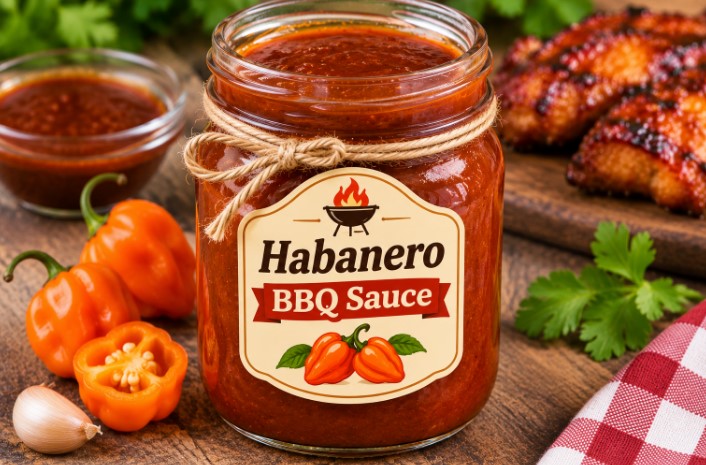
Habanero BBQ sauce is a spicy tomato-based condiment with the fruity aroma and intense heat of habanero peppers. A small quantity of fresh pepper can transform an ordinary barbecue glaze into a noticeably hot sauce. It pairs well with grilled chicken, beef and seafood, especially when served in a separate bowl so diners can choose how much heat they want.
Control the pepper before you start cooking
Habaneros are much hotter than typical jalapeños, although individual peppers vary. Their fruity character makes them especially useful in modern barbecue sauces. This is not a single historic regional recipe. It is a contemporary combination of chili pepper and a sweet, acidic barbecue base.
Wear disposable food-safe gloves when cutting the peppers, keep your hands away from your eyes, and wash the knife, cutting board and hands afterward. Removing the pale internal ribs can reduce some heat, but the remaining flesh is still hot. Avoid leaning over a pan of simmering chili sauce and ventilate the kitchen. Do not taste a large piece of pepper to judge its strength.
Start with a quarter of a small pepper if you are uncertain about your tolerance. Keep the remaining pepper separate and add more only after tasting a cooled sample of the sauce. A milder pepper can supplement the fruity flavor without adding as much heat.
How to make habanero BBQ sauce with a tomato base
This homemade habanero BBQ sauce is an adjustable, research-informed recipe. Set aside 10 minutes for preparation and 15 minutes for cooking, approximately 25 minutes in total. Expect around one cup or eight two-tablespoon portions, depending on reduction.
- ¾ cup ketchup
- ¼ cup water
- 2 tablespoons apple cider vinegar
- 1 tablespoon brown sugar
- ¼ small fresh habanero, finely minced, with more only if desired
- 1 teaspoon yellow mustard
- ½ teaspoon garlic powder
- ¼ teaspoon ground cumin
Tomato provides body and the vinegar supplies brightness. Brown sugar rounds the chili flavor without removing its heat. Mustard and cumin add savory notes.
- Put on gloves and prepare the measured pepper. Use a separate clean spoon for tasting later.
- Whisk ketchup, water, vinegar, sugar, mustard, garlic and cumin together in a saucepan.
- Stir in the minced pepper and heat gently. Simmer for about 15 minutes, stirring often.
- Cool a small sample on a clean spoon. If necessary, add a little more minced pepper and simmer briefly before tasting again.
- Remove from heat when the sauce lightly coats a spoon. For a smooth texture, cool sufficiently before blending according to the appliance instructions. Cool promptly for storage.
The finished habanero barbecue sauce should have a noticeable chili aroma and a sweet-tangy finish. Do not try to reach a specific heat level based on color. Red, orange and yellow peppers can all be strong.
A mango habanero BBQ sauce recipe for fruity heat
To adapt the main habanero BBQ sauce recipe, replace the brown sugar with ½ cup diced ripe mango and reduce the initial water to two tablespoons. Simmer until the fruit is soft, then blend safely after cooling. Taste before adding any sweetener. If using frozen mango, thaw it in the refrigerator and include its juices when deciding how much water is needed. The yield will be larger than the base recipe.
Mango habanero BBQ sauce works especially well with grilled shrimp, chicken skewers and roasted vegetables. The fruit complements the pepper aroma, but sweetness only changes the perception of heat; it does not remove capsaicin. Serve small portions first.
Fixing excessive heat without ruining the batch
If the sauce is far too hot, make an additional pepper-free portion of the tomato base and combine gradually. This reduces the concentration of the chili rather than merely covering the heat. Avoid pouring in large amounts of sugar or vinegar, which can create a second flavor problem.
If the mango version is watery, reduce gently before blending or use less water next time. If it is fibrous, strain the blended mixture through a fine sieve. A sour batch can be adjusted with a small amount of sweetener, but first taste it alongside cooked food. A burnt batch should be discarded if the unpleasant flavor persists.
Serving a hot glaze without overpowering dinner
For wings, cook to 165°F internally and toss with a small amount of clean sauce just before serving. On beef skewers, brush a thin coat toward the end of indirect cooking. Sweet barbecue sauces can burn over intense direct heat. For grilled fish, a spoonful at the table may be preferable to a heavy coating.
Offer a mild alternative for guests. The sweet honey sauce guide provides a contrasting option, while chipotle barbecue sauce brings smoke rather than fresh fruity chili flavor. For a pepper-forward regional tomato sauce, compare the Texas spicy tomato guide.
A habanero barbecue sauce recipe can be adapted to use milder orange peppers, but the result will have less of the distinctive heat. Check condiment labels for suitable ingredients. Reserve sauce for serving before any brush touches raw meat.
Safe storage and serving estimates
Refrigerate in a covered container at 40°F or below within two hours of cooking, or within one hour in temperatures above 90°F. Use within three to four days as a conservative limit or freeze clean portions. This sauce is not a validated shelf-stable hot sauce; vinegar alone does not guarantee safety. Discard contaminated portions and do not rely on smell alone to judge safety.
For eight servings, the base recipe is estimated at roughly 25–40 calories and 6–10 grams of carbohydrate per two tablespoons. Sugar and sodium vary with the ketchup; the mango version has a different yield and nutrition. Fat and protein are generally small. Calculate exact estimates using your ingredient labels.
FAQs
Does removing the seeds make habaneros mild?
No. Removing the inner ribs can reduce heat, but the pepper flesh remains hot.
Can I use dried habanero powder?
Yes, begin with a tiny pinch and increase gradually because powder strength varies.
Can I make the sauce without mango?
Yes. The main tomato recipe does not require fruit.
Will cooking destroy the pepper heat?
Not reliably. Reduction may concentrate it, so control the quantity before cooking.
Can I serve it as a cold dip?
Yes, use a clean chilled portion and serve a small amount.
Can children eat this sauce?
It may be too hot for them. Offer a mild alternative rather than encouraging them to try a strong chili sauce.
What makes a sauce taste fruity without mango?
Habaneros themselves can have fruity aromas; a small amount of pepper can contribute that character.
Can I freeze the blended mango version?
Yes, freeze clean portions, thaw in the refrigerator and stir if the texture separates.