Texas-Style Spicy Tomato BBQ Sauce
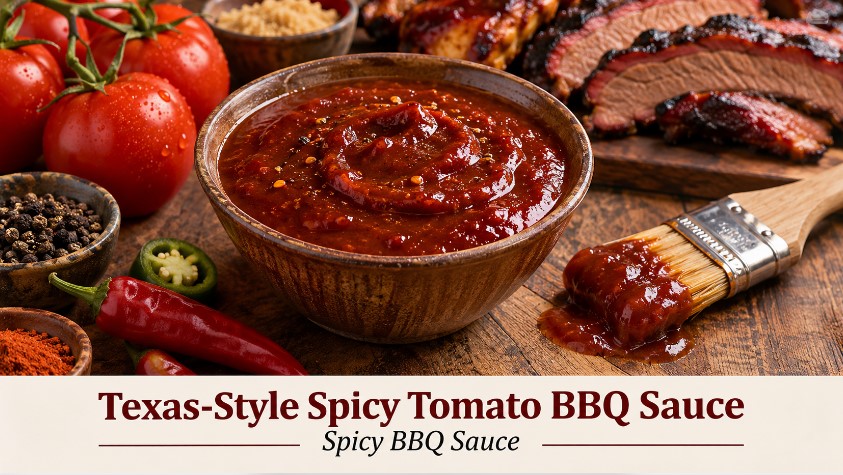
Texas style BBQ sauce can take several forms, from thin savory barbecue juices to red tomato sauces with a noticeable pepper kick. This guide covers a spicy tomato version designed to complement smoked beef rather than hide its flavor. It uses tomato, vinegar, black pepper and chili, with modest sweetness, and can be served beside brisket or brushed lightly onto grilled foods.
Choose the heat before choosing the sweetener
A pepper-forward Texas BBQ sauce should have a clear tomato and savory foundation. Black pepper supplies a warm, aromatic bite; cayenne adds sharper heat; paprika contributes color and a softer pepper note. Adding all three in large amounts can make the sauce harsh. Start with the lower quantities, taste a cooled sample, and increase the chili only if needed.
Texas barbecue has a wide range of sauce practices. Some restaurants serve thin juices, others offer thick red sauces, and some emphasize meat and seasoning without sauce. AmazingRibs describes thin Texas barbecue juice as both a basting liquid and finishing condiment. The tomato-forward version below is a modern home adaptation rather than the single authentic Texas barbecue sauce.
Build the sauce in three stages
This Texas BBQ sauce recipe starts with unsweetened tomato sauce so the cook can control sugar and salt. A heavy-bottomed saucepan, whisk and measuring spoons are sufficient. The recipe is research-informed and has not been kitchen-tested.
Prep: 5 minutes. Cook: 20 minutes. Total: about 25 minutes. Yield: approximately 1 1/2 cups, or twelve 2-tablespoon servings.
Stage 1: Make the tomato base
- 1 cup plain tomato sauce
- 1/2 cup unsalted beef stock
- 2 tablespoons tomato paste
- 3 tablespoons apple cider vinegar
- 1 tablespoon brown sugar
Whisk these ingredients until the tomato paste is fully dispersed. Warm over medium-low heat. Tomato paste gives body while the stock adds savory flavor and keeps the sauce from becoming a dense glaze.
Stage 2: Add the pepper and seasoning
- 1 teaspoon ground black pepper
- 1 teaspoon paprika
- 1/4 teaspoon cayenne, or less for mild heat
- 1/2 teaspoon garlic powder
- 1/2 teaspoon onion powder
- 1 teaspoon yellow mustard
- 1/4 teaspoon fine salt, optional depending on stock and tomato sauce
Whisk the seasonings and mustard into the warm tomato base. Bring to a gentle simmer and stir regularly for about 20 minutes. If the surface starts spitting heavily, lower the heat. A Texas spicy BBQ sauce should remain pourable rather than dry and pasty.
Stage 3: Taste and finish
Allow a spoonful to cool before tasting. Add a pinch of cayenne for more heat or a teaspoon of stock if the sauce is too concentrated. If the acidity is too strong, add unsweetened tomato sauce rather than a large quantity of sugar. Remove from heat and serve or refrigerate the clean remainder promptly.
Which pepper should you use?
| Pepper | Effect and adjustment |
|---|---|
| Ground black pepper | Aromatic warmth; increase gradually for a peppery brisket sauce. |
| Cayenne | Direct heat; add a small pinch at a time. |
| Smoked paprika | Smoke character with relatively mild heat in many varieties; replace some regular paprika. |
| Crushed red pepper | Visible flakes and variable heat; use sparingly and allow time to soften. |
For a spicy Texas BBQ sauce with a more pronounced smoky character, replace half the paprika with smoked paprika. If the brisket already has a heavy smoke flavor, use regular paprika instead. Heat varies between brands and batches of chili, so a measurement cannot guarantee identical results every time.
Serving brisket without hiding the bark
Cut a slice of rested brisket and taste it before adding sauce. Offer a small bowl beside the meat so diners can season each bite. For chopped beef sandwiches, mix in a spoonful at a time until the meat is lightly coated. Adding too much makes the sandwich wet and reduces the contrast between the meat and toasted bun.
The sauce also works with grilled beef burgers, lamb skewers and chicken. Brush onto chicken near the end of indirect cooking and confirm that it reaches at least 165°F internally. On vegetables such as mushrooms and peppers, apply after browning or serve as a dip. Avoid coating foods in thick sauce before placing them directly above high flames.
If you want to add flavor during a long brisket cook rather than after it, the Texas-style mop guide describes a thinner stock-based method. For a sweeter and stickier finish, compare the Kansas City recipe. You can also browse the complete BBQ sauce collection to choose a different flavor profile.
Fix the balance instead of starting over
Too hot to enjoy
Capsaicin does not disappear simply by simmering longer. Add unsweetened tomato sauce and stock to dilute the concentration. If the batch is extremely hot, mix it with a second mild batch and freeze the extra clean portions.
Too sour or too sweet
A strong vinegar finish can be softened with additional tomato and stock. If you have added too much sugar, dilute with unsweetened tomato sauce and adjust pepper and vinegar after tasting. Small changes are more predictable than alternating large amounts of sugar and acid.
Too thick or gritty
A vigorous simmer can concentrate the tomato solids. Add stock gradually and whisk. Coarsely ground black pepper will naturally create some texture; use a finer grind next time if you want a smooth sauce. Do not strain away all the seasoning unless the texture is genuinely unpleasant.
Burnt or bitter
Tomato paste can scorch at the bottom of a hot saucepan. Stir regularly, reduce the heat and move any unburned portion to a clean pan without scraping the bottom. If bitterness is throughout the batch, start again rather than trying to mask it.
Make it fit your pantry
A Texas style BBQ sauce recipe can use vegetable stock instead of beef stock for a plant-based version, provided the other ingredients are suitable. Ketchup can replace plain tomato sauce in a pinch, but reduce the sugar, salt and vinegar initially because ketchup already contains them. If tomato paste is unavailable, simmer the sauce gently for longer until it reaches a useful consistency.
When shopping for a prepared spicy sauce, compare the ingredient list and the sodium and sugar values per serving. A bottle marked Texas may still be sweet or mild. Choose the flavor that suits the meat rather than treating the regional label as a guarantee.
Storage and serving notes
Reserve a clean serving portion before brushing sauce onto meat. Refrigerate the unused homemade sauce at 40°F or colder within two hours, or one hour above 90°F. Use within three to four days as a conservative leftover guideline; freeze clean portions for longer storage. Thaw in the refrigerator. This stock-based recipe is not validated for shelf-stable canning.
The Texas spicy BBQ sauce recipe yields roughly 15–25 calories, 3–5 g carbohydrate, 2–4 g sugar and less than 1 g each of fat and protein per 2 tablespoons. These are rough recipe estimates, not laboratory results. Sodium varies with stock, tomato sauce, mustard and added salt; calculate it from the actual package labels. Mustard is a relevant allergen.
FAQs
Is Texas BBQ sauce always spicy?
No. Texas sauces range from thin and savory to sweet, mild or hot tomato sauces.
Can I leave out cayenne?
Yes. Black pepper and paprika will still provide flavor.
Is it a good sauce for brisket?
Yes, particularly as a small serving on the side so the bark remains noticeable.
Can I use fresh chili peppers?
Yes, finely mince a small amount and simmer until softened. Handle hot peppers carefully and avoid touching your eyes.
Does cooking make a sauce less spicy?
Not reliably. Reduction may concentrate the heat; dilute with a mild base instead.
Can I make it without sugar?
Yes. Omit brown sugar and expect a more acidic, less glossy sauce.
Can I replace beef stock with water?
Yes, although the flavor will be less savory. Adjust seasoning after tasting.
How does it differ from a Texas mop?
This sauce has more tomato solids and is better suited to finishing or glazing. A mop is thinner.
Can I use the sauce for chicken wings?
Yes. Toss safely cooked wings in a clean portion just before serving.
Can I use it as a marinade?
It can coat meat in the refrigerator, but the sugar and tomato solids may scorch. A late glaze is generally easier.
Is it safe to store in a sealed jar on the counter?
No. This recipe has not been tested for shelf-stable preservation; refrigerate or freeze it.