Kansas City-Style BBQ Sauce
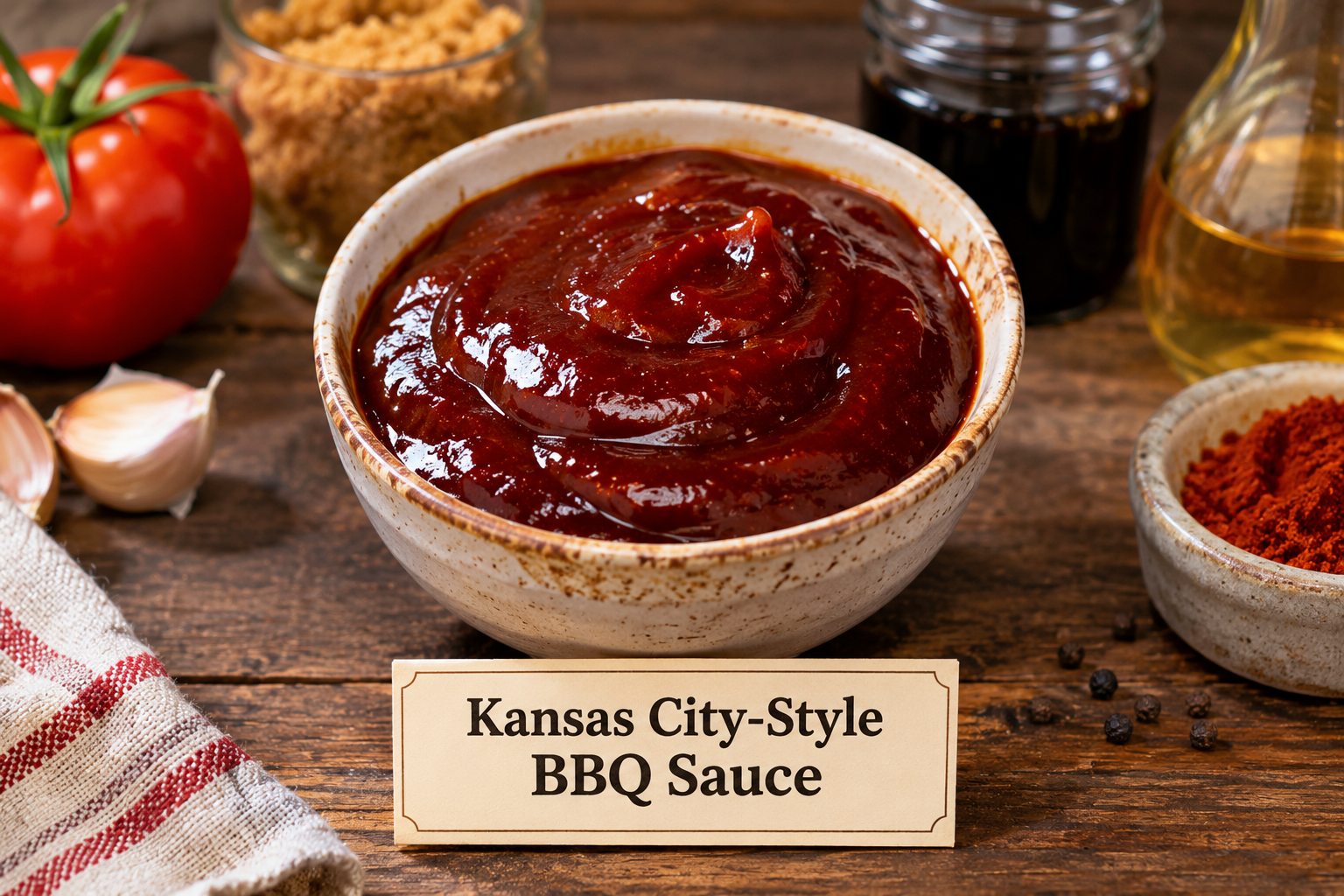
Kansas City BBQ sauce is a thick, tomato-based barbecue sauce with a sweet, tangy flavor and a dark, glossy finish. Brown sugar and molasses give it depth, while vinegar and spices keep the sweetness from becoming flat. It works particularly well on beef ribs, grilled chicken, turkey and burgers. A light coating applied near the end of cooking creates a sticky glaze without hiding the flavor of the meat.
What makes Kansas City barbecue sauce different?
Kansas City is associated with a style of barbecue that emphasizes smoked meats and richly seasoned sauces. Its familiar red sauce usually has a thicker body than the vinegar sauces of the Carolinas. There is no single formula used by every Kansas City restaurant. Some versions lean toward sweetness; others use more pepper, vinegar or spices.
The regional style is best understood as a balance between tomato, sugar, acid and savory seasoning. A dark color is not proof that a sauce contains smoke. Molasses and cooked tomato can produce that appearance without any added smoke flavor. A homemade version can therefore work well on an outdoor smoker without liquid smoke.
A good sauce should not taste like sweet ketchup. It should have a clear tomato backbone, a pleasant acidity and a finish that brings the meat back into focus. The sweetness helps create a glaze, but the acid prevents that glaze from tasting like candy.
Kansas City BBQ sauce ingredients and why they matter
| Ingredient | Amount | Purpose |
|---|---|---|
| Ketchup | 1 cup | Tomato flavor and body |
| Apple cider vinegar | 1/4 cup | Bright acidity |
| Brown sugar | 3 tablespoons | Rounded sweetness |
| Unsulfured regular molasses | 2 tablespoons | Deep caramel-like flavor |
| Water | 1/4 cup | Adjustable thickness |
| Yellow mustard | 1 tablespoon | Tang and complexity |
| Smoked paprika | 1 teaspoon | Gentle smoky flavor |
| Garlic powder | 1/2 teaspoon | Savory depth |
| Onion powder | 1/2 teaspoon | Mild aromatic flavor |
| Ground black pepper | 1/2 teaspoon | Peppery finish |
| Fine salt | 1/4 teaspoon | Seasoning, adjust to ketchup |
| Cayenne | 1/8 teaspoon | Optional heat |
Choose ketchup and mustard with suitable ingredients and no added alcohol. Use regular unsulfured molasses rather than blackstrap for this recipe. Blackstrap has a more assertive, bitter character and is not a direct flavor equivalent.
The ketchup already contains sweetener and salt, so do not automatically add more sugar or salt before tasting. Different brands can produce noticeably different results. The recipe is an adapted homemade Kansas City BBQ sauce, not a claim to reproduce a particular restaurant’s proprietary formula.
How to make Kansas City BBQ sauce
Kansas City BBQ sauce recipe: Prep 5 minutes; cook 15–20 minutes; total approximately 20–25 minutes. Expected yield about 1 1/2 cups, depending on evaporation, or approximately twelve 2-tablespoon servings. Equipment: measuring cups, spoons, whisk and a heavy-bottomed saucepan.
- Add ketchup, vinegar, water, sugar, molasses and mustard to the saucepan. Whisk until the molasses is evenly dispersed.
- Stir in paprika, garlic powder, onion powder, pepper, salt and optional cayenne.
- Bring the mixture to a gentle simmer over medium-low heat. Lower the heat if it begins bubbling vigorously.
- Simmer uncovered for 15–20 minutes, stirring frequently and scraping the base of the pan. Stop sooner if the sauce already coats a spoon.
- Taste a cooled spoonful. Add a teaspoon of vinegar if the sweetness is too prominent, or a little water if the consistency is too thick.
- Transfer to a clean shallow container and refrigerate promptly if not serving immediately. The sauce will usually seem thicker when chilled.
For a smooth KC BBQ sauce recipe, use powdered aromatics rather than chopped onion. For a more rustic sauce, cooked finely chopped onion can work, but the texture and storage characteristics change. This recipe has not been independently kitchen-tested; cooking time and yield are estimates.
How do you tell when the glaze is ready?
Draw the back of a spoon through the sauce and lift it out. A thin, even coating should remain on the metal. A sauce that drops off in heavy clumps may be too thick to brush evenly. One that runs like water will tend to leave the food before it has a chance to set.
Do not keep reducing simply because the hot sauce looks slightly thin. Chill a small sample for a more useful comparison with the consistency you want at serving time. If needed, simmer for a few extra minutes rather than increasing the burner temperature.
Getting the most from Kansas City BBQ sauce for ribs
Beef back ribs have an irregular surface, so a soft brush helps spread sauce into the spaces between bones. On beef short ribs, a thick glaze can cover a carefully developed crust. Try one thin layer first and serve extra sauce at the table instead of coating the entire rack heavily.
Apply the first layer once the meat is nearly done and the exterior has set. Over indirect heat, wait until the coating becomes tacky, then decide whether a second layer is useful. Watch the color rather than following an exact timer for every grill. A thin, set glaze is easier to control than several wet layers.
When cooking over charcoal, keep a cooler section available so you can move food away from direct flames. Our complete BBQ sauce guide explains how fuel arrangements affect heat control. The sauce should finish the cook, not determine whether the meat itself is safely cooked.
Other ways to serve it
- Chicken thighs: brush a thin coat near the end of indirect cooking. Use a separate clean bowl for serving.
- Burgers: spread a little over the cooked patty and add crisp lettuce or pickled onions to offset sweetness.
- Smoked turkey: offer sauce beside sliced meat so guests can adjust the intensity.
- Shredded beef: stir a small portion into warm meat, then taste before adding more.
- Roasted vegetables: use as a finishing glaze on carrots, cauliflower or mushrooms rather than soaking them before roasting.
As a marinade, this sauce is less convenient than a thinner vinegar mixture because its sugar and solids can scorch. If you want a basting liquid, dilute a separate portion with water and use it over gentle indirect heat. Never return a brush that touched raw meat to the serving jar.
Fixing flavor and texture problems
| Problem | Likely cause | Practical fix |
|---|---|---|
| Too sweet | Sweet ketchup plus sugar and molasses | Add vinegar one teaspoon at a time; extend with unsweetened tomato puree if needed. |
| Bitter | Blackstrap molasses, scorched sugar or spices | Dilute mild bitterness with tomato base. Discard badly burnt sauce and start again. |
| Too thick | Long simmer or chilling | Whisk in water a tablespoon at a time. |
| Too thin | Excess liquid or insufficient reduction | Simmer gently uncovered until it coats a spoon. |
| Tastes like ketchup | Too little acid or seasoning | Add a little vinegar, paprika and pepper, tasting between additions. |
| Glaze turns black | Direct heat or a thick sugary coating | Move to indirect heat and apply smaller amounts late. |
If the bottom of the saucepan catches, do not scrape black material into the remaining sauce. Pour the unburnt portion into a clean pan and taste it. A strong charred flavor is difficult to reverse. Stir frequently next time and choose a pan with a thicker base.
Make a batch that suits your cooking style
For a pepper-forward Kansas City style BBQ sauce recipe, replace some cayenne with freshly ground black pepper. For less sweetness, start with two tablespoons of brown sugar rather than three. Keep the molasses because it supplies a flavor that plain sugar cannot replace.
Honey can replace part of the brown sugar, but it may change the glaze’s stickiness. If molasses is unavailable, dark brown sugar can provide some caramel flavor; it will not reproduce the same dark, earthy note. Sweet paprika can replace smoked paprika when the meat already has a strong smoke flavor.
Choosing the best Kansas City BBQ sauce for your food
A bottled sauce with tomato listed early in the ingredients may be a useful starting point if you want a full-bodied glaze. Compare labels for added sugar, sodium, allergens and suitable ingredients rather than judging by the bottle’s color. A very sweet sauce may be pleasant with grilled chicken but too heavy for a rich cut of beef.
A homemade sauce allows you to control the thickness without committing to a large bottle. If serving guests with different preferences, offer a small bowl at the table. A stronger pepper version can be served alongside a mild batch instead of making one compromise sauce for everyone.
The Eastern North Carolina vinegar sauce is a useful alternative when you want an acidic finishing sauce with almost no body. Lexington BBQ sauce adds a little tomato while remaining thin. Kansas City style barbecue sauce is the better choice when you specifically want a thick brush-on coating.
Storing the homemade sauce
Transfer clean sauce to a covered container, label the preparation date and refrigerate at 40°F (4°C) or below. As a conservative approach for an unvalidated homemade recipe, use it within three to four days or freeze promptly in small portions. This is a general leftover-handling precaution, not a laboratory-established shelf life for this sauce.
Thaw frozen portions in the refrigerator and stir before serving. Do not leave a serving bowl out for more than two hours, or one hour in conditions above 90°F (32°C). Discard sauce with mold, unusual odor or uncertain handling; the absence of those signs is not proof of safety. The mixture is not a tested shelf-stable canning recipe.
Approximate nutrition per 2 tablespoons (12 servings per batch): 45–50 calories, 12 g carbohydrates, 10 g sugars, about 270 mg sodium, less than 1 g fat and less than 1 g protein. Estimates use generic ingredient values, including regular ketchup and molasses, and exclude small seasoning variations. Mustard is a potential allergen. Recalculate using your chosen labels and measured yield.
FAQs
Is KC BBQ sauce always sweet?
It is commonly sweet, but the degree of sweetness varies. A balanced version also has acidity and savory spices.
Can I make it without molasses?
Yes. Use a little dark brown sugar instead, understanding that the dark, earthy flavor will be less pronounced.
Can I use tomato puree instead of ketchup?
Yes, but puree lacks the sweetness, vinegar and salt of ketchup. Taste and adjust the other ingredients gradually.
Is smoked paprika necessary?
No. It offers mild smoky flavor. Plain paprika works when the food already receives smoke from the grill.
Can I make this sauce without cayenne?
Yes. The cayenne is optional, so omitting it gives a milder finish.
Why does my sauce get thicker in the fridge?
Cooling changes its flow, especially when tomato solids and dissolved sugars are present. Stir before deciding whether to add water.
How can I make the sauce more tangy?
Add apple cider vinegar in small increments to a cooled sample. Stop when acidity complements the tomato rather than dominating it.
Can I use Kansas City sauce on brisket?
Yes. Serve it alongside slices or brush lightly on chopped beef if you want a sweet finish without covering the bark.
Do I need liquid smoke?
No. The sauce can develop depth from molasses, paprika and seasoning. Smoked food supplies its own smoke aroma.
What is the difference between a glaze and a dipping sauce?
A glaze is applied in a thin layer to set on the food. A dipping sauce is served separately and does not need to set under heat.
Can I double the recipe?
Yes. Use a wider pan and check consistency rather than doubling cooking time. Divide the finished sauce into small containers for prompt cooling.