Eastern North Carolina Vinegar BBQ Sauce
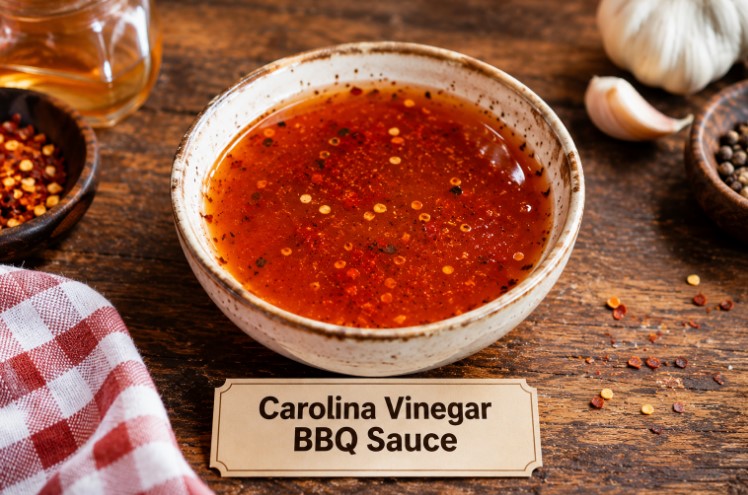
Eastern North Carolina BBQ sauce is a thin, sharp mixture of vinegar, pepper and salt rather than a thick tomato glaze. Its acidity cuts through rich smoked meat, while pepper flakes provide a warm finish. Try it on shredded beef, grilled chicken or smoked turkey. Unlike sweet red barbecue sauces, it works best when used in small amounts as a finishing seasoning or a light mop.
Start with vinegar, not ketchup
The simplest Carolina vinegar BBQ sauce is more like a seasoned dressing than a bottled glaze. It is intentionally fluid. You should expect pepper flakes to settle and the sauce to run off a spoon. Neither is a sign of a failed recipe.
Eastern Carolina barbecue sauce developed within a distinct regional cooking tradition. The Levine Museum of the New South describes the eastern North Carolina style as vinegar, salt and pepper based, in contrast with the tomato-accented Lexington style. Individual cooks differ in the vinegar, pepper and sugar they use. A light touch of sugar is an optional way to round out acidity, not a reason to make the sauce syrupy.
Eastern North Carolina BBQ sauce recipe: a no-cook method
This adapted Eastern NC BBQ sauce recipe keeps the vinegar and pepper character and does not use ketchup. It can be made in a bowl or clean jar without heating.
Prep: 5 minutes. Cook: none. Rest: optional 30 minutes in the refrigerator. Yield: approximately 1 cup (eight 2-tablespoon portions, although a smaller serving is often sufficient). Equipment: measuring cup, spoons, whisk and a covered glass container.
- 3/4 cup apple cider vinegar
- 1/4 cup distilled white vinegar
- 1 teaspoon crushed red pepper flakes
- 1/2 teaspoon ground black pepper
- 1/2 teaspoon fine salt
- 1 teaspoon brown sugar, optional
Measure the vinegar into a nonreactive container. Add both peppers and salt, then whisk until the salt is dissolved. Add the optional sugar if you prefer a slightly softer finish. Cover and refrigerate. Shake the jar before using it so that the pepper is distributed evenly.
This Eastern Carolina BBQ sauce recipe is designed as a small home batch. No boiling is required to develop the basic flavor. If you prefer warming it briefly to help sugar dissolve, use a nonreactive pan and avoid a long simmer. Boiling off vinegar and water changes the balance you are trying to achieve. The recipe is a research-informed adaptation and its yield has not been independently kitchen-tested.
Which vinegar should you use?
Apple cider vinegar has a fruity character that suits smoked food. Distilled vinegar offers a cleaner, sharper taste. The mixture above uses cider vinegar as the dominant ingredient. You can use cider vinegar alone if you prefer a rounder aroma.
Choose a commercially prepared food-grade vinegar with the acidity listed on its label, commonly 5%. Do not assume homemade vinegar has the same concentration. Balsamic vinegar is darker and sweeter and changes the style considerably. Lemon juice can supply acidity but is not a close replacement for the traditional vinegar flavor.
Crushed pepper provides occasional bursts of heat; fine cayenne disperses more evenly and may taste hotter. If substituting cayenne, start with a small pinch instead of an equal spoonful. Use less pepper if the people eating the food prefer a mild sauce.
Seasoning food without making it soggy
The most useful way to try Eastern NC BBQ sauce is on a small piece of cooked meat. Add several drops, taste, and then decide whether the rest of the serving needs more. This is especially important for lean turkey or chicken breast, where a large amount of acid can dominate the food.
For shredded beef, spoon a small amount over warm meat and toss gently. The vinegar spreads between strands and adds a lively contrast to rendered fat. Do not pour the entire jar into the bowl. Add more at the table if needed.
For smoked chicken, put the sauce beside the plate. A wet coating applied before the skin crisps can work against the texture you want. A thin finishing drizzle on cut pieces offers flavor without soaking the whole bird.
With grilled fish or vegetables, use a small amount immediately before serving. The sharpness can brighten a rich salmon portion or balance grilled mushrooms. Mild white fish may need only a few drops.
Can you use it as a mop during smoking?
Yes, a vinegar-based liquid can be used as a light baste on certain foods. A mop is not intended to make a sticky coating. Apply sparingly once the outside of the meat has begun to set. Frequent opening of the smoker can release heat, and excessive wetting can interfere with the crust.
Avoid repeatedly dipping a brush that has touched meat into the clean supply. Pour the amount needed for basting into a separate container and discard the remainder when cooking is finished. The BBQ smoker problems guide covers other common cooking and heat-control issues.
A vinegar sauce can also be used as a short refrigerated marinade, but it is quite acidic. A prolonged soak may damage the texture of delicate pieces. Reserve clean sauce separately for serving and never assume vinegar sanitizes raw meat.
Why the sauce tastes so sharp
Someone accustomed to sweet bottled sauce may find North Carolina vinegar BBQ sauce too aggressive when tasting it straight from a spoon. Try it with the intended food first. Fat, salt and smoke change the overall taste of the bite. That sharpness is part of the style, not necessarily a defect.
If the finished sauce still seems too intense, divide off a small portion and test one adjustment at a time:
| What you notice | What to try |
|---|---|
| Strong vinegar sting | Use a greater proportion of cider vinegar in the next batch, or add a small amount of water to a serving portion. |
| Excessive heat | Strain out some pepper flakes or blend with a fresh mild batch. |
| Flat taste | Add a small pinch of salt or fresh pepper. |
| Too much sweetness | Mix with an unsweetened portion of the same vinegar base. |
| Pepper settles quickly | Shake just before serving. This is normal. |
Do not try to thicken it simply to make it resemble commercial barbecue sauce. If you prefer a slight tomato body, the Lexington BBQ sauce guide is a better match. The two traditions are related, but the tomato accent gives Lexington dip a different profile.
Eastern North Carolina vinegar BBQ sauce and its neighbors
The eastern region is known for vinegar and pepper. Moving toward the North Carolina Piedmont, tomato enters the sauce in modest amounts. South Carolina also has its own vinegar, mustard and tomato traditions. Geography does not create a rigid rule for every household or restaurant.
Use Eastern sauce when you want a clean, peppery finish. Choose Carolina Gold BBQ sauce when mustard tang and a slightly more substantial coating are desirable. A thick, sweet tomato glaze serves a different purpose, especially on foods cooked over indirect heat.
A small batch is easier to keep fresh
Because this recipe has no validated acidity or shelf-life test, keep it refrigerated in a clean closed container at or below 40°F. Make only what you need over the next few days; a conservative three-to-four-day leftover window is appropriate for an unvalidated household mixture. Freezing small portions is an option, although making a fresh batch takes little effort. Shake after thawing.
Do not store this sauce on the counter indefinitely simply because the main ingredient is vinegar. Do not use a bottle that has been repeatedly contaminated by serving utensils. Discard any portion that has had unsafe time at room temperature or shows spoilage. Use a clean spoon for tasting.
Approximate nutrition per 2 tablespoons (eight servings, with optional sugar): 5–10 calories, about 1 g carbohydrates, less than 1 g sugar, about 145 mg sodium, less than 1 g fat and less than 1 g protein. Without the sugar, carbohydrates are lower. These are estimates from typical ingredient values and do not account for all minor spices.
FAQs
Does Eastern Carolina BBQ sauce contain tomatoes?
The classic eastern style generally does not. Tomato-accented thin sauce is more closely associated with Lexington and related regional styles.
Can I use only apple cider vinegar?
Yes. Use one cup of cider vinegar in place of the two-vinegar mixture if you prefer its fruity character.
Should I cook the sauce first?
No. A no-cook mixture is suitable. Gentle warming is optional if you want to dissolve sugar more quickly.
How can I make an Eastern Carolina sauce without sugar?
Leave out the optional brown sugar. The result will have a sharper, more direct vinegar finish.
Why do the pepper flakes sink?
They do not dissolve in vinegar. Shake or stir immediately before pouring.
Can I put the sauce on beef ribs?
Yes, as a light finishing drizzle or table sauce. It will not create the same thick glaze as Kansas City sauce.
Is Eastern NC BBQ sauce suitable for a squeeze bottle?
Yes, provided the opening is wide enough for the flakes. Keep the bottle clean and refrigerated.
Should I marinate chicken overnight in pure vinegar sauce?
A long soak is not usually necessary for such a sharp mixture. A shorter refrigerated marinade or a finishing drizzle offers better control over texture and flavor.
Can I use the leftover mop as a table sauce?
Do not serve a portion contaminated by raw or partly cooked meat. Reserve a clean amount before cooking begins.