South Carolina Mustard BBQ Sauce (Carolina Gold)
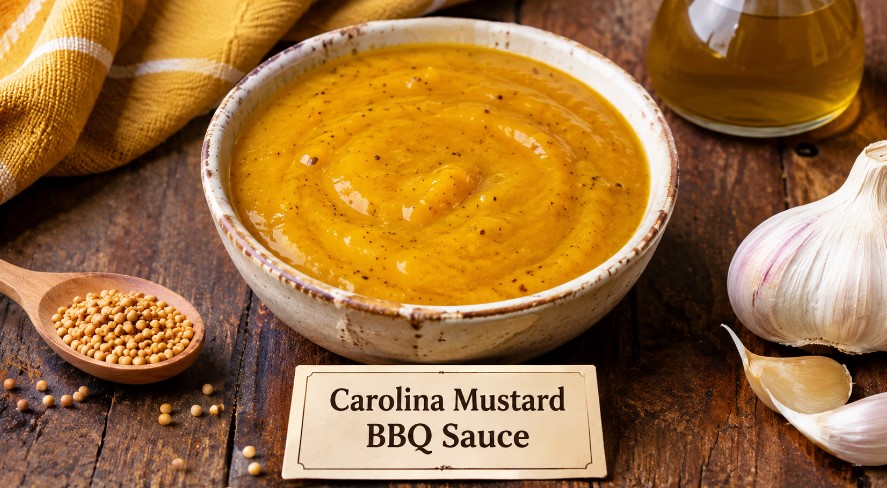
Carolina Gold BBQ sauce is a golden yellow, mustard-based barbecue sauce associated with South Carolina. It combines the tang of prepared mustard with vinegar, a little sweetness and savory spices. Instead of the sticky tomato flavor of many red sauces, it offers a brighter, sharper finish. It is especially useful on grilled chicken, turkey, beef sandwiches and vegetables, whether served as a dip or brushed lightly onto food.
Carolina Gold BBQ sauce recipe
This version is an accessible homemade adaptation of South Carolina mustard BBQ sauce. It uses ordinary yellow mustard and avoids added alcohol or unsuitable animal-derived seasonings. The aim is a smooth, pourable condiment that still tastes like mustard, rather than an overly sweet honey dressing.
Preparation: 5 minutes. Cooking: approximately 8–10 minutes. Total: 13–15 minutes. Yield: roughly 1 1/4 cups, or ten 2-tablespoon servings. Equipment: small nonreactive saucepan, whisk, measuring spoons and a clean storage container.
| Ingredient | Quantity |
|---|---|
| Prepared yellow mustard | 3/4 cup |
| Apple cider vinegar | 1/4 cup |
| Brown sugar | 2 tablespoons |
| Honey | 1 tablespoon |
| Water | 2 tablespoons |
| Ground black pepper | 1/2 teaspoon |
| Garlic powder | 1/4 teaspoon |
| Onion powder | 1/4 teaspoon |
| Cayenne pepper | 1/8 teaspoon, optional |
Mustard already supplies salt, so taste the finished sauce before adding any extra. Select prepared mustard and other packaged ingredients that meet your dietary requirements.
- Whisk the mustard, vinegar and water together in a small pan until no streaks remain.
- Add brown sugar, honey, black pepper, garlic powder, onion powder and optional cayenne.
- Heat gently, stirring until the sweeteners dissolve. Maintain a very gentle simmer for around 8–10 minutes; do not boil vigorously.
- Check that the sauce is smooth enough to pour from a spoon. If it becomes pasty, add a teaspoon of water and whisk again.
- Remove from the heat. Taste a cooled sample with a piece of cooked chicken or another food you plan to serve.
- Transfer to a clean container. Serve immediately or refrigerate promptly for later use.
This Carolina mustard BBQ sauce recipe is a proposed home adaptation based on regional ingredient patterns, not a personally tested or proprietary restaurant recipe. The final yield depends on how much liquid evaporates.
What makes the mustard base so important?
A typical South Carolina mustard sauce uses prepared yellow mustard rather than relying on tomato as its main body. Prepared mustard contains ground mustard seed, liquid and other seasonings. It offers both flavor and thickness in one ingredient.
Yellow mustard is usually milder and more familiar than strong Dijon mustard. Its color comes from its formulation, often including turmeric. Do not add extra turmeric simply because the sauce is not as bright as a commercial bottle. A natural muted gold color is perfectly acceptable.
Apple cider vinegar provides an acidic note that works with the mustard rather than replacing it. Brown sugar supplies a darker sweetness; honey contributes a softer, floral note and helps the sauce cling to food. The powders add background flavor without introducing large pieces that would interfere with brushing.
Why is this South Carolina BBQ sauce yellow?
Unlike a ketchup-based recipe, mustard supplies most of the visible color. Red sauces depend on tomato and sometimes dark sweeteners. The yellow base gives Carolina Gold its distinctive appearance, although some variations are more orange or brown than others.
South Carolina’s tourism authority documents mustard as one of four regional sauce traditions, alongside vinegar-and-pepper, light tomato and heavy tomato. Mustard sauce has a strong association with the state’s Midlands and surrounding areas. Regional accounts often connect its history with German-speaking settlers and local families, but a precise first inventor is not firmly established by the sources used here.
What does Carolina mustard BBQ sauce taste like with food?
Mustard can seem strong when tasted straight from a jar. Its role becomes clearer when eaten with a smoky or rich food. The acidity helps balance fat, while sweetness softens the sharpness of the mustard. Cayenne adds a small warm finish without changing the sauce into a hot pepper condiment.
Try it alongside three very different foods before deciding whether you prefer a stronger or milder version. A bite of lean chicken breast highlights the sauce’s sharpness. A piece of fatty beef emphasizes the contrast between acidity and richness. A roasted potato reveals its sweetness and seasoning without the distraction of smoke.
How to use the sauce from grill to table
As a finishing sauce: spoon it onto cooked chicken or turkey after slicing. This is useful when you want the mustard flavor to stay clear and fresh. It also prevents an acidic, wet coating from interfering with crisp skin during cooking.
As a glaze: lightly brush it on nearly finished chicken over indirect heat. Give the coating time to set and avoid direct flames. Sugar and honey can brown quickly, and a thick coat may darken before it has warmed evenly. See the complete BBQ sauce guide for more about controlling fuel and heat zones.
As a sandwich spread: use a thin layer on a bun, then add shredded beef, grilled chicken or turkey. A crisp cabbage salad or sliced pickles can provide a fresh contrast. If the sandwich already contains mustard, reduce the amount of sauce to avoid overpowering the filling.
As a dipping sauce: serve small portions next to grilled vegetables, chicken tenders or potato wedges. A slightly thicker version is convenient for dipping, while a thinner one works better as a drizzle.
As a marinade: thin a separate amount if needed and use it under refrigeration. It is not necessary to leave delicate pieces in a strongly acidic mixture for many hours. Keep a clean portion aside for serving. Do not return utensils used on raw meat to the main jar.
Which meats and sides work especially well?
| Food | Suggested way to serve |
|---|---|
| Smoked chicken | Offer a side bowl or lightly coat near the finish. |
| Beef sandwiches | Toss a small amount into warm shredded beef. |
| Grilled turkey | Brush very lightly or serve beside slices. |
| Lamb chops | Serve a little on the side to balance richness. |
| Roasted cauliflower | Drizzle after roasting to keep the surface dry during cooking. |
| Potato wedges | Use a thicker portion as a dip. |
A mustard-forward sauce does not need to cover every part of the food. Serving it separately makes it easier to control strong flavors and accommodate people who prefer a sweeter red sauce.
Which version of mustard BBQ sauce should you make?
A South Carolina mustard BBQ sauce recipe can be adjusted for different uses without abandoning its base. Start with small changes rather than changing the entire formula at once.
For a sharper sauce, reduce the brown sugar by a tablespoon. For a sweeter dip, add a teaspoon of honey to a cooled sample and compare the taste with the original. A peppery version can use more freshly ground black pepper or a little extra cayenne. For a smoke-friendly version, try a small pinch of smoked paprika; it will change the color and is not essential to the regional style.
Dijon mustard can replace a small portion of the yellow mustard if you like a sharper taste. Check the ingredient list for added wine or other unsuitable ingredients. Whole-grain mustard introduces visible seeds and a coarser texture that may be nice in a sandwich spread but less useful for brushing. Substituting all the prepared mustard with dry powder is not a simple one-for-one swap, because dry powder has neither the same liquid content nor the same ready-to-use balance.
If honey is unavailable, add a little more brown sugar and adjust water as needed. Maple syrup is another option, but gives a distinct flavor. For an entirely different sauce based on fruit or tomato, choose a separate recipe rather than trying to hide the mustard base with large amounts of sweetener.
Is the sauce too bitter, too sharp or too thick?
| Symptom | Possible reason | What to do |
|---|---|---|
| Harsh mustard bite | Strong mustard or insufficient sweetness | Blend with a small amount of mild yellow mustard or add a little honey. |
| Too acidic | Excess vinegar | Adjust a sample with water and a little sweetener before changing the full batch. |
| Too sweet | Sweet mustard plus added sugar | Mix with plain mustard and a small amount of vinegar. |
| Pasty texture | Over-reduction | Whisk in water a teaspoon at a time. |
| Watery texture | Too much added liquid | Simmer briefly over gentle heat, stirring often. |
| Dark spots or burnt smell | Heat too high or sauce left unstirred | Discard badly scorched sauce; use lower heat next time. |
Some home cooks discussing Carolina mustard sauces prefer additional onion or a different mustard intensity. These are taste preferences, not rules for authenticity. A useful adjustment is one that makes the sauce better with the intended food. Do not judge the balance entirely from a spoonful on its own.
If a sauce turns grainy, first check whether it contains whole seeds or coarse spices. Those may be expected. Whisking a cooled sample can smooth a mixture that simply has unevenly distributed ingredients. If the sauce is spoiled or its storage history is uncertain, discard it rather than trying to repair the texture.
Carolina Gold or a red barbecue sauce?
Choose a mustard base when you want a bright, savory-tangy finish. The Kansas City BBQ sauce offers a thicker tomato and molasses coating. The Eastern Carolina vinegar sauce is much thinner and has no need for mustard body. Each works in a different role, and one is not inherently superior to another.
When selecting the best South Carolina mustard BBQ sauce in a shop, check for mustard near the beginning of the ingredient list and consider how much sugar and sodium it contains. Read the allergen and ingredient statements rather than relying on the golden color. Bottled versions vary, and this homemade recipe should not be assumed to match any particular brand.
Keeping a homemade batch safely
Store the clean sauce in a closed container in the refrigerator at 40°F or colder. Treat this unvalidated recipe as a fresh homemade condiment: use it within three to four days as a conservative leftover guideline, or freeze small portions promptly. Frozen mustard sauces may change texture, so thaw in the refrigerator and whisk before serving.
The acidity of mustard and vinegar does not establish a safe room-temperature shelf life. Do not home-can this mixture without a tested preservation procedure. Never top up a serving bowl with fresh sauce if the bowl has been contaminated. Dispose of sauce held too long in warm conditions, even if it still smells normal.
Approximate nutrition per 2 tablespoons (ten servings): 25–30 calories, 5–6 g carbohydrates, 4 g sugars, about 200 mg sodium, about 0.6 g fat and 0.7 g protein. Estimates use typical prepared yellow mustard and sweetener values; actual brands and yield can change them. Mustard is a potential allergen.
FAQs
Is Carolina Gold the same as South Carolina mustard BBQ sauce?
The term Carolina Gold commonly describes the state’s golden mustard-based barbecue sauce. Individual recipes and brands differ.
Can I use Dijon instead of yellow mustard?
Replace a small portion if desired. A full substitution gives a different, stronger flavor. Choose a product without added wine or unsuitable ingredients.
Does Carolina Gold contain ketchup?
The classic mustard-forward style generally does not need ketchup. Some modern regional blends contain both tomato and mustard.
Is mustard BBQ sauce spicy?
It can be mild or hot. The mustard contributes its own sharpness; added cayenne controls much of the chili heat in this recipe.
Can I make it without honey?
Yes. Use a small amount of brown sugar or omit the honey for a sharper result.
Does it need to simmer?
Gentle heating dissolves the sweeteners and blends the ingredients. A no-cook adaptation can also work with finely dissolved sugar, but texture may differ.
Can I use it on chicken wings?
Yes. Toss lightly with fully cooked wings or serve it as a dip. This keeps the skin from becoming unnecessarily wet during cooking.
How do I reduce the vinegar taste?
Test a small sample with a little water or sweetness. Taste it with food before adjusting the entire jar.
Why does my sauce taste stronger after chilling?
Temperature and resting change how flavors are perceived. Stir and taste at serving temperature before adding more ingredients.
Can I add smoked paprika?
Yes, in a small amount. It adds smoke aroma and can shift the color toward orange.
Is this a low-sugar sauce?
Not automatically. Sugar depends on the recipe and mustard brand. Compare the ingredient quantities or nutrition label per serving.
Can I use this sauce for vegetables?
Yes. Its acidity works well with roasted potatoes, grilled mushrooms and cauliflower, especially as a finishing drizzle.