Honey BBQ Sauce
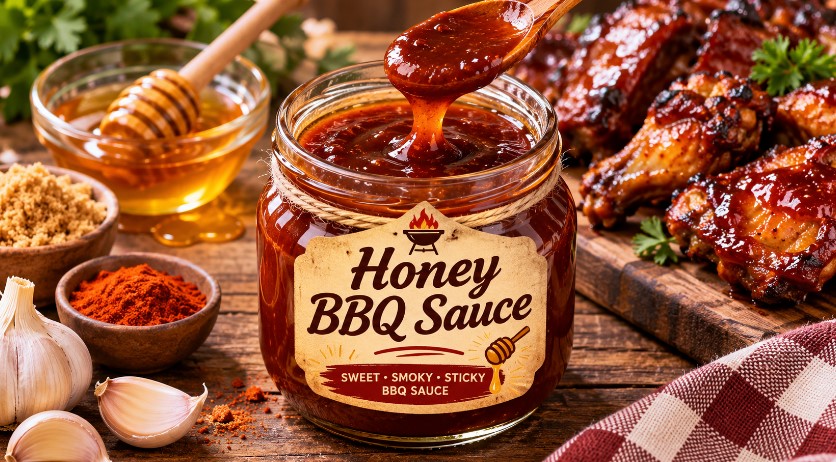
Honey BBQ sauce is a sweet, tangy barbecue condiment that uses honey to give a tomato base a rounded flavor and glossy finish. It suits grilled chicken, wings, beef ribs and sandwiches, particularly when you want less heat than a pepper-heavy sauce. The key is balancing the honey with vinegar and seasoning, then applying the sauce late enough that its sugars do not scorch.
How to make honey BBQ sauce at home
A good homemade honey BBQ sauce recipe begins with a base that already has enough body to cling to a spoon. Ketchup is convenient because it contains tomato, salt and some acidity. Since brands differ in sweetness, taste yours before adding extra sweetener. The following small-batch honey barbecue sauce recipe is a starting point for a family barbecue rather than a tested commercial formula.
Preparation: 5 minutes. Cooking: 15 minutes. Total: approximately 20 minutes. Yield: about 1¼ cups, depending on reduction, or ten two-tablespoon portions. Equipment: small heavy saucepan, whisk, measuring cups and a clean spoon.
Honey BBQ sauce ingredients
- ¾ cup ketchup
- ¼ cup mild honey
- ¼ cup water
- 2 tablespoons apple cider vinegar
- 1 teaspoon yellow mustard
- ½ teaspoon smoked paprika
- ½ teaspoon garlic powder
- ¼ teaspoon onion powder
- ¼ teaspoon ground black pepper
Honey provides sweetness and a floral note, while the vinegar keeps the finish from becoming cloying. Mustard adds tang without requiring more tomato. The water allows the spices to hydrate while the mixture cooks. Smoked paprika contributes a gentle smoky aroma without needing a separate liquid smoke product.
- Measure the ketchup, honey, water and vinegar into the pan. Whisk until the honey has dispersed.
- Add mustard, paprika, garlic, onion and pepper. Stir before switching on the heat so dry spices do not collect in lumps.
- Warm over medium-low heat until small bubbles appear. Reduce to a gentle simmer and stir frequently for about 15 minutes.
- Remove from heat when a spoon dipped in the sauce has a thin, even coating. It should still pour easily rather than form a thick paste.
- Let a small sample cool before tasting. Adjust acidity or water in small increments if necessary. Serve a clean portion or refrigerate promptly.
Do not judge the final thickness while the mixture is boiling. Honey barbecue sauce becomes more viscous as it cools. If you intend to toss wings in it, stop cooking slightly earlier than you would for a dipping sauce.
Choosing honey for a balanced glaze
Light clover honey offers a mild sweetness that lets tomato and spices remain noticeable. Wildflower honey can taste more floral, and dark honeys may contribute stronger earthy notes. Neither color nor price alone determines whether a honey will work well in the sauce. Use a variety you enjoy eating on its own.
Honey sometimes forms crystals during storage. This is a normal physical change and does not automatically mean it has spoiled. If the honey is otherwise sound, gently warm its container in warm water before measuring. Avoid heating a sealed container or putting a plastic bottle on a hot burner.
The best honey BBQ sauce for a particular meal is not necessarily the sweetest one. A lightly seasoned chicken breast can benefit from a brighter sauce, while smoky beef ribs may suit a deeper, peppery version. Use a cooled spoonful on a small piece of cooked food to evaluate how the flavors interact.
Getting the coating right on wings and chicken
For a honey BBQ wing sauce, cook the wings until they reach a safe internal temperature of 165°F. Toss the hot cooked wings with a clean portion of sauce just before serving. Start with a small amount; you can add more, but excessive sauce softens a crisp surface. For sticky wings, brush a thin layer on near the end of indirect cooking instead of tossing them early.
When using honey BBQ sauce for chicken on a grill, establish the cooked surface before adding the glaze. Move pieces away from strong direct heat as you brush. Give the coating a short time to set and check that it remains glossy rather than blackened. Use a thermometer rather than the color of the glaze to determine doneness.
On skewers, use an even, light brush stroke so the corners do not collect thick pools. A separate small bowl for dipping keeps unused sauce clean. For a mustard-forward alternative that can cut through richer chicken skin, explore Carolina Gold sauce.
How to use honey BBQ sauce for ribs
Beef ribs can take a long time to become tender. Apply the sauce after the bark has formed, near the end of the cook, rather than repeatedly coating the meat from the beginning. Use a thin layer and watch its surface. If it starts to darken rapidly, move it to a cooler part of the cooker. For a deeper tomato and molasses flavor, compare Kansas City barbecue sauce.
For burgers, spread the sauce on a cooked patty or toasted bun. It also works in shredded beef sandwiches, but add it gradually to avoid masking the meat. On grilled carrots or sweet potatoes, use less honey sauce than you would on a savory protein because the vegetables already bring sweetness.
When a batch does not taste right
Too sweet: Whisk in a teaspoon of vinegar, taste a cooled sample and repeat only if needed. If the whole batch is far too sweet, increase the unsweetened tomato and water rather than adding enough vinegar to make it harsh.
Too thin: Simmer uncovered briefly, stirring regularly. A sauce that looks thin when hot may become suitable once cooled, so check before reducing it further.
Too thick: Add water a teaspoon at a time over low heat. More honey will increase sweetness and may make the texture sticky instead of correcting the problem.
Scorched bottom: Stop heating immediately. If only the pan bottom is affected, pour the unburnt portion into a clean pan without scraping; discard it if the burnt taste remains. Prevent this by using gentle heat and stirring the corners of the pan.
Glaze slides off: Pat excess surface moisture away before cooking, then wait until the meat’s exterior is established. Use a brush rather than pouring a large amount over the food.
Home cooks frequently ask how to correct overly sweet sauces. Small adjustments in a separate spoonful make it easier to avoid ruining an entire batch.
Variations and substitutions
A sweet honey BBQ sauce can be made without adding brown sugar because the honey and ketchup already provide considerable sweetness. For a less sweet version, begin with three tablespoons of honey instead of four and replace the missing volume with water. For a warm kick, add a small pinch of cayenne. A smoked version can use slightly more paprika, but taste before increasing it.
Maple syrup can replace honey in a similar volume, though the result has a different flavor and may need a little more reduction. Unsweetened tomato puree can replace ketchup, but requires separate adjustment of salt, vinegar and seasoning. A honey-free variation is no longer a true honey sauce. Check purchased ketchup and mustard for ingredients that suit your dietary needs.
Storing a clean batch and estimating nutrition
Transfer unused sauce to a clean shallow container and refrigerate within two hours, or one hour if the surrounding temperature exceeds 90°F. Keep at 40°F or below and use within three to four days as a conservative homemade-food limit. Freeze clean portions for longer storage; thaw in the refrigerator and whisk after thawing. This recipe is not validated for shelf-stable canning. Discard sauce that has contacted raw meat or a contaminated brush.
For ten portions, typical ketchup and honey labels suggest roughly 40–50 calories and 10–13 grams of carbohydrate per two tablespoons. Most carbohydrate comes from sugars. Sodium depends on ketchup and mustard; check the labels to calculate it accurately. Protein and fat are generally small. These are estimates, not measured nutrition values. Honey is not suitable for infants under one year of age.
FAQs
Can I make honey sauce without a stove?
Yes, a whisked version is possible using ready-to-eat ingredients. Simmering integrates the spices and helps control the texture.
Does honey make the meat tender?
No. A glaze adds surface flavor; tenderness primarily depends on the cut and cooking method.
Can I use raw honey?
Yes, if it is suitable for your diet. Heating may reduce some of its delicate aromas.
Is honey barbecue sauce naturally sugar-free?
No. Honey contains sugars, and ketchup may also contain added sugar.
Can I brush it onto frozen chicken?
Thaw safely in the refrigerator and cook the chicken properly before glazing near the end.
Why does my sauce turn darker as it cooks?
Reduction and browning can deepen the color. A blackened, bitter coating suggests scorching.
Can I use it on salmon?
Yes. Apply a thin coating near the end so its sweetness does not overpower the fish.
Will honey sauce keep wings crispy?
Not indefinitely. Toss the wings immediately before serving or offer the sauce separately.
Can I double the recipe?
Yes. Use a larger pan and judge consistency rather than assuming the same reduction time.
Should I add salt?
Taste first. Prepared ketchup and mustard may supply sufficient salt.
Can I make it spicy without changing its sweetness?
Use a small quantity of cayenne or chili powder rather than replacing honey with a hot condiment.
What if my refrigerated sauce is too firm?
Warm a clean serving portion gently and stir in a little water if needed.