Georgia Peach BBQ Sauce
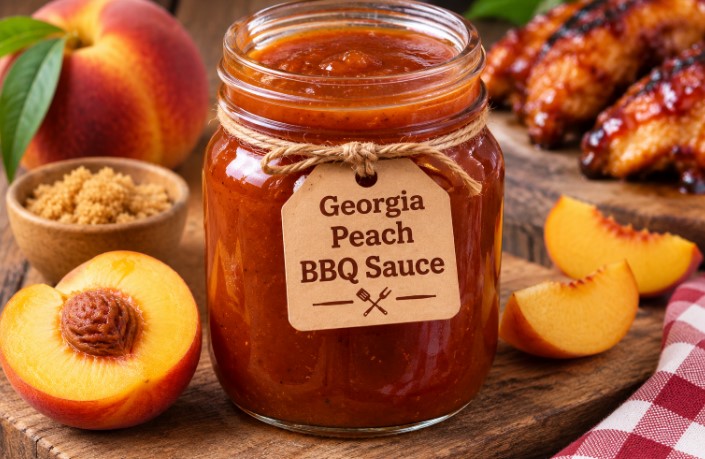
Peach BBQ sauce combines ripe peaches with savory seasonings, tomato and vinegar to make a fruity glaze for grilled chicken, beef ribs and turkey. The fruit contributes natural sweetness and body, while acidity and spices keep the result from tasting like jam. A Georgia peach BBQ sauce is a Southern-inspired variation that is especially useful when peaches are in season, although unsweetened frozen fruit works throughout the year.
Start with the fruit, not the sugar
Choose peaches that smell fragrant and yield slightly near the stem. Firm fruit may need longer cooking and may taste less sweet. Overripe but sound fruit can work well; discard moldy or spoiled peaches. Yellow peaches generally give a warm orange color and noticeable acidity, while white peaches can offer a more delicate flavor.
Georgia has a strong cultural association with peaches, but there is no evidence that all Georgia peach barbecue sauce follows one historic formula. A peach-mustard sauce from a Savannah barbecue restaurant and a peach glaze published by Georgia’s school nutrition program illustrate different local uses of the fruit. The recipe below is a Southern peach BBQ sauce inspired by these possibilities, rather than a claim to a single authentic regional recipe.
Frozen peaches should be unsweetened and pitted. Measure the fruit by weight when possible and cook off excess water as needed. Canned peaches packed in juice can also work if drained, but syrup-packed fruit makes sugar adjustment more difficult. In a Reddit smoking discussion, cooks considered whether preserves could replace fresh fruit. Preserves already contain concentrated fruit and sugar, so a direct equal-volume substitution can throw off the balance.
A homemade Georgia peach BBQ sauce recipe
This small-batch peach BBQ sauce recipe is a research-informed adaptation, not a kitchen-tested formula. It uses a moderate amount of tomato so the fruit remains noticeable.
Prep: 15 minutes. Cook: 25–35 minutes. Total: about 40–50 minutes. Yield: approximately 2 cups, or sixteen 2-tablespoon portions, depending on reduction.
- 2 cups peeled, pitted and chopped peaches (about 300 g)
- ½ cup ketchup
- ¼ cup water
- 3 tablespoons apple cider vinegar
- 1 tablespoon brown sugar, optional if fruit is very sweet
- 1 teaspoon neutral cooking oil
- ¼ cup finely chopped onion
- 1 garlic clove, minced
- 1 teaspoon yellow mustard
- ½ teaspoon smoked paprika
- ¼ teaspoon ground black pepper
- ⅛ teaspoon cayenne, optional
- ¼ teaspoon fine salt, adjusted to taste
How to make peach BBQ sauce with a smooth finish
- Warm the oil in a medium saucepan over medium-low heat. Cook onion for about five minutes until softened, then stir in garlic for 30 seconds.
- Add peaches and water. Cover loosely and cook until the fruit breaks down readily under a spoon, about 8–12 minutes.
- Stir in ketchup, vinegar, optional sugar, mustard, paprika, pepper, optional cayenne and salt. Simmer uncovered over low heat for another 10–15 minutes, stirring regularly.
- Remove from heat and carefully blend with an immersion blender. If using a countertop blender, follow its hot-liquid instructions or cool the sauce first.
- Return to low heat only if further thickening is needed. Taste a cooled sample, adjust and cool promptly for storage.
The finished homemade peach BBQ sauce should spread across a spoon and fall in a slow ribbon. It will usually thicken a little as it cools. Do not judge the final consistency while it is bubbling vigorously.
How each ingredient changes the result
Peaches supply fruit sugars, aroma and natural pulp. Ketchup provides tomato flavor, salt and some additional sugar. Vinegar balances both sweet ingredients, while mustard introduces a mild savory edge. Cooking onion and garlic before the fruit removes their raw sharpness. Smoked paprika gives a subtle smoky impression without needing to smoke the fruit itself.
If your peaches are already very sweet, leave the brown sugar out initially. Taste near the end, when the fruit has softened and the water has reduced. For a brighter sauce, add vinegar by the teaspoon. If the tomato flavor dominates, increase the amount of cooked peach puree rather than adding more sugar.
From saucepan to grill
Peach BBQ sauce for ribs works best as a light finishing glaze on beef ribs that are already approaching tenderness. Brush on a thin coat during the final stage of indirect cooking and let it set before deciding whether a second coat is needed. Fruit sugars and ketchup can darken quickly over flames. Avoid using the color of the glaze as evidence that the meat is cooked.
On chicken thighs, cook over indirect heat until nearly done, then glaze lightly and finish until the poultry reaches 165°F internally. Serve additional clean sauce separately. Turkey burgers benefit from a spoonful after grilling, while a small amount can brighten roasted carrots or grilled squash. For beef sandwiches, pair the sauce with a crisp, acidic vegetable topping rather than more sweet condiments.
If you prefer a heavier tomato glaze, see the Kansas City sauce guide. A tangier alternative for chicken is Carolina Gold, which relies on mustard rather than fruit pulp.
When the batch does not taste right
Jam-like sweetness: Add a little vinegar and mustard, tasting between additions. Next time use less sweetener and choose fruit that is ripe but not overly sugary.
Watery texture: Simmer uncovered in a wide pan over low heat. Stir the bottom frequently. Frozen fruit or insufficient reduction can leave too much liquid.
Grainy pulp: Cook until the fruit is genuinely soft before blending. Peeling and using an immersion blender can improve texture. A sieve removes stubborn fibers if a smooth glaze is important.
Burnt taste: Fruit pulp settles and scorches when heat is high. Transfer the unburned upper portion without scraping the bottom. If the bitter flavor has spread, start again. Use a heavy saucepan and gentle heat.
Muted peach flavor: Try a riper fruit or reduce the amount of strongly smoked paprika. Adding more sweetener will not restore fruit aroma. A small amount of fresh puree cooked briefly into the sauce may help.
Make it your own without losing the peach character
For a peppery variation, replace the optional cayenne with a little finely chopped jalapeño and cook it with the onion. For a smoky variation, use a small pinch of chipotle powder in place of some paprika. Apricots can replace peaches by weight, but the result becomes an apricot sauce and may need a different acid balance. If using peach preserves, start with a smaller quantity and omit added sugar; adjust water and acidity after tasting.
When buying a commercial version, look for the actual fruit in the ingredient list. A peach-flavored sauce may contain little fruit. Check sweeteners, salt and all ingredient restrictions.
Refrigeration and nutrition
Cool the sauce in small clean containers and refrigerate at 40°F or below within two hours, or one hour in temperatures above 90°F. Use within three to four days as a conservative household guideline. Freeze portions if making extra, leaving expansion space, then thaw in the refrigerator and stir before serving. This recipe has not been validated for home canning.
Based on typical peaches, ketchup, oil and one tablespoon of sugar, a two-tablespoon serving is roughly 20–25 calories, about 4–5 grams carbohydrate and less than 1 gram fat and protein. Most sugars come from fruit and ketchup; sodium depends on the ketchup, mustard and salt used. The estimate assumes sixteen servings and changes if the sauce is reduced further. Check mustard and condiment labels for allergens.
FAQs
Can I use unpeeled peaches?
Yes, if washed, but the skin may leave flecks and a less smooth texture. Remove the pits in either case.
Can I make it without ketchup?
Yes, use tomato puree and adjust sweetness, salt and acidity; the balance will differ.
Do frozen peaches need to thaw first?
Not necessarily. Allow more cooking time and account for released water.
Can I smoke the peaches first?
Yes, briefly smoking sound fruit can add aroma. Keep the smoke mild so it does not hide the peach flavor.
Is peach barbecue sauce spicy?
Only if peppers are included. The base can be made mild by omitting cayenne.
Can I use peach nectar instead of fruit?
It supplies flavor and liquid but lacks pulp, so it will require a different reduction and sweetness adjustment.
Will the sauce turn brown?
Cooking and oxidation may darken it. Color alone does not determine safety or quality.
Can I brush it onto raw chicken?
It is better as a late glaze. Reserve a clean serving portion and discard sauce contaminated by raw poultry.