Roasted Garlic BBQ Sauce
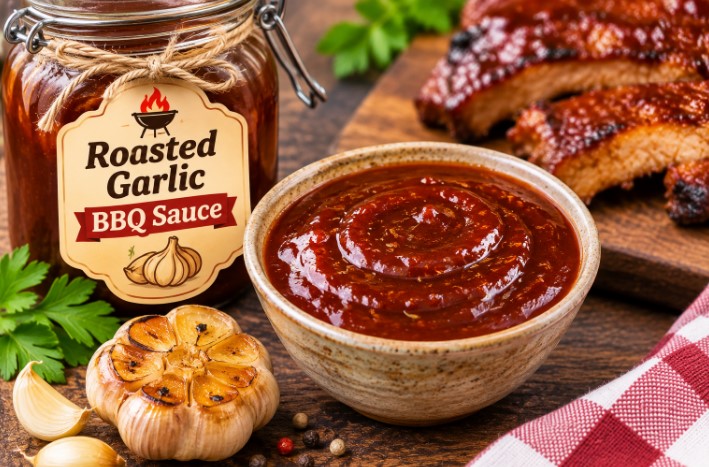
Roasted garlic BBQ sauce is a savory tomato-based barbecue condiment flavored with soft, golden garlic cloves. Roasting changes the sharp character of raw garlic into a mellow, slightly sweet flavor that works well with grilled beef, chicken, vegetables and sandwiches. Unlike a garlic-heavy hot sauce, this version aims for a rounded aroma rather than a sharp bite.
Roast the garlic first
Choose a firm garlic head without visible mold or soft spots. Remove loose outer skin, leaving the cloves together. Cut the top off just enough to expose the cloves, drizzle with one teaspoon olive oil and wrap in foil. Roast at 400°F for about 35–45 minutes, checking toward the end. The cloves should be soft enough to squeeze out after cooling slightly. Deeply blackened garlic may taste bitter.
Garlic BBQ sauce can be made with powder or fresh minced cloves, but roasted garlic adds a different texture and flavor. This is a modern flavor variation, not a single established regional style. The roasting stage is worth doing when you want a gentler garlic finish.
Roasted garlic BBQ sauce recipe
Allow about 10 minutes of active preparation, 35–45 minutes for roasting and another 12 minutes for simmering. Total time is approximately 57–67 minutes. Yield is about one cup, or eight two-tablespoon servings. Use a baking tray, foil, saucepan, fork and whisk.
- 1 medium garlic head, roasted as described above with 1 teaspoon olive oil
- ¾ cup ketchup
- ¼ cup water
- 2 tablespoons apple cider vinegar
- 1 tablespoon brown sugar
- 1 teaspoon yellow mustard
- ¼ teaspoon black pepper
- ¼ teaspoon dried thyme
The roasted cloves add body and savory depth; ketchup forms the main base, while vinegar and mustard balance the garlic’s sweetness. Thyme adds an herbal note without needing more smoke.
- Squeeze the softened cloves into a bowl and mash with a fork. Remove any papery skin.
- Whisk ketchup, water, vinegar, brown sugar, mustard, pepper and thyme in a saucepan.
- Stir in the mashed garlic and bring to a gentle simmer. Cook for approximately 12 minutes, stirring regularly.
- Check that the mixture coats a spoon but still pours. For a smooth roasted garlic barbecue sauce, blend after cooling sufficiently and following appliance safety instructions.
- Taste a cooled sample and adjust with a little water or vinegar if needed. Serve or refrigerate promptly.
Where the mellow garlic flavor works
Use the sauce as a finishing condiment on steak sandwiches, burgers or grilled mushrooms. Brush it lightly on chicken toward the end of indirect cooking, and check the chicken reaches 165°F. On grilled eggplant or cauliflower, a small spoonful after cooking adds flavor without exposing the garlic and sugars to prolonged direct heat.
For a honey garlic BBQ sauce variation, replace the tablespoon of brown sugar with one tablespoon of honey. Taste before adding more, since the roasted cloves and ketchup already provide sweetness. For a glaze with a stronger honey character, compare the honey barbecue guide. If you prefer smoked chili flavor, see the chipotle sauce recipe.
What if the garlic flavor is wrong?
Harsh or bitter garlic often comes from undercooked or scorched cloves. If the garlic has burned, roast a fresh head rather than trying to hide the bitterness with sugar. If the finished sauce is too sharp, dilute a small sample with tomato base before adjusting the whole batch.
Uneven texture usually means the cloves were not fully soft or mashed. Blend the sauce carefully or press it through a sieve. If it is too thick, add warm water in small amounts. Avoid prolonged reduction after adding garlic because concentrated sugars and solids can stick to the pan.
A garlic barbecue sauce made with powder can be a useful quick substitute. For an adapted garlic BBQ sauce recipe without a roasting step, start with half a teaspoon of garlic powder and adjust gradually. The taste will be different and the body may be thinner. Check purchased condiments for suitable ingredients.
Why garlic storage matters
Use the roasted cloves immediately in this recipe. Do not keep homemade garlic submerged in oil at room temperature; unsafe storage can permit botulism toxin formation. Refrigerate the finished sauce promptly in a clean covered container at 40°F or colder and use within three to four days as a conservative limit, or freeze portions. Do not treat this recipe as a validated canning formula. Reserve a separate portion for serving before basting raw meat.
Assuming eight servings, the estimated nutrition is around 30–45 calories per two tablespoons and roughly 6–9 grams of carbohydrate, with a small amount of fat from olive oil. Sugar and sodium depend on ketchup and mustard labels. These are approximate values.
FAQs
Can I roast garlic on a grill?
Yes, place the wrapped head over indirect heat and check for soft, golden cloves rather than relying on an exact cooking time.
Can I use pre-peeled cloves?
Yes, roast them covered in a small oven-safe dish with the measured oil and check earlier to avoid burning.
Should the sauce contain visible garlic pieces?
Either texture is suitable. Mash for a rustic finish or blend for a smoother glaze.
Can I use roasted garlic powder?
Yes, add a small quantity and taste. It will not provide the same texture as whole roasted cloves.
Does roasting garlic make it sugar-free?
No. Roasting changes its flavor, and the sauce also contains sugars from ketchup and the added sweetener.
Can I store the sauce in a squeeze bottle?
Yes, use a clean food-safe bottle, refrigerate promptly and follow the same short storage limit.