Alabama White BBQ Sauce
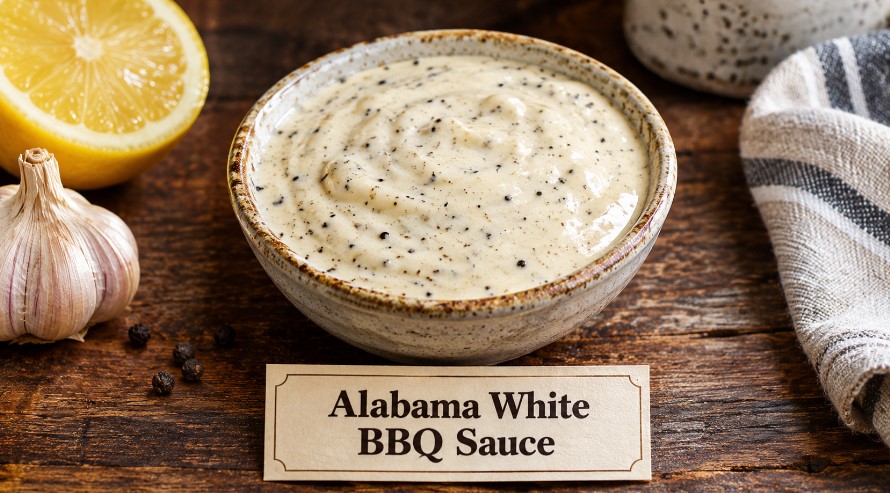
Alabama white BBQ sauce is a cold, creamy barbecue condiment made with mayonnaise, vinegar and black pepper. Its bright acidity cuts through the richness of smoked chicken, while the mayonnaise gives it a soft, clingy texture. Unlike a tomato glaze, it works especially well as a finishing sauce or dip. You can make a small batch without turning on the stove, then adjust the tang and pepper to suit your meal.
Why does this sauce look so different?
Most barbecue sauces get their body from tomatoes, fruit or cooked sugar. Alabama white sauce relies on an existing emulsion: mayonnaise. The tiny droplets of oil suspended in it scatter light, giving the sauce its pale appearance. Vinegar loosens that structure without necessarily breaking it. Coarsely ground pepper adds visible dark flecks and a gentle bite.
The style is closely associated with Big Bob Gibson Bar-B-Q in Decatur, Alabama. Bon Appétit traces its popularity to the restaurant in 1925. The practice of dressing smoked chicken with a pale, tart sauce became a regional signature. There is no single ratio used by every restaurant or household. Some versions pour almost like a dressing; others are thick enough to dip a wing into.
Alabama white barbecue sauce is not meant to taste like a sweet sandwich spread. A little sugar can soften the acidity, but the vinegar and pepper should still be apparent. For a useful contrast, compare it with Carolina Gold mustard sauce, which also supplies acidity but has a sharper mustard flavor and a different texture.
Alabama white BBQ sauce ingredients: choosing the right base
Use a commercially prepared mayonnaise made with permitted ingredients. Full-fat mayonnaise is a predictable starting point because it has enough body to accept liquid. Reduced-fat products vary in their starch and gum content; their texture can become surprisingly loose once diluted. Check the label for eggs, soy and any flavorings that do not fit your dietary requirements.
Distilled white vinegar produces a clean, direct sourness. Apple cider vinegar offers a softer fruit aroma, although both can have similar acidity. Choose a food-grade vinegar with a labeled acidity of around 5%. Lemon juice adds a fresh top note. Use prepared horseradish only if its ingredients are suitable; it provides a sharp sensation distinct from chili heat.
How to make Alabama white BBQ sauce without cooking
This Alabama white sauce recipe is a research-informed home adaptation, not the restaurant’s proprietary formula or a kitchen-tested recipe. It aims for a pourable but creamy finish.
Prep: 10 minutes. Cook: none. Optional chilled rest: 30 minutes. Yield: roughly 1¼ cups, about ten 2-tablespoon portions. You need a bowl, whisk, measuring spoons and a clean covered container.
- 1 cup full-fat mayonnaise
- 3 tablespoons apple cider vinegar
- 1 tablespoon lemon juice
- 2 teaspoons coarsely ground black pepper
- 1 teaspoon prepared horseradish, optional
- ½ teaspoon garlic powder
- ½ teaspoon sugar
- ¼ teaspoon fine salt, or less if the mayonnaise is salty
- 1 tablespoon cold drinking water, if needed
- Whisk the mayonnaise until smooth before adding liquid.
- Add the vinegar in two or three portions, whisking after each addition. Stir in the lemon juice.
- Mix in pepper, horseradish if using, garlic powder, sugar and salt. Taste a small spoonful using a clean spoon.
- If it is too thick to drizzle, add the optional water gradually. Do not add more water once the desired texture is reached.
- Cover and chill. Stir briefly before serving.
A useful test is to lift a spoon over the bowl. The sauce should fall in a ribbon rather than sit in a rigid mound. It should coat the back of the spoon without leaving a separate layer of oil. A white BBQ sauce recipe does not need heat to develop its texture; boiling it would risk damaging the emulsion.
Serving smoked chicken with a cold finishing sauce
Cook chicken to a safe internal temperature of 165°F (74°C), measured with a food thermometer. Keep the sauce refrigerated until serving. Instead of repeatedly brushing it onto raw poultry, spoon a clean portion over the cooked bird or offer individual dipping cups. This gives you better control of the amount and keeps the remainder clean.
For a whole chicken, cut it into serving pieces after cooking and dress only the pieces you plan to eat. If you prefer crisp skin, put the sauce beside the meat rather than covering it in advance. The sauce adds moisture to the surface, which can soften crisp skin while the food sits.
Wings benefit from a light coating just before serving. Turkey breast can be sliced and served with a narrow drizzle to avoid masking its mild flavor. On a grilled chicken sandwich, spread a thin layer on the bun and add a crunchy vegetable topping. A little also works on grilled cauliflower or as a dip for roasted potatoes.
For a tomato-based alternative on the same menu, offer Kansas City-style BBQ sauce separately. Guests can choose between a sweet glaze and a creamy, peppery finish rather than mixing the two by default.
Adjusting the sauce at the table
When tasting, try a little on an unseasoned piece of cooked chicken. A sauce that seems sharply acidic alone may taste balanced with rich meat. Conversely, a sauce that seems mild by itself may disappear beside a heavily seasoned rub. Adjust one component at a time and record what you added.
- Too vinegary
- Whisk in a tablespoon of mayonnaise at a time. This restores body and dilutes acid without turning the sauce into a sugary dressing.
- Too thick
- Use a teaspoon of cold water at a time. If the sauce also lacks tang, use a small amount of vinegar instead.
- Too thin
- Whisk a little fresh mayonnaise in another bowl and gradually incorporate the runny batch. Avoid flour or cornstarch in this uncooked sauce.
- Too much pepper
- Make a small unseasoned portion of mayonnaise and vinegar and blend it with the original. Adding sugar will not remove the pepper particles.
- Oily separation
- If the sauce has been safely kept cold, try whisking a spoonful of it into fresh mayonnaise. If it has been left warm for too long, discard it rather than trying to rescue it.
Can the flavor be changed without losing its character?
A pepper-forward Alabama style white BBQ sauce can be made with more coarse black pepper and no added sugar. For a gentler version, omit horseradish and start with half the pepper. A pinch of cayenne adds a different kind of heat, but it should not overwhelm the vinegar. A teaspoon of lemon juice in place of an equal amount of vinegar changes the aroma without adding much liquid.
Egg-free commercial mayonnaise can work as a substitute for people avoiding eggs. Check the manufacturer’s allergen label and expect a different texture. Plain yogurt makes a tangy dressing but is not a direct equivalent to mayonnaise; it changes the fat content, flavor and body. Never assume a product labeled vegan is suitable for every dietary restriction without checking ingredients.
Keeping a mayonnaise-based sauce safe
Make only what you need for a few meals. Keep it in a clean, covered container at 40°F (4°C) or below and use within three to four days as a conservative household limit, not a validated product shelf life. Follow any shorter ingredient use-by instruction. FDA recommends limiting time out of refrigeration for perishable foods to two hours, or one hour above 90°F (32°C).
At an outdoor meal, serve a small bowl and replenish it from the refrigerator rather than returning a used serving bowl to the main batch. A brush that touches raw or partly cooked chicken must not be dipped back into sauce intended for eating. Reserve the clean portion before cooking.
Freezing is generally not worthwhile because a mayonnaise emulsion can separate when thawed. This uncooked mixture is not a shelf-stable bottled condiment. Discard it if mold or unusual discoloration appears, or if safe time and temperature limits have been exceeded. Normal appearance does not prove that food is safe.
What is in a serving?
With typical full-fat mayonnaise containing 90 calories and 10 grams of fat per tablespoon, a tenth of this batch contains approximately 145 calories and 16 grams of fat. Carbohydrate and sugar are generally under 2 grams per portion; protein is minimal. Sodium varies substantially with the mayonnaise and horseradish, so calculate it from the actual package labels rather than relying on a universal number. This is an ingredient-based estimate, not laboratory analysis.
The sauce contains egg if conventional mayonnaise is used and may contain soy or mustard depending on the brand. A smaller serving or a lighter mayonnaise can reduce calories but may alter the mouthfeel.
FAQs
What makes the best Alabama white BBQ sauce?
Look for a clean tang, noticeable pepper and a creamy texture that complements chicken. The preferred ratio is a matter of taste.
Is white BBQ sauce the same as ranch dressing?
No. It emphasizes vinegar and pepper, while ranch commonly uses dairy and herbs.
Does this Alabama white BBQ sauce recipe need to rest overnight?
No. It can be served immediately, although a short refrigerated rest helps the dry seasonings disperse.
Can I use white vinegar instead of cider vinegar?
Yes. Use a similar amount of food-grade vinegar and adjust to taste.
Why does the sauce become thinner after mixing?
Vinegar increases the liquid proportion of the mayonnaise. Add it gradually to control the final consistency.
Can I use freshly made raw egg mayonnaise?
Commercial mayonnaise or mayonnaise made with pasteurized eggs is a safer choice for an uncooked sauce.
Is horseradish required?
No. It supplies an optional pungent note. Pepper and vinegar can provide enough bite on their own.
Can I cook white sauce over a direct flame?
It is better used as a finish. High direct heat can separate the emulsion and damage the texture.
Does it work on beef?
Yes, especially as a small dip for grilled beef or a sandwich spread. Its classic association is chicken.
Is the sauce naturally dairy-free?
Conventional mayonnaise is usually dairy-free, but check every ingredient label for milk and other allergens.
Can I leave it on a picnic table?
Serve small portions and keep the remainder cold. Follow the two-hour limit, reduced to one hour above 90°F.
Can I bottle it for gifts?
Only as a refrigerated, short-lived food with clear storage instructions. This recipe is not validated for room-temperature storage.
Should I dunk the whole chicken in the sauce?
That is a traditional serving approach, but at home a clean spoon or separate bowl avoids contaminating the main batch.