Lexington-Style BBQ Sauce (Piedmont Dip)
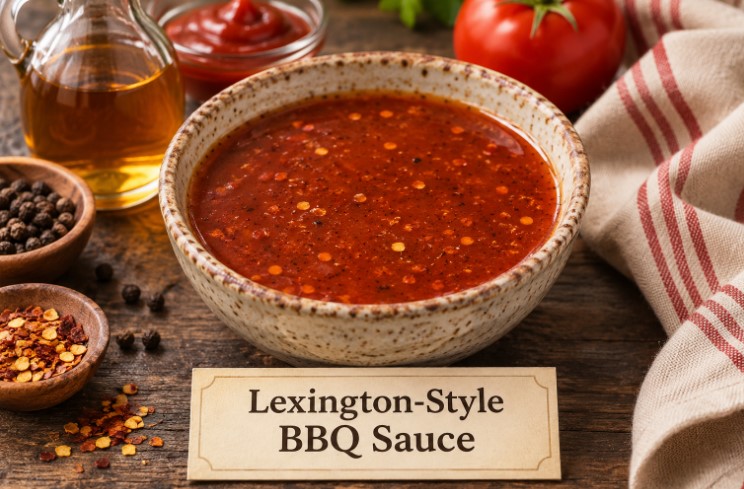
Lexington BBQ sauce, often called Lexington dip or Piedmont dip, is a thin North Carolina barbecue sauce built around vinegar, a small amount of tomato and pepper. It has a red tint and a slightly rounder flavor than the eastern vinegar-only style. Use it to season shredded beef, smoked turkey or grilled chicken without creating a heavy sugary coating.
Eastern sauce or Lexington style dip: what is the difference?
The city of Lexington lies in North Carolina’s Piedmont region. Its barbecue tradition developed a distinctive dip in which tomato softens the sharp vinegar-and-pepper base. It is not supposed to resemble thick ketchup, even though ketchup is a convenient ingredient in many homemade versions.
| Characteristic | Lexington dip | Eastern vinegar sauce |
|---|---|---|
| Base | Vinegar with some tomato | Vinegar |
| Color | Light red to reddish brown | Clear to amber |
| Texture | Thin and pourable | Very thin |
| Flavor | Tart, peppery, mildly sweet | Sharper acidity and pepper |
| Common application | Finishing and light basting | Finishing and light basting |
Explore Eastern North Carolina BBQ sauce if you want a completely tomato-free version. For a heavier tomato glaze, Kansas City BBQ sauce is a different approach.
A Lexington BBQ sauce recipe for a small cookout
Prep: 5 minutes. Cook: 5–8 minutes. Total: approximately 10–13 minutes. Yield: about 1 1/4 cups, depending on evaporation. Equipment: small stainless steel saucepan, whisk, measuring spoons and a clean container.
For this Lexington style BBQ sauce recipe, gather 3/4 cup apple cider vinegar, 1/4 cup water, 1/4 cup ketchup, 1 tablespoon brown sugar, 1/2 teaspoon black pepper, 1/2 teaspoon crushed red pepper and 1/4 teaspoon fine salt.
Combine the vinegar, water and ketchup in the pan. Whisk in the sugar and seasonings. Warm over low to medium-low heat until the sugar dissolves and the mixture just simmers. Stir for a few minutes and remove from the burner. It should still pour freely, with only a slight tomato body.
Taste a cooled sample on cooked food rather than judging the vinegar from the hot pan. Adjust pepper or sugar sparingly. Refrigerate promptly if you are not using it immediately. This is an adapted small-batch Lexington NC BBQ sauce, not a proprietary restaurant recipe or a kitchen-tested formula.
Understanding the ratio
The key is that vinegar remains the dominant liquid. Ketchup contributes color, a little sweetness and tomato solids. Water softens the mixture without turning it into a syrup. Brown sugar rounds off the edges, while red pepper and black pepper give two different kinds of heat.
If substituting plain tomato puree for ketchup, remember that it does not contain the same seasoning. Start with a small amount and adjust the sugar and salt after tasting. A teaspoon of tomato paste can be used to introduce color gradually, but a large amount will make the dip heavy. Select suitable commercial ingredients with no added alcohol or prohibited ingredients.
How to serve Piedmont BBQ sauce
Lexington barbecue sauce is particularly useful for chopped or shredded cooked meat. A spoonful spreads more easily than thick sauce and gives the cut surfaces a tangy flavor. Toss a small portion into the warm meat, taste, then add more if necessary. Keep the remaining clean dip on the table for people who want a stronger vinegar note.
On smoked beef, this can make a rich sandwich feel less heavy. Try a modest drizzle on chicken pieces rather than saturating the crisp exterior. It can also be stirred into a simple cabbage slaw for a barbecue side dish, with additional seasoning adjusted separately.
As a mop, it is most useful in light applications after the outside of the meat starts to set. Too much liquid or frequent smoker opening can slow the cook or soften the bark. For a general overview of cooking terminology, see the complete BBQ sauce guide.
If using the dip in a marinade, separate the serving amount before raw food enters the bowl. Acid does not remove the need for safe refrigeration and cross-contamination control.
Fixing a Lexington dip that lost its balance
The dip is thick and sticky: too much ketchup or excessive reduction is likely. Add a small amount of vinegar and water, tasting after each addition. Do not simmer for another half hour just because a typical red sauce recipe says to do so.
It tastes harsh: vinegar is supposed to be noticeable, but a tiny amount of brown sugar can soften the finish. Test it on the meat before changing the whole batch. If the acidity still overwhelms the food, dilute a small serving and adjust seasoning.
It tastes like ketchup: reduce the proportion of ketchup next time. Add vinegar gradually to the current batch if it is otherwise well balanced. A little black pepper can also bring back a savory edge.
It is too peppery: prepare a small unseasoned batch and mix it in. Straining flakes can remove some heat sources, although dissolved pepper flavor will remain.
For a milder Piedmont dip, use half the crushed pepper. For a sharper version, increase vinegar while keeping the tomato quantity modest. A small splash of apple juice can soften the taste in a modern variation, but it adds sweetness and is not required by the regional style.
Should you buy or make Lexington sauce?
If choosing a commercial bottle, look for a pourable sauce that identifies vinegar as a principal ingredient. A sauce marketed as Carolina barbecue may instead use mustard or a thick tomato base. Regional labeling alone does not guarantee the flavor you expect.
Making a small batch makes it easier to control the vinegar and pepper ratios. Keep notes on the ketchup brand and the amount of sugar. Those two details can explain why batches prepared from identical measurements taste different.
Storage and serving size
Refrigerate clean dip in a covered container at 40°F or colder. Use within three to four days as a conservative general leftover limit for this unvalidated recipe or freeze small portions. Thaw in the refrigerator. Discard contaminated or improperly held sauce; do not rely on smell alone. This recipe is not approved for room-temperature canning.
Approximate nutrition per 2 tablespoons (ten servings): 15–20 calories, 3–4 g carbohydrates, about 3 g sugars, 120 mg sodium, less than 1 g fat and less than 1 g protein. Values use generic ketchup and packed brown sugar data, and vary with the final yield and label sodium.
FAQs
Is Lexington dip the same as Piedmont dip?
These terms commonly refer to the vinegar-based, tomato-accented regional sauce. Individual recipes vary.
Why is Lexington style BBQ sauce thinner than ordinary BBQ sauce?
Vinegar is its principal ingredient and tomato is used in a modest quantity, so it stays pourable rather than syrupy.
Can I make Lexington dip without ketchup?
Yes. A small amount of tomato puree or diluted tomato paste can provide the tomato note, with seasonings adjusted separately.
Does Lexington sauce need to be hot when served?
No. It can be served cold, cool or gently warmed. Keep portions safely refrigerated until needed.
Is Lexington sauce suitable for grilled chicken?
Yes. It is useful as a light finishing sauce, particularly if you prefer tanginess over a sweet glaze.
Can I increase sugar for a sweeter dip?
Yes, but add small amounts. Too much sweetness changes the characteristic sharp balance.
Is Lexington barbecue sauce meant to be a thick dipping sauce?
No. The regional name refers to a thin seasoning sauce, not a thick condiment that clings heavily to food.