South Carolina Heavy Tomato BBQ Sauce
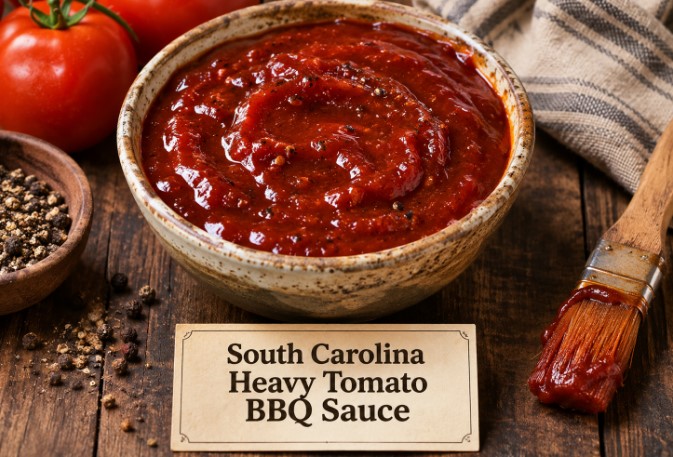
South Carolina heavy tomato BBQ sauce is a red, tomato-forward sauce associated with the western and northwestern parts of the state. It has more body than the vinegar-led light tomato style and works especially well when you want a coating on grilled chicken, beef ribs or a burger. Sweetness and heat vary by cook, so the regional name does not guarantee a particular recipe.
Getting the texture right before you start cooking
The word heavy refers to the prominence of tomato, not the weight of a serving. A good heavy tomato BBQ sauce can cling to a spoon without becoming a paste. Tomato solids provide body, while vinegar cuts through sweetness and helps the sauce taste lively alongside fatty cuts. Sugar is optional in varying amounts; it does not need to be the dominant flavor.
Discover South Carolina identifies four regional families of sauces. Its heavy tomato style is associated with the Upstate, but restaurants can offer several styles side by side. South Carolina heavy tomato sauce is not governed by a fixed ingredient ratio. The closely related light tomato guide describes a thinner alternative for finishing meat rather than coating it.
A small-batch heavy tomato BBQ sauce recipe
This South Carolina heavy tomato BBQ sauce recipe is an adapted home version, not a claim to reproduce a restaurant’s secret formula. It is a tomato based BBQ sauce recipe designed for a smooth, moderately sweet finish. Use a small heavy-bottomed saucepan, whisk, measuring spoons and a heatproof spatula.
Prep: 5 minutes. Cook: 20 minutes. Total: about 25 minutes. Yield: approximately 1 1/4 cups, or ten 2-tablespoon portions.
- 1 cup plain tomato sauce
- 2 tablespoons tomato paste
- 3 tablespoons apple cider vinegar
- 2 tablespoons brown sugar
- 1 tablespoon water
- 1 teaspoon yellow mustard
- 1/2 teaspoon garlic powder
- 1/2 teaspoon onion powder
- 1/2 teaspoon black pepper
- 1/4 teaspoon fine salt, or less if the tomato sauce is salted
- Whisk tomato sauce and paste until no lumps remain.
- Add vinegar, sugar, water, mustard and all seasonings.
- Bring to a gentle simmer, then reduce the heat. Stir frequently, reaching the corners of the pan.
- After about 15 minutes, check the coating on a spoon. Continue for up to five more minutes if needed.
- Cool a small sample before adjusting the flavor. Serve or transfer the unused portion to a clean container and refrigerate promptly.
Homemade South Carolina heavy tomato BBQ sauce thickens as it cools. Stop cooking while it is a little looser than your preferred serving texture. Actual yield depends on evaporation.
Tomato sauce or ketchup?
Making BBQ sauce with tomato sauce gives you more control over sugar and salt. A ketchup based BBQ sauce is quicker because the ketchup already contains sweetener, acid and seasoning. If replacing the cup of plain sauce with ketchup, start with no added sugar and less salt; taste before adding more vinegar. Tomato paste is concentrated, so replacing all the liquid with paste would make the recipe far too dense.
Use it as a glaze or a table sauce
Brush a thin coat over chicken thighs near the end of indirect grilling. Let it set briefly before adding another coat. On beef ribs, wait until the crust is firm and the meat is nearly tender. The goal is a thin glossy layer, not a thick blanket that obscures the surface. Keep some clean sauce at the table for diners who prefer more.
For burgers, spread a spoonful on a cooked patty or toasted bun. For grilled mushrooms, brush lightly after most of their moisture has evaporated. A tomato based barbecue sauce also works with roasted potatoes, but use it as a dip if the potatoes are already crisp.
Three adjustments that save a batch
- Too thick after cooling
- Add water by the teaspoon and whisk. If the flavor becomes flat, add a small splash of vinegar.
- Too sweet
- Blend in unsweetened tomato sauce, then adjust acidity. Adding salt alone does not remove sweetness.
- Burning at the bottom
- Lower the heat and stir more often. If the bottom has scorched, transfer the unburned top to another pan without scraping. Discard it if the burnt taste is throughout.
For a peppery Carolina heavy tomato BBQ sauce, increase black pepper in small increments. For a milder version, omit the extra pepper and use a little water to soften the concentration. Unlike a thin vinegar dip, heavy tomato barbecue sauce should not be repeatedly poured over meat throughout a long cook.
Serving and keeping the remainder
Set aside serving sauce before bringing a brush near raw meat. Refrigerate the unused homemade sauce at 40°F or below within two hours, or one hour when the temperature exceeds 90°F. Use within three to four days as a conservative leftover guideline rather than a validated shelf-life for this formula. Freeze clean portions for longer storage; thaw in the refrigerator and whisk if the texture changes. This recipe is not tested for shelf-stable canning.
For a rough nutrition estimate, a 2-tablespoon serving may contain about 15–25 calories, 3–5 g carbohydrate, 2–4 g sugar and less than 1 g each of fat and protein. Sodium varies especially with the tomato sauce and mustard brands; check package labels to calculate it for your batch. Mustard is a relevant allergen.
For a thicker glaze with a more pronounced molasses character, compare the Kansas City sauce guide before choosing your sweetener.
FAQs
Is tomato sauce BBQ sauce the same as ketchup sauce?
Both can form the base of a barbecue sauce, but ketchup already supplies sugar and vinegar. Adjust the added seasonings.
Can I skip tomato paste?
Yes. Reduce the sauce gently for longer, checking it frequently to avoid scorching.
What is the difference from Kansas City sauce?
Both may be thick and sweet, but regional recipes overlap. The South Carolina label describes a regional family rather than a fixed molasses formula.
Can I make it without added sugar?
Use unsweetened tomato sauce and omit brown sugar. Expect a more acidic result and less sticky glaze.
How do I know when it is thick enough?
A spoon should carry an even coating that still flows when tilted. Check again once a sample cools.
Does it work on smoked turkey?
Yes. Apply a thin coat near the end or serve it on sliced cooked turkey.
Can I double the batch?
Yes, but use a wider pan and allow extra reduction time. Refrigerate in smaller containers promptly.