Pineapple BBQ Sauce
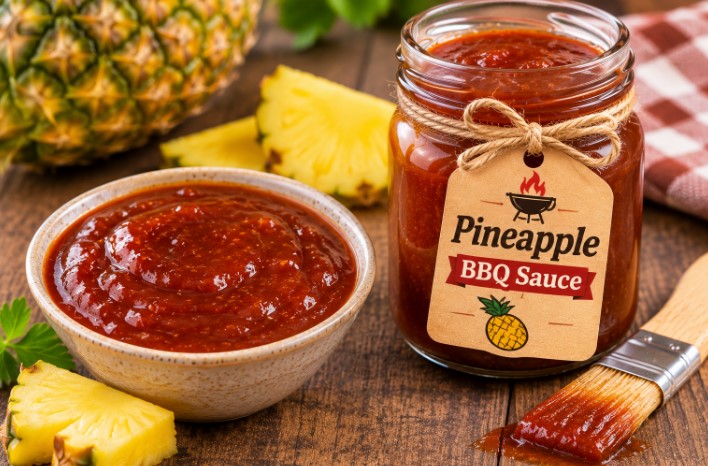
Pineapple BBQ sauce brings tropical fruit sweetness and a bright acidity to a familiar tomato-based barbecue sauce. It works especially well as a finishing glaze for grilled chicken, shrimp and beef ribs. A good version tastes savory as well as fruity, with enough body to cling to food without forming a heavy sugary coating.
Fresh pineapple or canned pineapple?
Fresh ripe fruit provides a bright aroma and a slightly variable sweetness. Choose fruit that smells pleasantly fruity, trim away the tough skin and remove the core before chopping. Canned crushed pineapple packed in juice is a convenient alternative. Avoid heavy syrup unless you deliberately want a much sweeter sauce. Frozen pineapple can also be thawed in the refrigerator and used with its released juice.
Fresh pineapple contains bromelain, an enzyme that breaks down proteins. Heat treatment reduces its activity. That matters if you use uncooked pineapple as a marinade: prolonged contact can leave meat with an unpleasantly soft surface. A simmered pineapple barbecue sauce is better treated primarily as a flavoring and glaze rather than a reliable meat tenderizer.
How to make pineapple BBQ sauce
This pineapple BBQ sauce recipe uses both fruit and juice to build flavor. It is a modern fruit-based variation, rather than a claim to a single traditional Hawaiian recipe. Allow 10 minutes to prepare and 20–25 minutes to cook. Yield is approximately 1½ cups, or twelve two-tablespoon servings. Have a saucepan, spoon, measuring cups and a blender available.
- ½ cup crushed pineapple in juice, including its liquid
- ½ cup unsweetened pineapple juice
- ¾ cup ketchup
- 2 tablespoons apple cider vinegar
- 1 tablespoon brown sugar
- 1 teaspoon grated fresh ginger
- ½ teaspoon garlic powder
- ¼ teaspoon smoked paprika
- ¼ teaspoon black pepper
- Combine fruit, juice and ketchup in a saucepan, then add the vinegar, sugar, ginger and dry seasonings.
- Heat slowly, stirring until the mixture is evenly combined. Maintain a gentle uncovered simmer for 20–25 minutes.
- Crush larger pieces with a spoon. For a smooth sauce, allow it to cool sufficiently before blending according to appliance instructions.
- Check a cooled sample. If the sauce is too thin, return it to gentle heat for a few more minutes. If too sharp, add a little sugar only after tasting.
- Remove from the heat when it coats a spoon and still pours. Reserve clean portions for glazing and serving.
A pineapple barbecue sauce recipe using juice alone will be smoother but may require more reduction. Crushed fruit gives body and a more obvious fruit texture. The recipe here is research-informed and has not been personally kitchen-tested.
Choose the application before adjusting the thickness
| Use | Texture and technique |
|---|---|
| Pineapple BBQ sauce for chicken | Brush a thin coating over nearly cooked thighs on indirect heat. Cook poultry to 165°F internally. |
| Pineapple BBQ sauce for ribs | Use a slightly thicker finish on tender beef ribs, checking the coating frequently to avoid scorching. |
| Pineapple BBQ glaze | Reduce a clean portion a little longer for a glossy finish on cooked shrimp or vegetables. |
| Dipping | Serve a pourable, cooled portion with grilled chicken or roasted potatoes. |
Do not apply a thick sweet glaze at the start of direct grilling. The surface can darken well before the food is cooked. Instead, build flavor with a savory seasoning and finish with the sauce toward the end. When using sauce as a marinade, refrigerate the meat and keep an untouched portion for serving. Discard the used marinade rather than brushing it onto cooked food.
Is Hawaiian pineapple BBQ sauce the same as Huli Huli?
A Hawaiian pineapple BBQ sauce recipe may use ginger, garlic and pineapple for a tropical flavor, but this does not make it identical to traditional Hawaiian grilling sauces. The tomato-heavy version here is a modern adaptation. Our Huli Huli sauce guide explains a more savory grilling preparation. A fruity peach barbecue sauce offers a different balance when pineapple is unavailable.
For a sweet pineapple BBQ sauce, choose ripe fruit and taste before increasing the sugar. For a hotter version, add a pinch of cayenne. For a less sweet batch, omit the brown sugar and adjust the vinegar after simmering. Ginger powder can replace fresh ginger in a smaller quantity, starting with an eighth of a teaspoon.
Fixing watery, fibrous or overly sweet sauce
Watery sauce usually needs evaporation rather than more ketchup. Use a wide pan and simmer gently until the excess liquid reduces. A sauce with visible fruit fibers can be blended and strained, although straining removes some body. If the sauce tastes like fruit syrup, add unsweetened tomato puree or a little vinegar. Avoid correcting sweetness with excessive salt.
When a glaze burns, reduce grill heat and use thinner coats. Do not scrape blackened sugar into the remaining sauce. If the pineapple aroma seems weak, start the next batch with more flavorful fruit rather than simply adding sugar. Homemade pineapple BBQ sauce can vary substantially with fruit ripeness, which is why tasting a cooled sample matters.
Storage and nutrition
Cool clean leftovers in a shallow container and refrigerate within two hours, or one hour above 90°F. Store at 40°F or below and use within four days as a conservative cooked-food guideline. Freeze in small portions if needed; thaw in the refrigerator and stir to recombine. Do not use this untested recipe for shelf-stable canning.
Estimated energy is about 25–40 calories per two tablespoons at the stated yield. Carbohydrate and sugar supply most of the energy; sodium depends largely on ketchup. Exact nutritional values require the product labels and measured final yield.
FAQs
Can I use pineapple juice from a can?
Yes, use juice rather than heavy syrup to keep the sweetness manageable.
Should the sauce be completely smooth?
No. A slightly textured sauce is useful for dipping; a blended version is easier to brush onto meat.
Can pineapple sauce tenderize chicken?
Fresh uncooked pineapple may soften the surface through enzyme activity. Do not depend on a cooked sauce for tenderizing.
Can I serve it with fish?
Yes, use a light coating on cooked firm fish so the fruit does not overwhelm it.
Can I skip the added sugar?
Yes, taste the fruit first. Ripe pineapple and ketchup may provide enough sweetness.
Why is my sauce foamy after blending?
Blending introduces air. Let the sauce settle briefly before serving or refrigerating.
Can I use it on burgers?
Yes, spread a modest amount on a cooked beef or turkey burger.
Does pineapple make barbecue sauce shelf stable?
No. Fruit acidity alone does not establish a safe room-temperature storage process.