Hawaiian Huli Huli Sauce
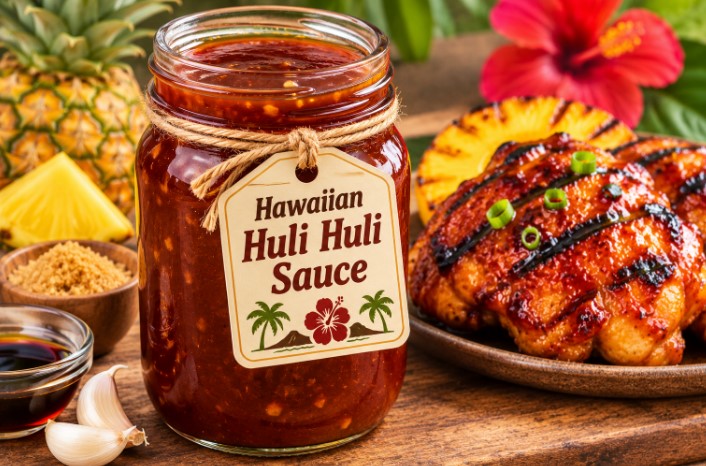
Huli Huli sauce is a sweet, salty and ginger-scented Hawaiian grilling sauce commonly used for chicken. Soy sauce, sugar, garlic and pineapple juice are familiar ingredients in modern home versions. The mixture can season meat before cooking and form a glossy finish near the end. Keeping the marinade separate from the serving glaze is the key to using it safely and preventing a burnt coating.
One sauce, two jobs: marinade and glaze
Before mixing anything, decide how much you need for the raw chicken and how much you want for the grill. A Huli Huli marinade is relatively fluid so it can coat pieces evenly. A glaze is more concentrated and clings to the cooked surface. The two can begin with the same clean mixture, but once a portion has touched raw poultry it must never be returned to the clean batch.
Huli Huli chicken sauce is particularly useful with bone-in thighs because the rich meat stands up to sweet and savory seasoning. Boneless thighs cook faster and can be turned more easily. Chicken breast also works, but prolonged cooking can dry it out; the glaze cannot correct overcooking.
Huli Huli sauce ingredients and a balanced home recipe
This Hawaiian Huli Huli sauce recipe is an alcohol-free, research-informed approximation, not a reproduction of the original commercial formula. Use soy sauce and other condiments whose ingredient labels meet your dietary requirements, including no added alcohol. Canned or pasteurized pineapple juice is a predictable choice for marinating because its enzymes are largely inactivated by heating.
Prep: 10 minutes. Glaze cooking: 10–15 minutes. Total sauce preparation: 20–25 minutes, excluding marinating. Yield: about 1½ cups before reduction. The glaze portion will yield less after simmering.
- ½ cup unsweetened pineapple juice
- ⅓ cup reduced-sodium suitable soy sauce
- ¼ cup ketchup
- ¼ cup packed brown sugar
- 2 tablespoons water
- 1 tablespoon apple cider vinegar
- 1 tablespoon finely grated fresh ginger
- 2 garlic cloves, finely grated
- 1 teaspoon toasted sesame oil, optional
How to make Huli Huli sauce for both uses
- Whisk all ingredients in a clean bowl until the sugar dissolves. The mixture should smell of ginger and soy and have a reddish-brown color.
- Reserve about half in a clean container for glazing and serving. Place the remaining portion in a separate container for marinating.
- Pour the reserved clean glaze portion into a small saucepan. Simmer gently for 10–15 minutes, stirring frequently, until it lightly coats a spoon.
- Cool the glaze and divide it again if you plan to brush some on the grill and serve some at the table.
- Refrigerate the sauce if not using immediately. Discard the portion used to marinate raw chicken.
Homemade Huli Huli sauce should not have to become as thick as jam. A light syrup spreads more easily and avoids a heavy sugary shell. If you want only a dipping sauce, simmer the whole clean batch and skip the raw-meat step.
Why pineapple, soy and ginger work together
Soy sauce supplies savory depth and salt, while pineapple juice gives fruit acidity and sweetness. Brown sugar helps a thin coat develop color during cooking. Ketchup contributes body and a little extra tang. Fresh ginger gives a warm aromatic bite, and garlic supplies savory pungency. Sesame oil adds a nutty scent but is optional; too much can dominate the fruit.
Fresh pineapple juice contains bromelain, which can break down proteins and make meat surfaces mushy during extended marination. If using fresh juice, choose a shorter marinating period or cook the juice first and cool it before use. Do not assume that acidic fruit juice makes raw chicken safe to eat.
Grilling chicken without scorching the sauce
Use the marinade for about 30 minutes to four hours in the refrigerator as a practical starting point for this recipe. Remove chicken from the marinade, let excess liquid drip away and discard the used liquid. Pat the surface lightly if it is dripping, then cook using a two-zone setup so you have a cooler area away from direct flames.
Turn the pieces as needed for even cooking, using clean utensils for fully cooked meat. Start brushing a thin layer of clean glaze near the final cooking stage, when the chicken has nearly reached its safe internal temperature. Move the chicken to indirect heat if the coating darkens too quickly. Poultry must reach 165°F (74°C), confirmed with a thermometer in the thickest part, away from bone.
Set the glaze with gentle heat rather than trying to achieve a deep crust over a flame. The sugars will continue to darken as moisture evaporates. Several very thin coats are easier to control than a single heavy one.
For a different finishing method on chicken, try the cold Alabama white sauce. If you prefer a fruit-forward glaze without the same soy and ginger flavor, explore Georgia peach BBQ sauce.
Where does the name come from?
Hawaiian newspaper accounts and HAWAIʻI Magazine associate the dish with poultry businessman Ernest Morgado, who served his marinated chicken at a farmers’ gathering in 1955. The word huli refers to turning, reflecting the way chicken was turned during cooking. It became associated with community fundraising and local gatherings.
Hawaiian BBQ sauce is a broad label, not a single formula. The Huli Huli BBQ sauce style is one recognizable sweet-savory preparation within that broader group. The original formula was not publicly released, so home cooks should describe their versions as inspired by the style rather than identical to the original.
What to do when the glaze goes wrong
| Symptom | Adjustment |
|---|---|
| Too salty after reduction | Add unsweetened pineapple juice or water in small amounts. Next time use reduced-sodium soy and stop reducing sooner. |
| Too sweet | Stir in a teaspoon of vinegar and a little ginger. Reduce the brown sugar in future batches. |
| Burns before chicken cooks | Move to indirect heat and apply glaze later. Avoid thick coats and direct flames. |
| Too thin for a glaze | Simmer a clean portion gently until it coats a spoon. Keep the marinade portion thin. |
| Garlic tastes harsh | Simmer the clean serving sauce briefly; grate garlic finely and avoid frying it until dark. |
| Chicken feels mushy | Shorten marinating time, particularly when using raw pineapple juice. |
Other ways to serve the sauce
Brush a small amount onto grilled beef skewers near the end of cooking. Use it sparingly on salmon or shrimp because the soy flavor can overwhelm delicate seafood. Grilled pineapple and vegetables work with the sweet and savory balance, too. For a rice bowl, drizzle the warm clean sauce over cooked chicken and vegetables instead of soaking the rice.
A mild Huli Huli sauce recipe needs no chili. Add a pinch of red pepper flakes if you prefer a little heat. If sesame is unsuitable, omit the oil. For a wheat-free option, use a suitable certified gluten-free soy-style seasoning and verify the rest of the ingredients. Such substitutions can change saltiness, so taste before reducing.
Storing separate portions and estimating nutrition
Keep the uncooked clean mixture and cooked clean glaze in separate covered containers in the refrigerator at 40°F or below. Use within three to four days as a conservative limit, or freeze clean portions. Thaw in the refrigerator. Raw meat marinade is not a storage portion: discard it after use. USDA advises reserving clean sauce before marinating. Do not leave perishable sauce at room temperature for more than two hours, or one hour above 90°F.
For this Huli Huli BBQ sauce recipe, a two-tablespoon portion of the unreduced mixture contains roughly 25–35 calories and about 5–7 grams carbohydrate, assuming twelve portions. Fat and protein are small. The sodium content depends heavily on soy sauce and ketchup. A reduced glaze has more concentrated nutrients per spoonful. Soy, wheat and sesame may be present, so check labels.
FAQs
Is Huli Huli sauce the same as teriyaki?
It is related in flavor, but many Hawaiian-style home versions contain pineapple, ketchup and ginger in a distinctive balance.
Can I make the glaze a day ahead?
Yes. Refrigerate the clean sauce promptly and stir before use.
Can I skip pineapple juice?
Apple juice can replace it by volume in a home adaptation, but the characteristic fruit flavor changes.
Does the marinade need to be boiled before use?
No, the clean mixture can be used directly for marinating. Keep a separate clean portion for glazing.
Can I use powdered ginger?
Start with about ¼ teaspoon in place of the tablespoon of fresh ginger and adjust to taste. Its aroma is different.
Why is my glaze sticky?
Sugar becomes more concentrated during reduction. Thin a clean batch with a little water if needed.
Can I cook Huli Huli chicken in an oven?
Yes. Roast until safely cooked and apply the reserved glaze toward the end, watching for scorching.
Is sesame oil essential?
No. It is an optional flavoring in this version.
Should I use the leftover marinade as a dip?
No. Use the separately reserved clean sauce instead.
Can I make a less sweet version?
Reduce the brown sugar and use unsweetened juice. The glaze may be thinner and less glossy.