South Carolina Light Tomato BBQ Sauce
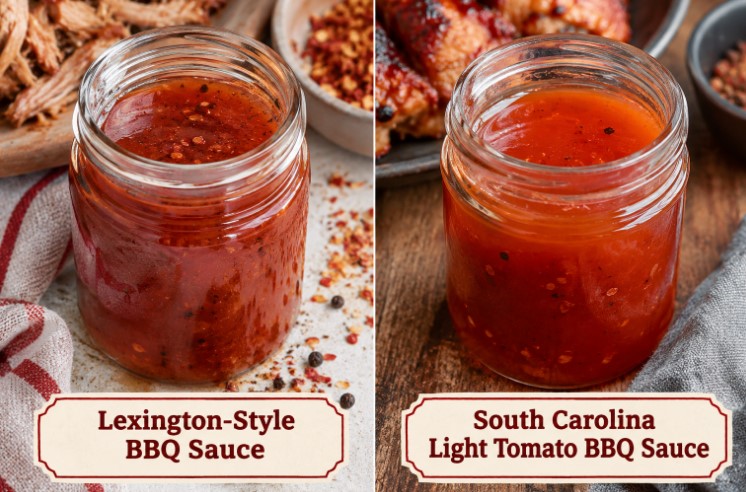
South Carolina light tomato BBQ sauce is a thin vinegar-and-pepper sauce with enough tomato to give it a red tint and soften its sharpness. It is associated with regional barbecue traditions in South Carolina and resembles the tomato-accented dips of neighboring North Carolina. Unlike a thick red glaze, it pours easily and works well as a finishing drizzle on smoked beef, chicken or turkey.
Where does the light tomato style fit?
South Carolina is known for four broad barbecue sauce styles: vinegar and pepper, mustard, light tomato and heavy tomato. The state’s tourism resources distinguish the two tomato styles, while regional boundaries and individual recipes overlap. The light tomato style is associated with areas including the Pee Dee and parts of the upper state, but not every restaurant in those areas serves the same sauce.
The words light and heavy describe the role of tomato and the resulting body, rather than calories. Light tomato barbecue sauce usually remains dominated by vinegar and pepper. Heavy tomato sauces rely on more tomato solids and are generally thicker. Do not assume every bottle labeled Carolina red BBQ sauce represents the same precise regional recipe.
A useful sauce for foods that need brightness, not a thick glaze
A tomato vinegar BBQ sauce is particularly handy when a cut of meat already has a well-developed smoky crust. Spoon a little over sliced or shredded cooked beef instead of hiding the bark beneath a thick coating. On chicken, offer it on the side or drizzle onto cut portions after cooking.
A small amount can season a cabbage side dish, grilled mushrooms or a turkey sandwich. It is not an ideal coating if the goal is a sticky red glaze. For that purpose, choose the thicker Kansas City sauce instead.
The Lexington dip guide covers the closely related North Carolina tradition. These styles can overlap substantially; the South Carolina guide focuses on the state’s regional classification, rather than claiming that the two are separated by a universal ingredient ratio.
Light tomato BBQ sauce recipe
This South Carolina light tomato BBQ sauce recipe is a simple adapted formula, not an official or kitchen-tested regional recipe. It produces a homemade South Carolina light tomato BBQ sauce with a modest amount of tomato, keeping the vinegar-pepper base recognizable.
Prep: 5 minutes. Cook: about 5 minutes. Total: approximately 10 minutes. Yield: about 1 cup. Equipment: small stainless steel saucepan, measuring cup, spoons and whisk.
- 3/4 cup apple cider vinegar
- 2 tablespoons water
- 3 tablespoons ketchup
- 2 teaspoons brown sugar
- 1/2 teaspoon ground black pepper
- 1/2 teaspoon red pepper flakes
- 1/4 teaspoon fine salt
Whisk the vinegar, water and ketchup in the saucepan. Stir in the sugar, black pepper, pepper flakes and salt. Warm gently for about five minutes until the sugar dissolves and the ingredients blend. Avoid a long simmer, which may concentrate the sauce more than intended.
Let a small spoonful cool before tasting. The finished sauce should flow freely and carry a light tomato note. Refrigerate promptly if not serving. Choose packaged ingredients that meet your dietary requirements.
Adjusting the tomato and pepper balance
Ketchup is convenient because it supplies tomato, sweetener and salt in one ingredient. Plain tomato puree can replace it, but you may need to adjust sweetness and salt. Use less crushed pepper for a mild batch. Cider vinegar can be partly replaced by distilled white vinegar for a sharper taste.
If you are looking for a vinegar tomato BBQ sauce with only a trace of red color, start with two tablespoons of ketchup rather than three. Increasing the ketchup significantly will move it toward a heavier style. A small amount of water can soften the acidity, but do not dilute it to the point where it tastes bland.
What can go wrong with a thin red sauce?
Too thick: The pan may have been heated for too long. Whisk in a small splash of water and vinegar. Next time, remove it once the sugar dissolves.
Too sour: Taste the sauce on cooked food. If the acidity still dominates, add a little brown sugar to a separate sample and adjust gradually.
Too mild: Add freshly ground black pepper or a few additional pepper flakes. Avoid adding excessive ketchup just to intensify the flavor.
Pepper collecting at the bottom: This is normal in a thin sauce. Shake or stir it immediately before pouring.
As a light mop, the Carolina light tomato BBQ sauce can be applied sparingly after the exterior starts to set. Opening the smoker too frequently or repeatedly soaking the meat can affect cooking performance. Reserve a separate serving portion before any sauce or brush comes into contact with raw meat.
Storage and nutrition considerations
Store freshly made sauce in a clean covered container at 40°F or colder. For this unvalidated homemade recipe, use a conservative three-to-four-day refrigerated leftover window or freeze promptly in small portions. Do not regard it as shelf-stable or use it for home canning without a validated process. Discard any contaminated portion and any sauce kept beyond safe holding times.
Approximate nutrition per 2 tablespoons (eight servings): 15 calories, about 3 g carbohydrates, 2–3 g sugars, approximately 130 mg sodium, less than 1 g fat and less than 1 g protein. These estimates use generic ketchup and brown sugar values, with minor seasoning variations not fully accounted for.
FAQs
Is South Carolina light tomato sauce the same as Lexington dip?
They are closely related vinegar-and-tomato styles, but the names refer to different regional contexts. Specific recipes can overlap.
What does light tomato BBQ sauce mean?
It describes a thinner sauce with a relatively small amount of tomato, not necessarily a reduced-calorie sauce.
Can I use tomato paste instead of ketchup?
Yes, but use a small amount and adjust water, sugar and salt. Too much paste makes the sauce heavy.
Can I brush it onto chicken?
Yes, in light applications during indirect cooking or as a finishing drizzle. It will not form a thick sticky glaze.
Why is my sauce almost transparent?
A low tomato proportion gives a pale red or amber appearance. That can be normal for this style.
Can I add more sugar to make it sweeter?
Yes, a little at a time, but the vinegar-pepper character should remain noticeable.