


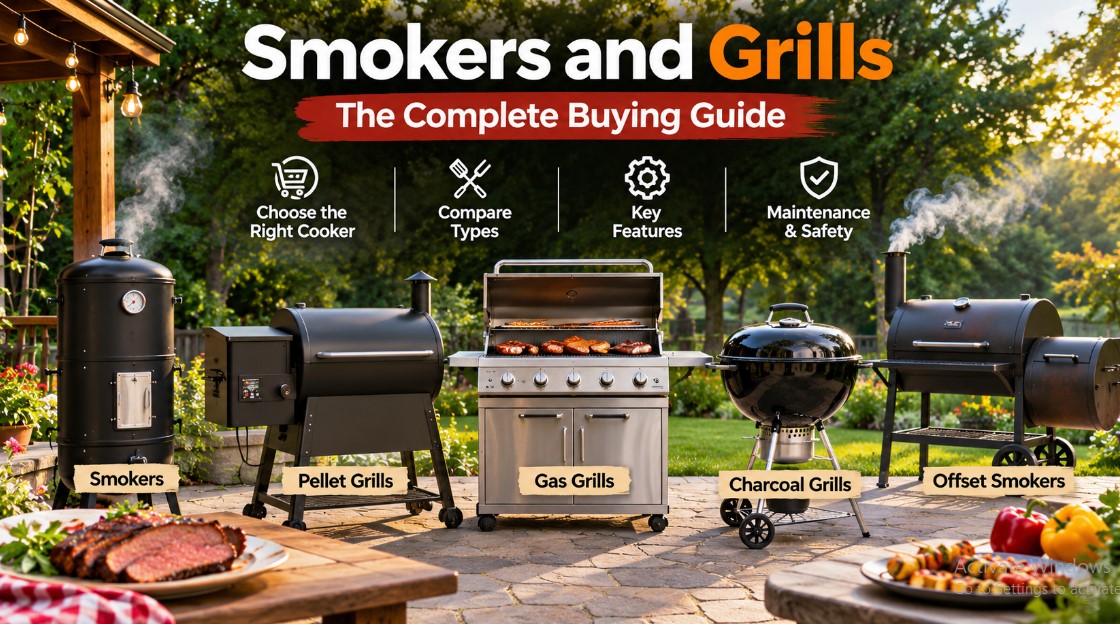
Choosing between smokers and grills gets easier when you start with the food you make, the time you have and the
way you prefer to cook. A gas grill is convenient for quick dinners. A charcoal grill handles high heat and can also cook
slowly with the right setup. Pellet smokers suit people who want longer barbecue cooks without constantly adjusting a
fire. Offset smokers give you direct control over burning wood, but they require more attention.
The most expensive cooker is not automatically the right one. Think about a normal Tuesday dinner as well as a
weekend brisket. Check how much usable cooking space you need, which fuel is easy to buy locally and whether you
have a safe outdoor place to operate the equipment. This buying guide compares the main options and explains the
practical details that matter after you bring a cooker home.
What Is the Difference Between a Smoker and a Grill?
A grill is built primarily to cook with high or moderate heat, often directly below the food. That makes grilling useful for
burgers, fish, vegetables and steaks. A smoker is intended to hold a more controlled cooking temperature while smoke
moves around food for an extended period. Traditional hot smoking uses indirect heat, although equipment designs
vary.
The names overlap. A kettle charcoal grill can smoke ribs when the charcoal sits away from the food. A pellet grill can
cook low and slow, and some models also offer a direct-flame or high-temperature grilling mode.
Not every pellet grill can produce the concentrated searing heat of a dedicated gas or charcoal grill. The model’s actual temperature range and heat delivery matter more than the label on the box.
If you mainly cook quick meals, start with a grill. If your weekends revolve around brisket, pulled beef, whole chickens
or ribs, look closely at a dedicated BBQ smoker or a cooker designed to do both jobs.
Which Types of Smokers and Grills Are Worth Considering?
Gas grills: Propane and natural gas grills provide fast burner adjustment and easy two-zone setups on models with
multiple burners. Their strengths are speed and convenience.
They do not create the same wood smoke as a live wood fire without additional equipment. Check the number of usable burners, grease drainage and whether
replacement burners are available.
Charcoal grills:
A charcoal grill can sear over a hot coal bed and cook indirectly with coals banked to one side. Kettle
designs are flexible, but temperature control takes practice. You need a safe place for the cooker to cool and a suitable
metal container for fully cooled ash.
Pellet smokers and pellet grills:
A controller operates an auger that feeds cooking pellets into a burn pot. A fan
supports combustion. This reduces the need to add fuel by hand, but the cooker normally requires electricity and dry,
food-safe pellets. Ask how easily you can clean the burn pot and find replacement igniters, fans and probes.
Offset smokers:
An offset smoker places the firebox beside the main cooking chamber. Heat and smoke pass into the
chamber before leaving through an exhaust. It is a rewarding choice for people who like tending a wood fire. Cheap,
thin-walled offsets can be hard to manage in wind and cold conditions, so inspect door fit, metal construction and
airflow controls.
Vertical smokers:
A vertical cabinet, drum or bullet smoker saves floor space by stacking cooking racks. Some use
charcoal, some electricity, some gas and some pellets. The tradeoff can be access to lower racks during a long cook.
Check water pan placement, fuel access and room for tall foods.
Portable grills:
A small grill works well when storage and transport matter. However, portability alone does not make a
cooker appropriate for enclosed patios, vehicles or tents. Follow outdoor clearance and fuel storage requirements
wherever you cook.
For a deeper explanation of individual designs, use our Types of BBQ Smokers directory rather than relying on a single
general comparison.
Should You Buy a Smoker, a Grill or a Grill Smoker Combo?
A grill smoker combo makes sense if space is tight and you genuinely need both cooking styles. But a combined
cooker can involve compromises.
A pellet grill smoker may handle slow cooking extremely well while offering less
intense direct heat than a charcoal kettle. A charcoal grill can smoke effectively but needs careful coal placement,
airflow control and fuel planning for long sessions.
Ask three questions before buying: How often will I cook at high heat? How often will I smoke food for several hours?
Will I enjoy tending fuel, or will I find it frustrating? If the answer is mostly weeknight grilling, buy a capable grill first. If
you plan to smoke food nearly every weekend, prioritize a smoker with stable heat and easy access to fuel and grease
collection.
Two modest appliances can sometimes be more practical than one costly combination unit. That depends on your
space, budget and willingness to maintain both.
Which Smoker or Grill Is Best for Beginners?
There is no universal best smoker for beginners. A beginner who wants to cook chicken and vegetables after work may
find a gas grill easiest.
Someone who enjoys learning charcoal management might prefer a kettle grill. A pellet smoker
can simplify longer cooks, provided the user is comfortable with electrical components and cleaning the burn pot.
A beginner should look for clear controls, a readable manual, accessible grease and ash removal, stable legs and a
reliable warranty. Do not pay extra for a phone app before checking basic construction. A simple cooker that is easy to
clean and holds a predictable temperature is more useful than one packed with features you rarely touch.
For a first cook, choose a forgiving recipe and learn how your particular cooker behaves. Test its heat distribution
before filling every inch of the grate.
How Much Cooking Space Do You Actually Need?
Manufacturer specifications often combine the main cooking surface with upper racks. Those numbers can look
generous while the usable area for a large roast is limited. Compare the dimensions of the main grate and the height
under the lid, not only total square inches.
Think about your normal meal. A small family cooking a few burgers needs less room than someone smoking several
racks of ribs. An offset may have enough overall chamber length for a brisket but still contain warmer areas near the
firebox. A vertical smoker may hold several racks of smaller foods yet struggle with a full-length rib rack unless it is
trimmed or arranged differently.
Leave some space between food items so air and smoke can circulate. Also measure your patio or yard, allowing safe
manufacturer-specified clearances, room to open the lid and access for cleaning.
Which Fuel Is Easier and More Affordable to Use?
Fuel cost depends on local prices, weather, cooker efficiency and how long you cook. The lowest purchase price does
not guarantee low running costs. A poorly sealed cooker may need more fuel to maintain a steady temperature.
Gas is convenient to adjust, but you must store and handle cylinders correctly when using propane. Charcoal is widely
useful for grilling and smoking, but fire management and ash disposal take time.
Pellet cookers use bagged cooking pellets and electricity. Keep pellets dry because moisture can make them swell and cause feed problems. Offset smokers commonly burn seasoned hardwood splits and may benefit from a charcoal base during startup, depending on the design.
Before comparing purchase prices, estimate the cost of several typical cooks using the fuel you can actually buy
nearby. Consider replacement parts, protective storage and routine maintenance as well.
What Construction Details Should You Inspect Before Buying?
Look beyond paint color and digital displays. A grill that rocks when you open the lid, has sharp unfinished edges or
makes the grease tray difficult to remove will be irritating to own. Inspect the hinges, wheels, handles, cooking grates,
firebox access and the path grease takes into the collection pan.
For gas grills, look for dependable burner ignition and access for burner inspection. For charcoal equipment, check the
ash collection system and the ability to adjust air intake. For an offset, test whether doors close properly and whether
dampers can be reached without leaning over hot surfaces. For pellet smokers, find out how the burn pot is cleaned
and whether the manufacturer sells replacement electrical components.
Heavy steel can improve heat stability, particularly on offsets, but weight alone does not prove good performance.
Consider design, insulation, airflow and how the cooker is assembled. Read the warranty details rather than relying on
a long headline warranty that may exclude important parts.
What Features Are Worth Paying Extra For?
A dependable thermometer is near the top of the list. A probe placed near the cooking grate helps you understand the
actual temperature around food. An instant-read food thermometer helps confirm doneness. Built-in lid thermometers
can differ from grate temperatures, especially in large cookers.
Other practical features include accessible grease management, easy ash removal, durable cooking grates, adjustable
racks and a stable work shelf. WiFi monitoring may be useful if you do long cooks and the system works reliably, but it
does not replace checking equipment and following safe cooking practices.
A side burner, rotisserie or dedicated searing zone may be useful for particular meals. Buy those features because you
intend to use them, not because they appear in a long specification sheet.
Can a Charcoal Grill Be Used as a Smoker?
Yes. A charcoal kettle can work as a smoker when the food is separated from the main coal bed. Arrange the charcoal
to one side, put the food on the cooler side and use the vents to regulate airflow. A small amount of suitable hardwood
can provide smoke. A drip pan may help catch grease and keep the cooking area cleaner.
Use a thermometer near the food because the lid gauge may not represent the cooking zone. Start with enough fuel for
the planned cook and learn how your grill reacts to vent adjustments. Making repeated large vent changes often leads
to unnecessary temperature swings.
Never use treated, painted or unknown scrap wood as cooking fuel. Choose hardwood or food-grade cooking pellets
appropriate for your appliance.
How Do You Control Temperature Without Chasing Every Small Change?
Stable heat starts with a suitable fuel load, unobstructed airflow and a cooker that is not overloaded. In charcoal and
wood cookers, opening an intake vent generally allows more air to support combustion. Closing it reduces the fire’s
oxygen supply, but changes take time to show on the thermometer.
An offset smoker also depends on a clean-burning fire and an exhaust that allows smoke to leave. Avoid treating the
exhaust as a shortcut for suppressing a dirty fire. A pellet cooker uses a controller and fan, so temperature fluctuations
may point to fuel quality, ash buildup, sensor placement or weather conditions rather than a need to manually adjust
the feed system.
Keep an eye on trends rather than reacting to every brief reading change. If the cooker repeatedly falls well below
target temperature, inspect the fuel and airflow before making aggressive changes. For a full diagnosis, see our smoker troubleshooting articles.
Why Is Your Smoker Not Getting Hot Enough?
A low cooking temperature is not always a broken heating system. On a charcoal cooker, damp fuel, blocked vents or
accumulated ash can choke the fire. On a wood offset, a small struggling fire or poorly prepared wood may be
responsible.
On a pellet smoker, pellets that have absorbed moisture, a dirty burn pot or a failed igniter can cause
startup and temperature trouble.
Start with the manufacturer manual and a separate thermometer to confirm the reading. Check whether the fuel is
appropriate and whether normal airflow paths are clear. If the appliance uses gas or electricity and you suspect a
damaged component, stop using it and follow the manufacturer’s service guidance. Never bypass safety devices.
Wind and cold weather may increase fuel use. That is not a reason to move a combustion cooker into a garage or
other enclosed space. Outdoor smokers and grills must remain in suitable open-air locations.
Why Does Barbecue Sometimes Taste Bitter or Too Smoky?
More smoke does not always mean better barbecue. A smoldering, oxygen-starved wood fire can produce unpleasant
smoke. Dirty grease deposits can also burn and contaminate the flavor of food. A small, clean-burning fire with
adequate airflow is usually a better starting point than stuffing the firebox with damp wood.
Different hardwoods produce different flavors, but fuel quality and combustion matter just as much as tree species. Use
clean, untreated wood suited to cooking. Empty grease trays according to the appliance instructions and remove old
deposits before they become a recurring problem.
If food tastes bitter after a long session, check your fire, airflow and cleanliness before adding more wood next time.
How Do You Avoid Dry Food and Uneven Cooking?
Uneven cooking can come from hot spots, crowded grates, direct heat exposure or inconsistent pit temperature. Learn
the warmer and cooler areas of your cooker with a grate-level probe and use indirect cooking when appropriate. Larger
pieces of meat often benefit from controlled heat rather than the strongest possible fire.
Dry food may be overcooked even when its surface looks good. Use a food thermometer and follow a tested cooking
method suited to the cut. Remember that tender barbecue and food safety are separate questions: some tough cuts
are deliberately cooked well beyond minimum safe temperatures for texture, while delicate cuts may dry out if held at
those higher temperatures.
Allow space between pieces and avoid opening the lid constantly. A drip pan can collect grease, but a water pan is not
a substitute for proper temperature management.
How Do You Cook More Safely on a Grill or Smoker?
Only operate outdoor propane, charcoal, wood and pellet cookers outdoors, well away from combustible materials. Do
not use them inside a home, garage, tent or enclosed porch. Carbon monoxide from burning fuel can be deadly even
when smoke is not obvious. Keep children and pets away from the cooking area, and never leave a lit cooker
unattended.
The USDA recommends monitoring the smoker itself and the internal temperature of food. For hot smoking meat and
poultry, its guidance calls for a smoker temperature between 225°F and 300°F. Minimum safe internal temperatures
include 165°F for poultry, 160°F for ground meats and 145°F with a three-minute rest for whole cuts of beef, pork, lamb
and veal. Follow current official food safety guidance for the food you are preparing.
Keep raw and cooked foods separate. Clean food probes between uses. After grilling, manage grease and ash safely
and allow equipment to cool before covering or storing it.
What Maintenance Will Keep Your Cooker Working Longer?
Clean the cooking grates and grease collection system at the intervals recommended by the manufacturer. Remove
excess ash from charcoal and pellet equipment once it is completely cool. Ash can trap moisture against metal
surfaces, so do not let it accumulate for long periods.
Check vents, door seals and moving parts periodically. On gas equipment, inspect connections according to the
manual and do not operate a grill if you suspect a gas leak. Store pellets and charcoal in suitable dry locations. A
correctly fitted weather cover protects equipment when it is cool and out of use, but the cooker should not be wrapped
while hot.
Before buying, see whether replacement grates, igniters, burners, thermometers and other wear parts are available.
Ease of repair can matter more than another decorative feature.
How Can You Make the Final Buying Decision?
Choose based on the cooking you will do most often. Pick a gas grill when fast weeknight meals and straightforward
heat control are your priorities. Consider a charcoal grill when you want strong direct heat and the flexibility to learn
indirect smoking. Look at a pellet smoker when long cooks appeal to you but frequent fuel adjustments do not. Choose
an offset smoker when tending a real wood fire is part of the experience you want.
Then check the details: usable grate size, location and safety clearances, fuel access, grease and ash cleanup, build
quality, parts support and total ownership cost. Read model-specific instructions and reviews before buying. A
well-matched cooker you use every week is a better purchase than an impressive one that rarely leaves storage.
Explore our Gas Grills, Charcoal Grills, Pellet Smokers, Offset Smokers and Portable Grills sections to compare the
equipment families. Our Types of BBQ Smokers directory and BBQ Smoker Glossary explain the technical terms when
you need more detail.
FAQs
Can you grill food on every smoker?
No. Many smokers are designed mainly for indirect heat and may not safely support direct grilling or high-temperature
searing. Check the manufacturer’s approved cooking modes and actual temperature range.
Is a pellet grill smoker good for beginners?
It can be. Automatic fuel feeding simplifies long cooks, but you still need to clean the burn pot, protect pellets from
moisture and check food temperatures with a thermometer.
Which is better for everyday meals, a gas grill or a charcoal grill?
Gas is usually faster to start and adjust. Charcoal offers more hands-on fire control and can be versatile for direct and
indirect cooking. Choose based on your schedule and the experience you enjoy.
Do offset smokers need electricity?
Traditional wood-fired offsets generally do not need electricity. Accessories such as powered temperature monitors or
fans may need batteries or an electrical supply.
Is a smoker grill combo worth buying?
Yes if you regularly need both cooking styles and have limited room. Compare its low-temperature control and
high-temperature grilling performance separately, because combo cookers differ greatly.
What is the most important accessory for a new smoker?
A reliable food thermometer is essential. For long smoking sessions, use a separate probe to measure the cooking
chamber near the food as well.
Why does my smoker temperature keep dropping?
Common causes include insufficient fuel, poor airflow, moisture-damaged pellets, ash buildup and windy weather.
Check the basics and consult your model manual before assuming a part has failed.
Can I run my BBQ smoker in a garage with the door open?
No. Combustion smokers and grills are outdoor appliances. Opening a garage door does not remove the risk of carbon
monoxide exposure or fire. Use the equipment outdoors with proper clearances.
References: