Tamarind BBQ Sauce
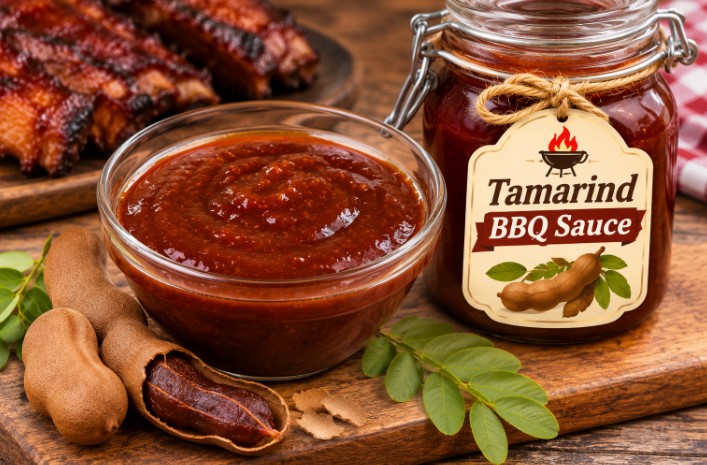
Tamarind BBQ sauce is a sweet-sour barbecue condiment made with tangy tamarind fruit, a savory base and spices. Its acidity provides a bright contrast to grilled lamb, beef, fish and chicken. Unlike a heavily sweetened tomato sauce, this version lets the fruit’s tart character remain noticeable without making the finished sauce harsh.
Understand tamarind before measuring it
Tamarind is used in many cooking traditions across South and Southeast Asia, Africa and Latin America. A modern tamarind barbecue sauce draws on that sour fruit flavor rather than representing one universal regional recipe. Tamarind products vary greatly in concentration. A ready-to-use paste can be much milder than a thick concentrate, and a sweetened tamarind chutney already contains seasoning.
For this recipe, choose unsweetened ready-to-use seedless tamarind paste. If you have a block of pulp, soak a small piece in warm water, press it through a sieve and discard the seeds and fibers. The resulting liquid may be less concentrated, so add it gradually. Read the label of concentrated products and start with a smaller amount rather than assuming all pastes are equivalent.
Tamarind BBQ sauce recipe
Allow about 5 minutes for preparation and 15–20 minutes for simmering. If starting with whole pulp, allow extra soaking and straining time. Expected yield is around one cup, or eight two-tablespoon servings. Use a small saucepan and whisk.
- ½ cup ketchup
- ⅓ cup water
- 1 tablespoon unsweetened ready-to-use tamarind paste
- 2 tablespoons brown sugar
- 1 teaspoon grated ginger
- ½ teaspoon garlic powder
- ¼ teaspoon ground cumin
- ¼ teaspoon black pepper
- A small pinch of salt, if needed after tasting
Ketchup supplies body and some sweetness, while tamarind contributes acidity. Brown sugar softens the sharp fruit notes. Ginger, cumin and garlic support the savory flavor without adding another strong acid.
- Whisk the tamarind paste with water until evenly dispersed.
- Add ketchup, brown sugar, ginger, garlic, cumin and pepper. Mix thoroughly.
- Bring to a gentle simmer and cook uncovered for 15–20 minutes, stirring often.
- Taste a cooled spoonful. Add the optional salt only if needed. If the flavor is too sharp, dilute with a little water and tomato base or add a small amount of sugar.
- Stop cooking when the mixture lightly coats a spoon. Cool before portioning.
This tamarind barbecue sauce recipe is a research-informed adaptation, not a kitchen-tested formula. If adapting a BBQ sauce with tamarind from another recipe, pay special attention to whether it calls for pulp, paste or concentrated extract. These forms do not have a universal replacement ratio.
Serving a tangy sauce without overwhelming the food
Brush a light tamarind BBQ glaze onto cooked lamb or nearly finished chicken over gentle indirect heat. Serve additional clean sauce on the side. The fruit acidity pairs with rich meat, so a small amount is often enough. On fish, use a thinner version and add it near serving time to keep the delicate flavor visible. Grilled eggplant or cauliflower can also benefit from a spoonful.
A spicy tamarind BBQ sauce can be made by adding a pinch of cayenne or chili powder during simmering. Increase gradually, since tartness can make a hot sauce feel especially sharp. For a different fruit-based finish, compare cherry barbecue sauce. Our gochujang BBQ sauce guide offers an alternative with fermented chili flavor.
When the sour flavor takes over
Too much concentrate is a common reason for an overly sharp sauce. Rather than adding a large amount of sugar, dilute with tomato base and water first. Then taste again. If the sauce feels gritty, the pulp may contain fibers; strain it before adding to the next batch. A thin sauce can be reduced briefly, but prolonged cooking will concentrate the acidity and sweetness together.
If tamarind is unavailable, a small amount of lime juice can provide acidity, but it will not reproduce tamarind’s fruit character. A suitable unsweetened tamarind paste is preferable. Avoid using sweetened chutney as an exact substitute because its sugar and spice levels may be very different.
Storage for homemade tamarind BBQ sauce
Refrigerate clean portions within two hours, or one hour if the surroundings exceed 90°F. Keep at 40°F or below and use within four days as a conservative cooked-food guideline. Freeze additional portions if needed and thaw in the refrigerator. Do not assume tamarind’s natural acidity makes the sauce safe at room temperature. Reserve a clean portion before any sauce contacts raw meat and discard contaminated leftovers.
Estimated energy is around 30–45 calories per two tablespoons, largely from carbohydrates. Sodium and sugar depend on the ketchup, tamarind product and final yield. Check labels for additives and allergens.
FAQs
Can I use tamarind concentrate?
Yes, but start with less than the listed paste amount and dilute according to the product label and taste.
Does the sauce need vinegar?
Not necessarily. Tamarind already provides acidity in this formula.
Can I use it for dipping?
Yes, reserve a clean portion and adjust thickness with a little water if needed.
Can I make it without sugar?
You can omit the added sugar, but expect a sharper taste. Ketchup may still contain sugar.
Why does tamarind sauce become darker?
The fruit’s natural color and concentration during cooking can produce a dark brown finish.
Can I use tamarind sauce on grilled shrimp?
Yes, apply a light coating near the end or serve it separately after cooking.