


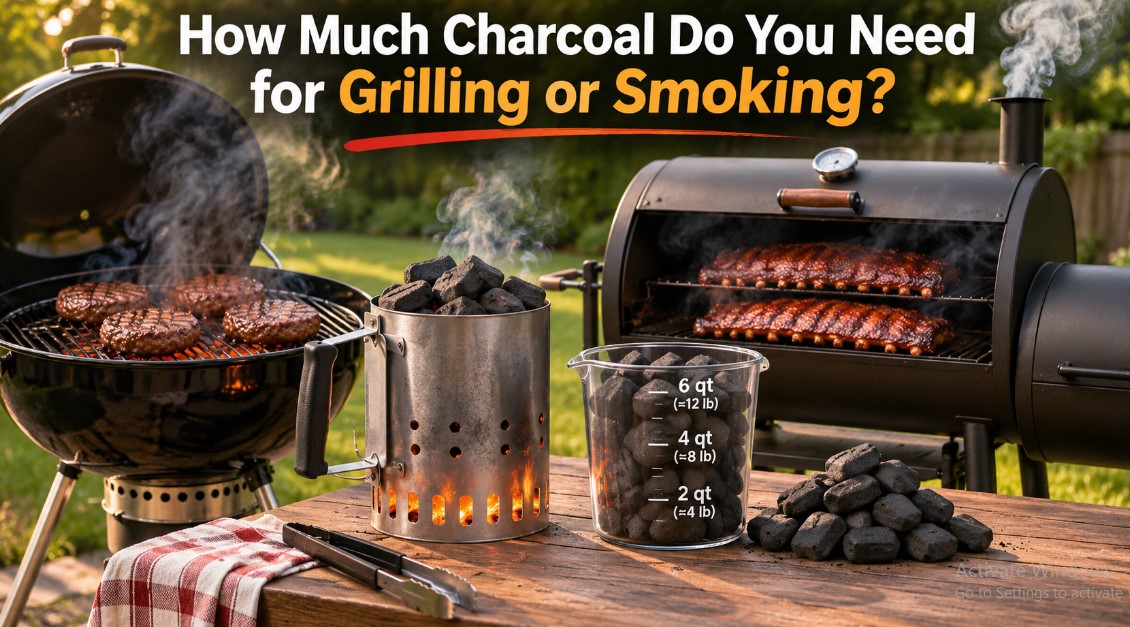
Charcoal demand changes with grill diameter, fuel type, temperature target, cooking time, wind and how tightly the coals are arranged. One full chimney in a large kettle does not behave like the same amount in a tiny portable grill. Use published amounts as starting points and adjust based on the grate temperature you measure.
A clear starting answer
Chimney starters come in different sizes, so “one chimney” is not a standardized weight. Kingsford describes a standard example holding roughly 100 briquettes. Check your chimney capacity and the fuel bag weight. For repeatability, mark a half-full level or occasionally weigh the fuel instead of relying only on visual guesses. Short direct-heat grilling often benefits from a concentrated layer of fully lit coals rather than a small scattered fire. For a common 22-inch kettle, a substantial portion of a standard chimney may be appropriate. The desired searing heat and number of burgers matter. Preserve a cooler area if you need to handle flare-ups.
Why is there no universal charcoal amount?
Charcoal demand changes with grill diameter, fuel type, temperature target, cooking time, wind and how tightly the coals are arranged. One full chimney in a large kettle does not behave like the same amount in a tiny portable grill. Use published amounts as starting points and adjust based on the grate temperature you measure.
What does one chimney mean?
Chimney starters come in different sizes, so “one chimney” is not a standardized weight. Kingsford describes a standard example holding roughly 100 briquettes. Check your chimney capacity and the fuel bag weight. For repeatability, mark a half-full level or occasionally weigh the fuel instead of relying only on visual guesses.
How much charcoal for burgers?
Short direct-heat grilling often benefits from a concentrated layer of fully lit coals rather than a small scattered fire. For a common 22-inch kettle, a substantial portion of a standard chimney may be appropriate. The desired searing heat and number of burgers matter. Preserve a cooler area if you need to handle flare-ups.
What about chicken pieces?
A two-zone arrangement is useful because chicken benefits from gentler cooking away from direct radiant heat before finishing the skin if desired. Bank the fuel to one side and leave another area clear. Use a food thermometer to confirm 165°F. Adding more coals is not a substitute for checking the center of thick pieces.
How much for reverse searing steak?
Start with a steady indirect zone and reserve or create a strong direct zone for the finishing sear. Depending on the cooker, a partial to full chimney may be useful. Think about fuel distribution as well as amount. Never assume that a glowing exterior tells you the internal doneness of a thick steak.
How much for low-and-slow ribs?
A longer cook needs a controlled path for fuel to ignite gradually. A briquette snake can help in a kettle, while an offset smoker may use a distinct coal-bed approach. Kingsford publishes an example snake with several pounds of unlit briquettes and a handful of lit starters. Match the arrangement to your grill.
Can you simply light all the charcoal at once?
Lighting every piece immediately creates a hotter fire that may burn down faster than needed. For long cooks, methods that allow fuel to ignite progressively can help. For quick steaks, a fully lit bed can be suitable. Use the fire design that matches your goal rather than assuming a larger initial fire always lasts longer.
Why does fuel arrangement matter?
A shallow bed spreads heat across a wider area, while a concentrated pile can produce a strong direct zone. A snake reduces the number of burning coals at once. The distance between pieces and airflow pathways change ignition behavior. Add charcoal deliberately instead of pouring a random pile into the grill.
How do lump and briquettes differ?
Briquettes have a relatively consistent shape, making chimney estimates and snakes easier to reproduce. Lump charcoal can contain very different piece sizes. Sort obvious dust or small fragments if they obstruct airflow. The total weight used still depends on the specific product and fire method.
How does wind affect your estimate?
Wind can increase heat loss and sometimes alter airflow through vents. A shielded but properly ventilated outdoor location may help. Never move a lit grill into a shed or garage to conserve charcoal. Carbon monoxide has no smell and can be deadly in enclosed spaces.
How do you know when to add more?
Watch grate temperature trends and remaining fuel, not just elapsed minutes. On a long fire, add enough fuel before the remaining coals collapse. Handle hot parts with proper tools and keep people away from the firebox opening. Avoid making several vent and fuel changes at once because it hides the cause of temperature swings.
What if your charcoal keeps going out?
Clear cold ash from obstructed vents, check that the fuel is dry and ensure the fire has enough intake air. A snake with gaps may stop propagating. If coals are almost fully extinguished, diagnose the setup instead of repeatedly adding lighter fluid. Never put lighter fluid onto hot charcoal.
How do you compare price per cook?
Record fuel weight used, total minutes of cooking and number of servings. A cheaper bag can be more expensive if you burn much more fuel. Add ash cleanup and consistency to your evaluation. Do not judge cost using bag price alone when the net weights differ.
How do you dispose of ash?
Wait until all ash and charcoal are completely cold, according to manufacturer instructions. Hot embers can remain beneath gray ash. Use a suitable metal container and follow local disposal guidance. Do not tip ash into a plastic bin immediately after cooking.
What is the best beginner approach?
Choose a familiar charcoal brand, learn the capacity of your chimney and repeat one simple two-zone setup. Record how much you started with and whether the fire maintained its target. Once you can reproduce that result, experiment with snake arrangements, different fuel and larger batches.
Charcoal measuring checklist
This is a practical working checklist, not a replacement for your cooker instructions or official food safety requirements. Use the steps that match your equipment and situation.
- Confirm grill diameter and chimney capacity.
- Choose direct, two-zone or snake fire arrangement.
- Measure starting fuel in a consistent way.
- Allow lit coals to become ready before cooking.
- Check temperature at grate level.
- Keep vents and ash paths clear.
- Record whether you needed a second fuel addition.
- Dispose of cold ash safely.
Example starting amounts from a published guide
Kingsford describes roughly two to four pounds of briquettes for some two-zone arrangements on a standard grill and an approximately four-pound unlit snake for long cooking. These are equipment-specific starting points. Your smaller or larger grill, different fuel or windy weather may need adjustments. Never present one starting figure as correct for all setups.
Why an ash-choked fire behaves oddly
A fuel bed needs oxygen. Ash can obstruct the grate or intake and cause a struggling fire even when unburned charcoal remains. Clean only after the cooker is completely cold. During a cook, use approved tools and avoid dangerous improvisations. Better airflow may help more than adding a larger pile of fresh coals.
Troubleshooting decisions and next steps
When advice conflicts, verify the rule that actually governs the decision. For equipment, the maker’s manual takes precedence over generic internet settings. For food safety, current government guidance is the primary reference. For taste and convenience, repeatable cooking observations provide better evidence than an isolated review. Avoid assuming that one successful result proves a technique will work on every smoker.
If the result differs from your plan, write down what you measured rather than explaining it away. A thermometer that was never checked, fuel of unknown condition or a cut with unfamiliar thickness introduces uncertainty. Identify which factor you can verify safely. Improving that measurement is usually more helpful than adding complicated new steps.
FAQs
How many coals for a 22-inch kettle?
It depends on cooking method; consult the manufacturer’s chimney and arrangement chart.
Is half a chimney enough?
Often for some two-zone tasks, but heat target and grill size matter.
Does more charcoal always burn longer?
Not when all fuel is lit at once; arrangement changes burn duration.
Can I add lighter fluid to hot coals?
Never. It can cause serious flare-ups.
When can I dispose of charcoal ash?
Only after all coals and ash are completely cold.
Final advice
Choose a familiar charcoal brand, learn the capacity of your chimney and repeat one simple two-zone setup. Record how much you started with and whether the fire maintained its target. Once you can reproduce that result, experiment with snake arrangements, different fuel and larger batches.